Spanish wine harvest set at 34 Mhl, the fourth short campaign in a row
Cooperativas Agro-alimentarias de España forecasts wine and must production of around 34 million hectolitres, the fourth consecutive campaign below 37 Mhl. The shortfall comes as world output is estimated at about 222 Mhl, against roughly 294 Mhl in 2018. The cooperative sector is also pressing Brussels to automate labelling waivers for wines exported outside the EU.
Spain's wine and must production will come in at around 34 million hectolitres (34 Mhl) this season, according to the forecast published by Cooperativas Agro-alimentarias de España and reported by Agrodigital. The estimate was drawn up after the organisation analysed the information available from the country's main producing areas.
The figure was released after the cooperative body convened its Wine Sector Council to review the campaign, the course of national and international production, and a set of regulatory issues affecting the competitiveness and commercialisation of wine.
Four campaigns below 37 Mhl
If the estimate is confirmed, Spain will string together four consecutive campaigns with production below 37 million hectolitres, a run of significantly shorter harvests than in earlier years, according to the organisation.
That matters because Spain is one of the world's largest wine producers and a structural supplier of bulk wine and must to blenders and bottlers in other markets. A single short year can be absorbed from stocks; four in a row reduce the volume that is available for trade at the entry-level end of the market, where price is set by availability rather than by appellation.
Early picking, high quality, smaller berries
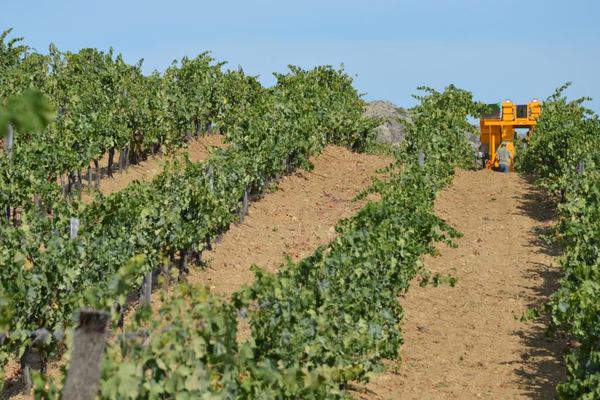
On the vintage itself, Cooperativas Agro-alimentarias de España highlights that despite the early start of picking, the grapes brought in are of high quality. High temperatures, however, affected the productivity of the vineyards and reduced both the size and the weight of the grapes, which is the mechanism behind the volume loss.
- Forecast Spanish wine and must production: around 34 million hectolitres
- Fourth consecutive campaign below 37 million hectolitres
- World wine production estimated at around 222 million hectolitres
- Reference point: approximately 294 million hectolitres worldwide in 2018
Global supply is tight as well
The lower availability of product in Spain comes on top of an international context of reduced production. The estimates analysed by the Sector Council put world wine production at around 222 million hectolitres. If that materialises, it would be the fourth consecutive year of low global output and one of the lowest volumes of recent decades. As a reference, world production reached approximately 294 million hectolitres in 2018.
The comparison frames the scale of the contraction: current estimates sit some 72 million hectolitres below the 2018 level. For buyers, that removes the option of switching origin to cover a shortfall in one producing country, because the alternative origins are not holding surpluses either.
Labelling rules for third-country exports
The Sector Council also addressed the proposed amendment to Delegated Regulation (EU) 2019/33 as regards the labelling rules for wine-sector products destined for third countries.
Cooperativas Agro-alimentarias de España considers it necessary to establish an automatic authorisation allowing European wines intended for export to comply with the labelling requirements demanded by destination markets when those requirements do not coincide with the rules set in the European Union. To that end, the cooperative sector is asking for the current wording, "Member State may permit", to be modified so that the application of this exception does not depend on a national decision.
The organisation points out that the existence of differing national criteria can generate additional administrative burdens for exporting companies when the labelling requirements of importing countries diverge from EU rules. In its view, a harmonised approach at European level would provide greater legal certainty, reduce administrative complexity and make it easier for European wineries and cooperatives to access international markets.
Cooperative wine sector to meet in Cariñena
The Council also advanced the organisation of the Wine Sector Conference of Cooperativas Agro-alimentarias de España, to be held on Wednesday 4 November in Cariñena, in the province of Zaragoza. The meeting will bring together wine cooperatives from different autonomous communities and will serve to analyse the main challenges of the sector and the future prospects of Spanish cooperative wine.