Spain revises labeling and production standards for table olives, pickles and vinegar
Royal Decree 142/2026 introduces more detailed labeling for table olives and updates technical rules for vinegar and preserved vegetables in Spain. The measure, effective since March 1, also tightens the use of commercial terms such as “natural” and clarifies quality classifications.
More detail required on olive labels
Spain has revised the rules governing how table olives, pickles, vinegar and other preserved vegetables are produced and presented to consumers. Royal Decree 142/2026, in force since March 1, introduces new labeling requirements and technical adjustments intended to align Spanish regulation with European standards and provide clearer information about widely consumed food products.
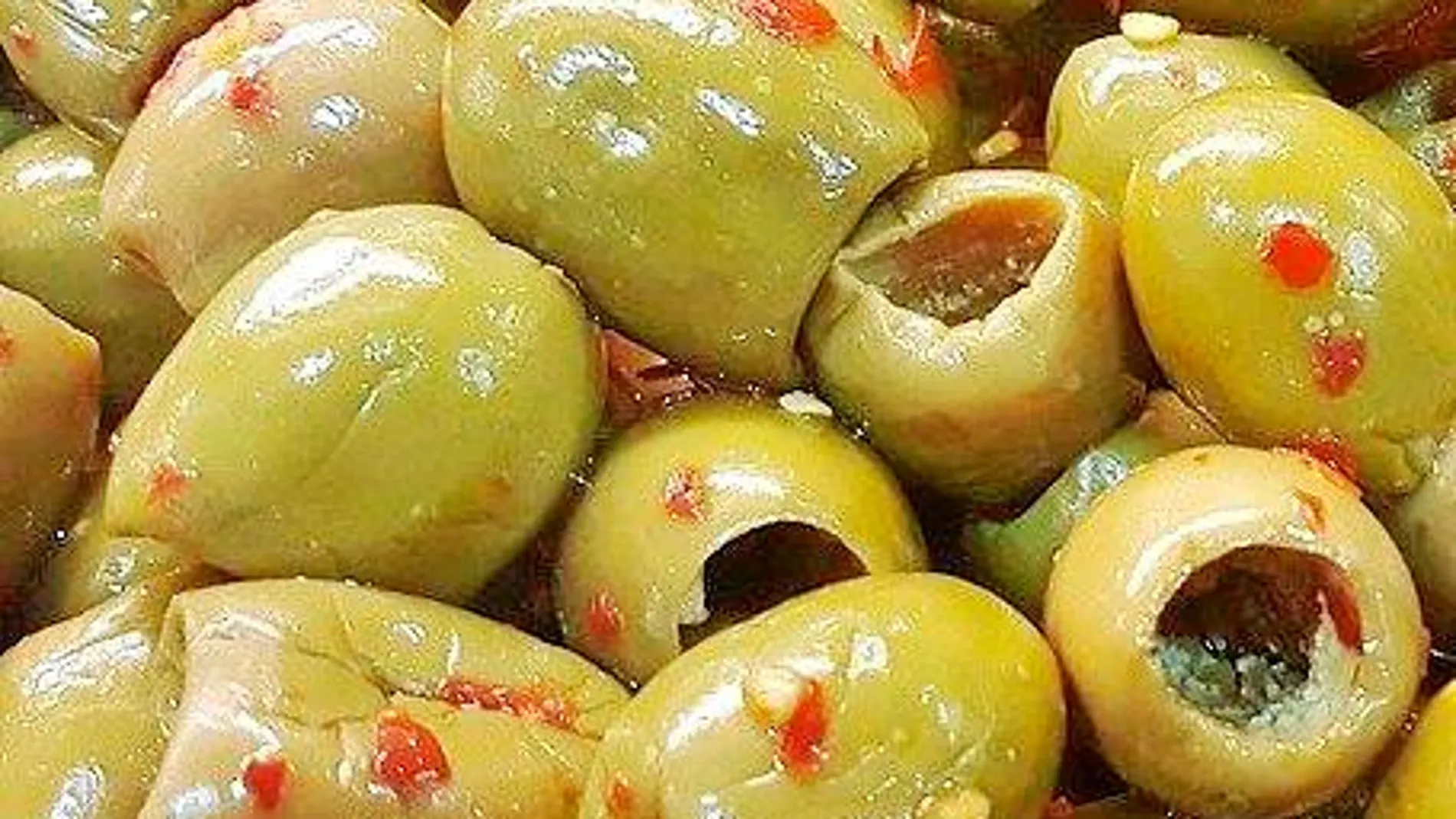
According to La Razón, the name of a table-olive product must now include “olives” or “table olives,” together with its presentation format, commercial category and color. The color does not have to be stated when it is visible through transparent packaging. The requirements give manufacturers and retailers a more standardized framework for describing products on supermarket shelves.
Stuffed olives receive particular attention. Labels must use the formula “olive stuffed with…” followed by the characteristic ingredient. If the filling is a paste rather than a whole food, the package must say so and provide its complete composition. An item marketed as anchovy-stuffed olives must therefore clarify whether the filling also contains thickeners, other fish, water, salt or additional ingredients.
Vinegar rules recognize more ingredients and traditional methods
The decree also clarifies which ingredients may be used to make vinegar. These include fruit juices, concentrates and different forms of grape must. The revision gives processors a clearer technical basis for formulations that may not have been covered explicitly by the previous rules.
Traditional practices receive specific recognition for vinegars protected by a Designation of Origin or Protected Geographical Indication. Alcohol-stabilized grape must may be used when the relevant product specification permits it. The measure therefore combines more precise general standards with room for established regional production methods.
Declared acidity may differ by 0.2 degrees for general products and by 0.5 degrees for vinegars carrying a protected designation or geographical indication, provided that the legal minimum is respected. These tolerances are relevant for vinegar producers, laboratories and quality-control teams responsible for matching production batches with label declarations.
Commercial descriptions face tighter conditions
Gherkins and other vegetables preserved in vinegar may be affected by changes concerning raw materials, although the decree does not establish new quality categories for them. It does, however, impose stricter conditions on commercial descriptions such as “natural.” That term may be used only when a product meets defined requirements concerning the absence of certain additives or industrial processes.
The regulation also revises parameters covering salt, acidity, preservation and commercial classification. Categories such as “Extra,” “First” and “Second” will consequently be tied to more precise and consistent criteria across manufacturers. Producers may need to review formulations, quality-control procedures, product specifications and packaging, while retailers and importers placing qualifying goods on the Spanish market will need to verify that supplier information supports the claims shown on labels.
La Razón reports that the reform is intended to strengthen traceability, improve labeling clarity and recognize traditional practices omitted from the previous framework. It is not presented as a response to a food-safety failure, since existing safety protections remain in place. Its practical effect is to make the actual composition and production characteristics of olives, vinegar and preserved vegetables easier to identify, reducing ambiguity for consumers and creating more uniform presentation rules for food companies operating in Spain.