Southern Thailand’s Black Glutinous Rice Shortage Spurs Interest in Vietnamese Imports
Southern Thailand faces a shortage of black glutinous rice as domestic production fails to meet demand from traditional-dessert makers. Mills are proposing additional imports from Vietnam and greater cultivation in southern provinces, while northern Luem Pua rice has risen to 60-70 baht per kilogram.
Domestic supply falls short of food-industry demand
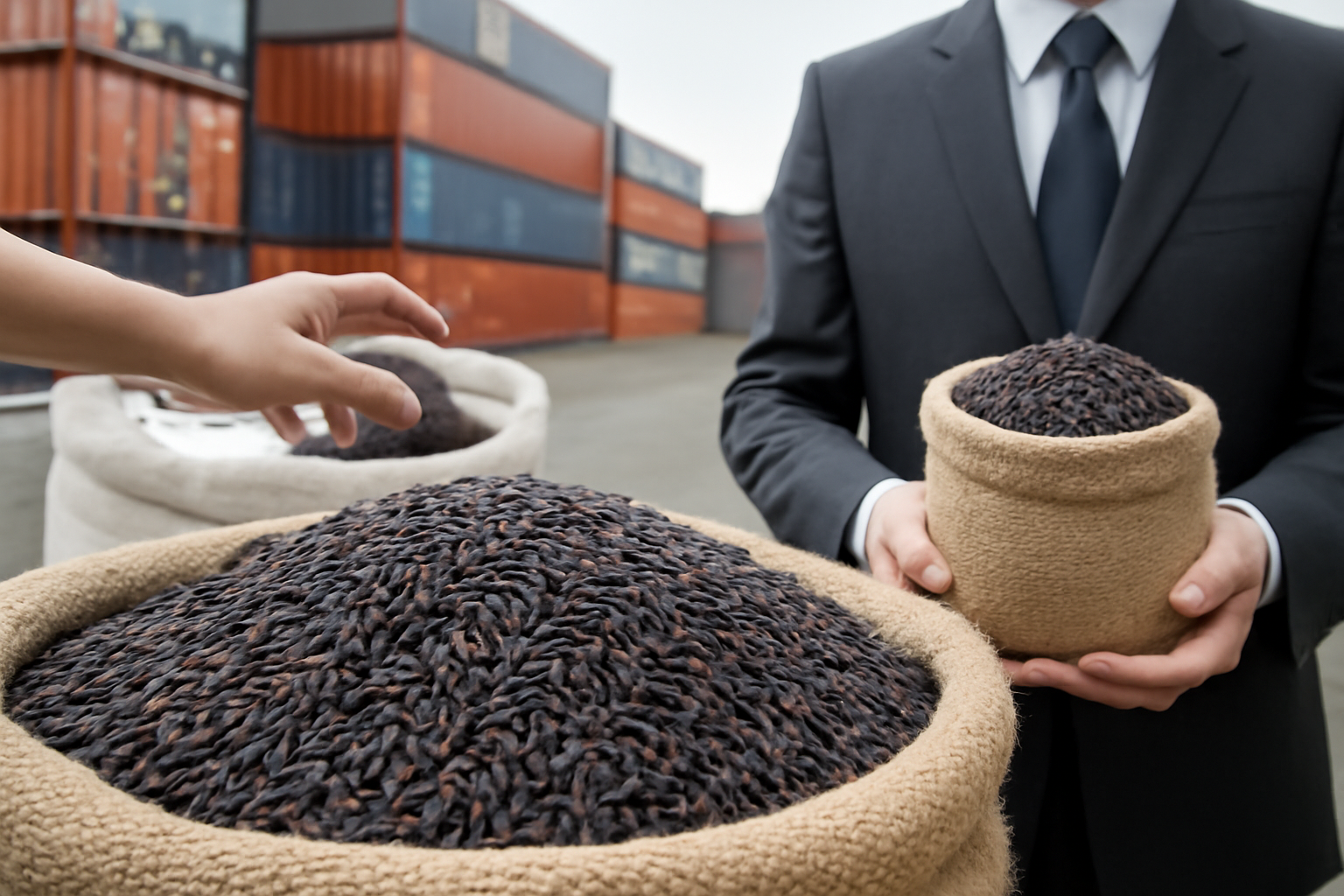
Southern Thailand’s black glutinous rice market is tightening as domestic output proves insufficient for producers of traditional desserts and other local foods. Rice mills have proposed increasing imports from Vietnam while encouraging farmers to expand cultivation in southern provinces, a combination intended to address both the immediate shortage and the underlying production gap.
The pressure is visible in the price of Luem Pua, a black glutinous rice variety grown in northern Thailand. Its price has climbed to 60-70 baht per kilogram. For dessert manufacturers and small food processors, that level raises the cost of a culturally important ingredient and increases the need to secure alternative supplies.
The shortage also shows the limits of relying on production concentrated far from the main southern market. Moving northern rice to southern processors adds distance and logistics requirements before the grain reaches mills, wholesalers or food businesses. When available volumes are already limited, these costs compound the effect of higher farm and wholesale prices.
Vietnam offers supply, but logistics remain a constraint
Operators have turned toward Vietnamese rice as a possible way to supplement Thai production. Vietnam’s proximity gives buyers a regional sourcing option, but transport costs and related import expenses can reduce the price advantage. Mills therefore need to compare the delivered cost of Vietnamese grain with northern Thai rice priced at 60-70 baht per kilogram.
Imports could provide faster relief than a cultivation programme because additional planting requires farmers, suitable land and a full growing cycle. Imported supplies may help traditional-food producers maintain output while the domestic sector considers how much extra acreage is commercially viable. They would not, however, remove exposure to freight costs or cross-border supply conditions.
Quality and processing suitability will also matter. Black glutinous rice used in traditional foods cannot be treated solely as an interchangeable bulk grain: millers and manufacturers need supplies that meet their requirements for colour, texture and cooking performance. Any shift toward Vietnam will consequently depend on both delivered price and acceptance by processors and consumers.
Southern cultivation could shorten the supply chain
Expanding cultivation in southern Thailand would place production closer to the businesses using the grain. A shorter domestic supply chain could reduce dependence on long-distance shipments from the north and limit the need for imports. It could also create a new crop opportunity for southern farmers if buyers provide reliable demand and prices that cover production risks.
The immediate market signal is clear: domestic supply is not keeping pace with demand, and the 60-70 baht-per-kilogram price for Luem Pua is forcing mills and processors to examine alternatives. Vietnam can serve as a supplementary source, while southern cultivation offers a longer-term response. The balance will depend on delivered costs, crop suitability and whether food producers can secure the quality and volume required without passing excessive costs to customers.