South Korean Beer Exports Rise 30.6% as Domestic Consumption Declines
South Korean beer exports increased 30.6% even as domestic consumption declined. Major brewers are responding by expanding their own brands in overseas markets.
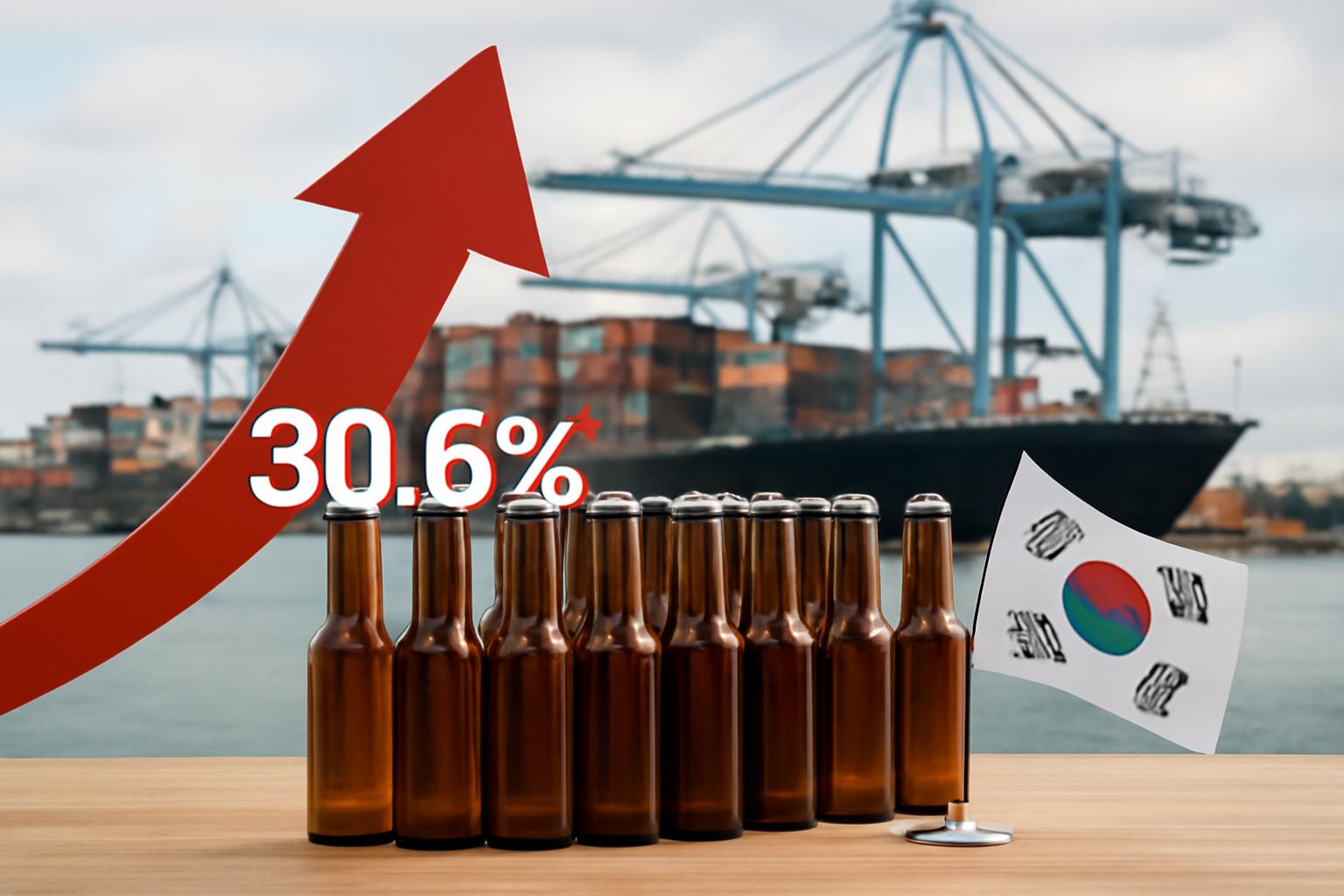
Export growth contrasts with weaker home market
South Korea’s beer industry is increasingly looking overseas as demand at home contracts. Beer exports rose 30.6%, while domestic consumption declined, creating a clear divergence between the industry’s two main sales channels. The figures point to international markets becoming a more important source of growth for South Korean producers.
The export increase is notable because it comes during a contraction in the brewers’ home market. Lower domestic consumption limits the ability of producers to generate growth through additional sales inside South Korea. Export expansion can help offset that pressure, although the available information does not show whether the 30.6% increase was sufficient to compensate fully for weaker domestic demand.
Brewers take their own brands abroad
Major beer companies are seeking to widen their presence overseas through their own brands. This strategy gives producers an opportunity to build recognition for South Korean beer rather than relying only on production for third parties or sales without a distinct brand identity. It also places brand development, market positioning and overseas distribution at the center of their expansion plans.
Building proprietary brands abroad can give brewers greater control over pricing, promotion and relationships with distributors. It can also create a more durable position if consumers begin to recognize individual South Korean labels. However, success depends on securing shelf space, maintaining supply and persuading overseas buyers to retain the products after their initial introduction.
Export growth changes commercial priorities
The 30.6% increase indicates that foreign demand is growing from its previous level, but the source material does not provide export volumes, values, destination markets or individual company results. Those details would be necessary to determine which countries are driving the increase and whether growth is broad-based or concentrated in a small number of markets.
For producers, the immediate commercial question is whether export momentum can be sustained while domestic consumption continues to weaken. Capacity that is no longer fully absorbed by the home market could potentially support overseas sales, but brewers must align production with the package formats, product specifications and delivery requirements of foreign customers. Export growth alone does not guarantee improved profitability, particularly when brand promotion and distribution require additional spending.
Market participants watch the durability of demand
Distributors and importers will be important to the next stage of expansion. Their willingness to list South Korean brands, invest in promotion and reorder after initial sales will determine whether the current increase develops into a lasting market position. Producers will also need to assess where their brands can compete effectively rather than pursuing volume in every available market.
The contrast between declining domestic consumption and 30.6% export growth is therefore reshaping the industry’s direction. South Korean brewers are not simply selling excess output abroad; major companies are trying to establish their own brands in foreign markets. The durability of that strategy will depend on repeat demand, effective distribution and the ability to turn rapid export growth into stable overseas business.