South Korean Alcohol Producers Shift to Lower-Strength and Alcohol-Free Drinks
South Korea’s alcohol shipments fell below 3 million kilolitres in 2025 for the first time in 27 years. Producers are responding with lower-strength soju, alcohol-free beer and campaigns promoting moderate drinking and road safety.
Shipments fall below 3 million kilolitres
South Korean alcohol producers are expanding lower-strength and alcohol-free ranges as declining consumption reshapes the domestic market. According to Minju Newspaper, companies are also changing advertising and promoting moderate drinking, widening their focus beyond campaigns designed primarily to increase consumption.
National Tax Service statistics cited by the publication show that domestic alcohol shipments fell to 2.987726 million kilolitres in 2025, from 3.151371 million kilolitres in 2024 and 3.237036 million kilolitres in 2023. The annual decline has therefore accelerated. Shipments dropped below 3 million kilolitres for the first time since 1998, when the country was experiencing the Asian financial crisis and volume stood at 2.022 million kilolitres.
The longer-term contraction is also pronounced. Shipments peaked at 3.804 million kilolitres in 2015 and declined 21.5% over the following decade. Diluted soju and beer have each recorded three consecutive years of falling shipments, while makgeolli has declined for five consecutive years, indicating weakness across several of the country’s principal alcohol categories.
Soju brands lower alcohol content
Industry assessments cited by Minju Newspaper link the decline to growing health concerns and higher household costs. Workplace and social gatherings once supported frequent alcohol consumption, but consumers increasingly focused on health are drinking less often and in smaller quantities. Rising restaurant costs have added another constraint.
Producers are responding by giving consumers more control over alcohol strength. Oriental Brewery is due to introduce its first soju, the zero-sugar brand Challang, on the 28th. The brewer has set its alcohol content at 15%, making lower-strength demand central to its entry into a category outside its traditional beer business.
HiteJinro and Lotte Chilsung Beverage have also reduced the strength of their leading soju brands. This year, Chamisul Fresh and Chum Churum were lowered from 16% to 15.7%. As a result, all three major domestic alcohol companies now have flagship soju products in the 15% range, showing that the strategy extends beyond limited product trials.
Alcohol-free ranges and safety campaigns expand
Beer producers are broadening alcohol-free portfolios at the same time. HiteJinro, which introduced Hite Zero 0.00 in 2012 as South Korea’s first alcohol-free beer, added Terra Zero this year. Companies are also presenting these products for a wider set of occasions as consumers divide their choices between alcoholic and non-alcoholic drinks.
Marketing is shifting with the product mix. This month, Oriental Brewery worked with the Korea Road Traffic Authority and breathalyser manufacturer Sentech Korea on an anti-drink-driving campaign. Its vehicle-key storage box releases keys only after a breath test detects no alcohol the following day. A campaign at Daejeon Hanwha Life Ballpark on the 20th also allowed visitors to choose beer or an alcohol-free product according to their condition that day.
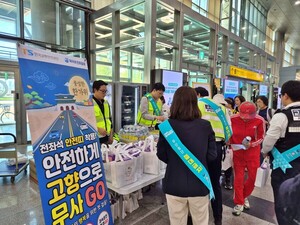
HiteJinro ran a separate road-safety campaign with the Seoul headquarters of the Korea Transportation Safety Authority on the 22nd and 23rd, distributing Hite Zero 0.00, Hite Zero 0.00 Lemon & Yuzu and Black Barley Cola. Advertisements are likewise moving away from parties and company dinners toward meals, exercise and cultural activities. For producers, the goal is increasingly to maintain brand contact with consumers who may reduce alcohol intake rather than abandon social occasions or beverage brands entirely.