Bangladesh and Pakistan Demand Opens White Copra Opportunity for Indonesian Farmers
Demand from Bangladesh and Pakistan for white copra offers Indonesian farmers a market for smaller coconuts that are often rejected by conventional buyers. However, limited processing finance, uneven prices and quality problems in previous coconut exports remain major constraints.
South Asian buyers seek smaller coconuts
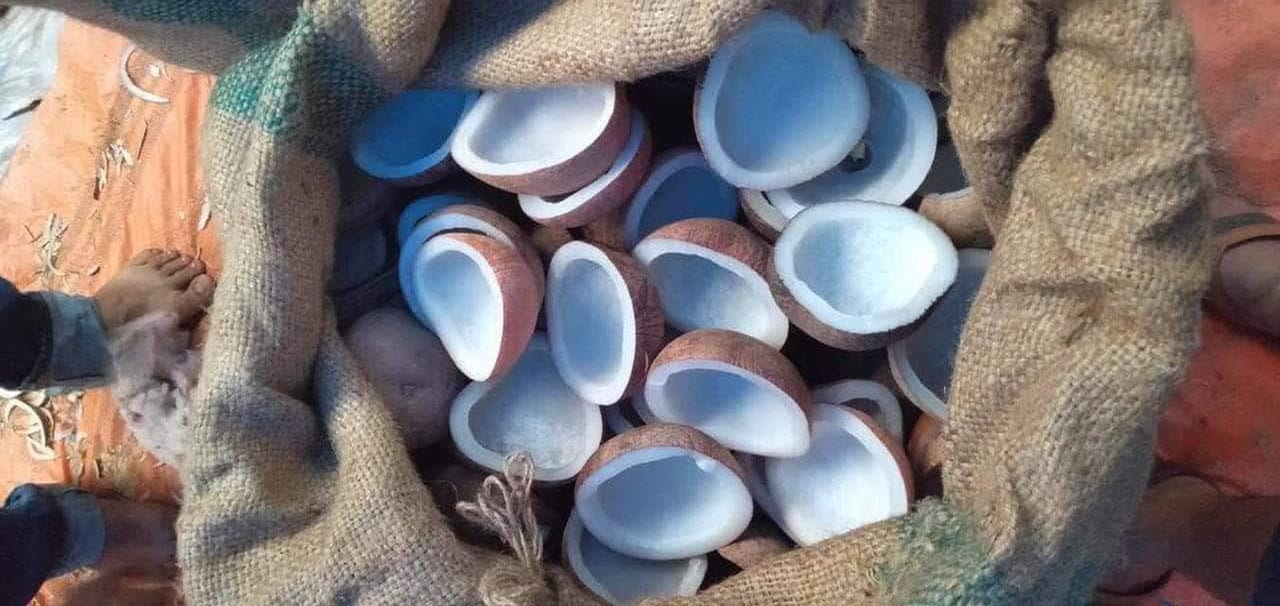
Strong demand for white copra from Bangladesh and Pakistan is creating an outlet for smaller Indonesian coconuts that often struggle to find buyers in the conventional market, according to Indonesian plantation industry publication Media Perkebunan.
Soeriadi, an Indonesian coconut entrepreneur cited by the publication, buys coconuts from farmers and processes them into white copra, also known as edible copra. He said buyers in Pakistan and Bangladesh use the product both for direct consumption and for processing into coconut oil. White copra commands a higher price than lower-grade, conventionally dried copra, he added.
The opportunity is particularly relevant for farmers producing coconuts below the standard size commonly sold in domestic markets. These smaller nuts are frequently rejected, but can provide suitable raw material for white-copra production. This gives growers a possible route to increase the value of fruit that might otherwise be discounted or left unsold.
Processing requires better drying and access to finance
White copra must be dried under controlled conditions to protect its color and edible quality. According to Soeriadi, processors use greenhouses or ovens, while farmers can also dry coconut meat under tarpaulins. His business produces white copra directly and purchases output from participating farmers at what he described as fair prices.
Capital remains a central obstacle. Farmers often lack the funds required to process their own coconuts, limiting their ability to move beyond sales of unprocessed fruit. Soeriadi argued that Indonesia’s government-backed People’s Business Credit program, known as KUR, should provide financing and that government intervention is needed to help growers establish processing operations.
He also called for coconut price regulation comparable to the system applied in Indonesia’s palm oil sector. Coconut prices are currently determined by the market without national government intervention, according to Media Perkebunan, creating uncertainty for both farmers and processors and contributing to substantial regional differences.
Soeriadi cited farmers receiving Rp1,800 per kilogram in some areas while his business in Gorontalo continued buying at more than Rp3,000 per kilogram. He said his small and medium-sized enterprise pays cash and competes for supplies with large companies producing crude coconut oil.
Quality problems weigh on broader export demand
Indonesian coconut prices rose during the previous year as export demand strengthened and production declined slightly, but have since fallen as production increased and overseas demand weakened, Media Perkebunan reported. Soeriadi attributed part of that reversal to disappointment among foreign buyers over the quality of shipments made when prices were high.
During that period, strong demand encouraged the export of coconuts harvested before they were sufficiently mature. Many could not be processed after reaching their destinations, particularly in China, prompting buyers to shift toward suppliers in other countries, he said.
Immature coconuts deteriorate quickly, while properly harvested fruit can remain usable for two weeks if stored correctly. Accumulating enough product to fill one export container can take more than a week, and shipping to China takes another two weeks. Even under normal conditions, Soeriadi estimated that 10% to 20% of the coconuts can be damaged; premature harvesting pushes losses higher.
Old trees and scarce harvesting labor add pressure
Indonesia also faces structural constraints at farm level. Many coconut trees are old and tall, increasing the need for replanting and for skilled climbers. Seed costs complicate renewal, although Soeriadi said farmers can propagate fruit selected from strong, productive trees.
Harvesting labor is becoming scarcer because younger workers have little interest in coconut climbing. Soeriadi placed the current climbing wage at Rp10,000 per tree. If a tree produces only 10 coconuts, harvesting costs amount to Rp1,000 per fruit; at 20 coconuts, the cost falls to Rp500. He recommended using shorter, early-bearing coconut varieties in future replanting because climbers may become increasingly difficult to find.
Media Perkebunan contrasted Indonesia’s market-led approach with policies in the Philippines, Thailand, India and Sri Lanka, which it said give the coconut sector greater institutional attention. For Indonesian growers, capturing South Asian white-copra demand will therefore depend not only on finding buyers, but also on financing small-scale drying, maintaining harvest quality and improving farm productivity.