Solidaridad proposes shared-risk model to protect Indonesian smallholders from EUDR costs
Solidaridad Indonesia has proposed a financing framework that would distribute the cost of complying with global sustainability rules across farmers, buyers, banks and government. The model combines supply-chain data, blended finance, long-term purchasing commitments and stronger local institutions.
Compliance costs raise pressure on smallholders
Solidaridad Indonesia has called for the financial risks created by stricter global market rules, including the European Union Deforestation Regulation, to be distributed across agricultural supply chains rather than borne primarily by independent smallholders. The organization argues that traceability alone cannot deliver a sustainable supply chain if farmers lack the money and institutional support needed to comply.
The proposal was presented during a session organized by the Tropical Forest Alliance and the Indonesia Business Council for Sustainable Development at the Indonesian Sustainable Forum 2026, according to Kalteng Daily. Solidaridad said the transition to more sustainable supply chains frequently involves high compliance costs. If farmers must cover those expenses on their own, the burden can sharply reduce their income and risk excluding them from regulated markets.
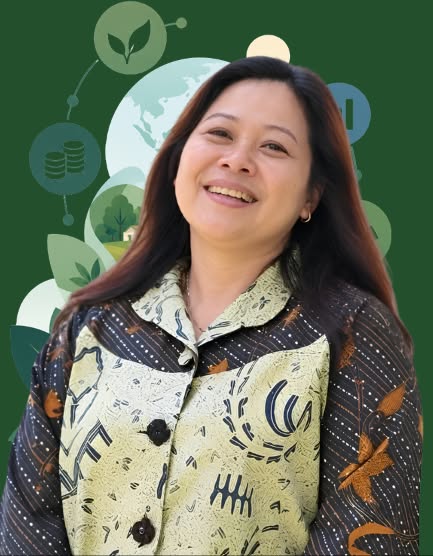
Yeni Fitriyanti, country manager of Solidaridad Indonesia, said traceability systems improve visibility across supply chains but address only part of the sustainability challenge. She argued that independent farmers should not serve as the sole buffer against climate risks and tighter market requirements. Solidaridad is therefore advocating a move from stand-alone tracking systems toward what it calls a shared-risk architecture.
Four-part Indonesia Model
Solidaridad’s proposed “Indonesia Model” contains four elements: KNOW, INVEST, COMMIT and DELIVER. The first calls for accurate geospatial and legality data to form the basis of safeguards at the upstream end of agricultural supply chains. Such information is central to demonstrating where commodities were produced and whether production meets applicable legal requirements.
The INVEST component proposes blended-finance mechanisms under which the cost of meeting global standards would be shared instead of transferred to farmers. COMMIT seeks multi-year agreements with global buyers to provide longer-term market signals and greater commercial fairness. DELIVER focuses on strengthening local institutions by empowering cooperatives, regional governments and industry participants to implement the system in farming areas.
The framework links international market access with domestic priorities such as downstream processing and food resilience. Its financing element would require corporate buyers and financial institutions to treat compliance capacity as an investment in supply continuity, rather than as a cost imposed solely at farm level. Long-term purchasing commitments could also give producers more confidence to invest in data collection, productivity and operational changes.
Productivity and local support remain central
Drawing on Solidaridad’s work with Indonesian palm oil farmers, Fitriyanti said compliance with global rules is more effective when accompanied by productivity improvements and farmer support. Field-level assistance, she said, should be considered a core part of the investment rather than an additional expense.
That position has practical implications for companies sourcing agricultural commodities from Indonesia. Traceability platforms can identify farms and supply-chain participants, but farmers may still struggle to meet market requirements without technical guidance, financing and commercially viable buyer relationships. The proposed model would place responsibility for those functions across several participants instead of concentrating it at the production end.
Fitriyanti called on corporations to co-invest, banks to provide more flexible access to finance, and the government to align spatial-planning rules with agricultural extension services. Cooperatives and regional administrations would serve as local delivery channels, helping translate national or international requirements into measures that farmers can apply.
Solidaridad said the ultimate objective is not merely to produce commodities that can be traced to individual farms. It is to create supply chains in which smallholders can invest, adapt and remain economically viable in global markets. Whether the model gains traction will depend on buyers, lenders and public authorities making concrete commitments to share compliance costs and market risks.