Saravan date harvest nears 28,000 tonnes as exporters target neighboring markets
Saravan has harvested nearly 27,000 tonnes of dates and expects output to reach about 28,000 tonnes when late varieties are collected. Production is up around 15%, while exports have begun through the county’s border and the Kuhak border market.
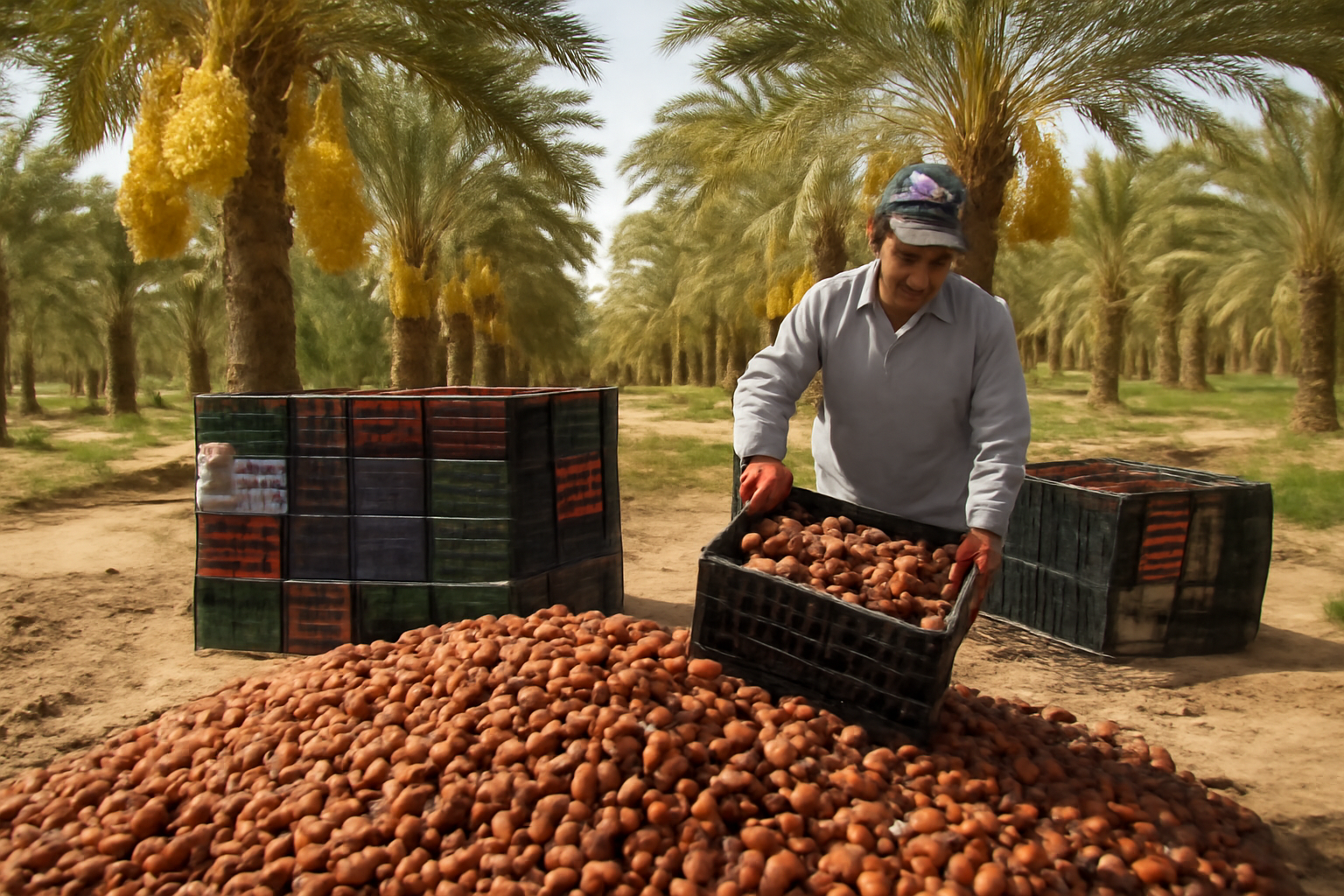
Harvest approaches 28,000 tonnes
Date growers in Saravan, in Iran’s Sistan and Baluchestan province, have harvested nearly 27,000 tonnes this season, according to Iraj Rostamzehi, head of the county’s agricultural department. With late-ripening varieties still being collected, total production is expected to reach about 28,000 tonnes by the end of the harvest. IRNA described the result as a new production record for the area and linked it to Saravan’s effort to commercialize its crop and gain wider access to export markets.
Production has increased by around 15% from last year, Rostamzehi said, attributing the improvement to growers’ use of extension advice as well as technical services and support from the agricultural authorities. The harvest begins in the second half of August and generally continues through the end of September, while some late varieties remain in the groves until the first half of October. The extended season allows packing, storage and trading operations to handle the crop in stages rather than receiving the entire volume at once.
Productive area and varietal range expand supply
Saravan has about 4,200 hectares planted with date palms, of which nearly 3,900 hectares are productive, Iran Online reported. The remaining area consists of immature groves that have not yet entered production. These plantings could add future supply, although the reports did not provide a timetable or forecast for when the non-bearing palms will begin producing commercial volumes.
The county grows commercial varieties including Rabi, Halileh, Zardan and Mazafati. Nasser Dolati, deputy for infrastructure affairs at Saravan’s agricultural department, told local publication Shastoon that 74 date varieties have been identified in the area. This range gives growers access to different harvest windows and market segments, while Mazafati holds particular commercial importance because of its established demand and suitability for higher-value presentation.
Border access supports commercialization
Exports of Saravan dates to neighboring countries have begun through the county’s border capacity and the Kuhak border market, Rostamzehi said. The available reports did not specify current export volumes, prices or destination countries. That leaves the commercial impact dependent on how much of the harvest can be graded, packed, stored and moved across the border rather than sold into the domestic market without further processing.
The rise in output increases the need for coordinated handling after harvest. Almost 28,000 tonnes must find buyers within a supply chain serving both domestic consumers and cross-border trade. For producers, access to packing and cold storage will influence product quality and the timing of sales. For traders, the longer harvest window and variety mix offer flexibility, but the absence of disclosed export volumes makes it too early to measure how much of Saravan’s production push will translate into sustained foreign-market sales.