Şanlıurfa pistachio harvest opens with exchange prices between 472 and 900 lira per kilogram
Turkey's largest pistachio province has started its 2026 harvest after drought and hail cut the pre-season forecast from about 200,000 tonnes to 80,000 tonnes. First registrations at the Şanlıurfa Commerce Exchange for 1–10 September show prices ranging from 472 to 900 lira per kilogram depending on product type and sale category. The red pistachio harvest, expected between 15 and 30 September, should clarify supply and price direction.
Harvest opens after a drought-hit season
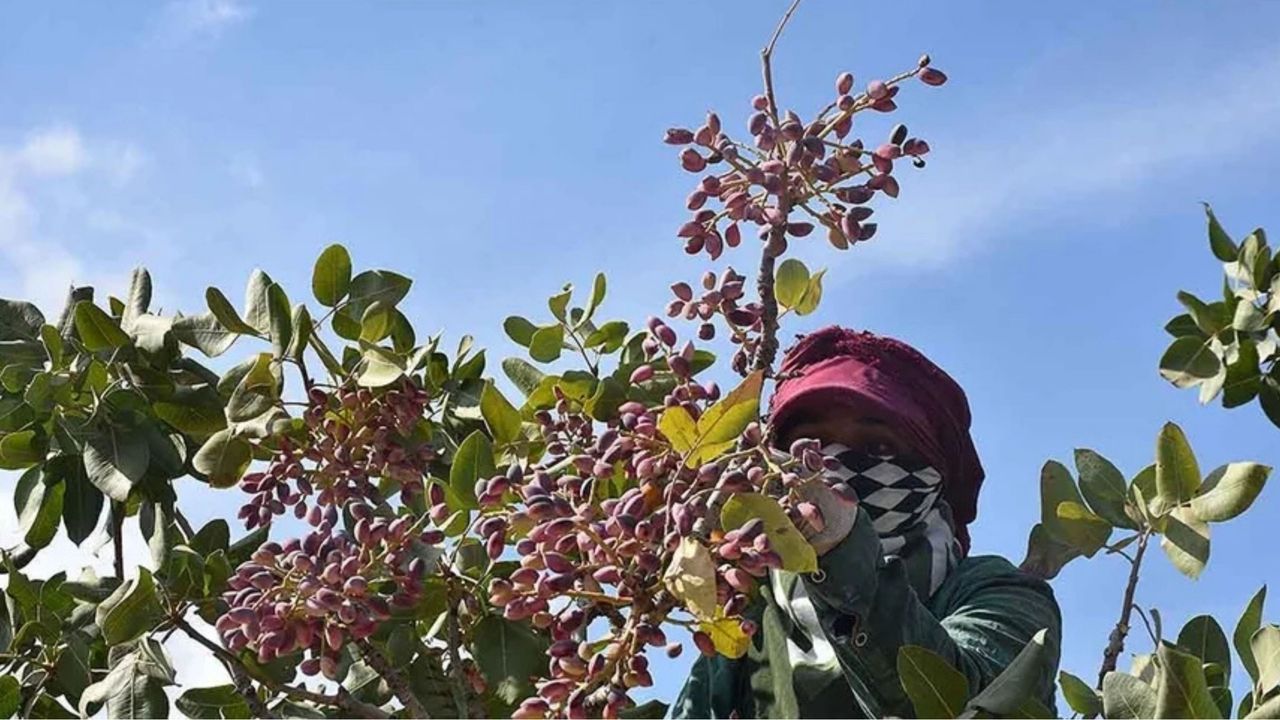
Pistachio harvesting is under way in Şanlıurfa, Turkey's largest growing province for the crop known locally as “green gold”. According to urfanatik.com, the early boz pistachio harvest began in August and growers are now preparing for the red pistachio harvest, which is expected to intensify in the second half of September. The province's 2026 crop is running above last year's level but remains well short of the high output recorded in 2024.
Data from the Agricultural Economics and Policy Development Institute (TEPGE), part of the Ministry of Agriculture and Forestry, put Turkey's pistachio area at 4.9 million decares (490,000 hectares) in 2025, in a report dated July 2026. Şanlıurfa accounted for 2.2 million decares, or roughly 45 percent of the national total, the largest area of any province.
Turkey produced 147,000 tonnes of pistachios in 2025. Şanlıurfa led all provinces with 49,000 tonnes, meaning close to one in every three kilograms of Turkish pistachios came from the province.
Provincial forecast cut from 200,000 to 80,000 tonnes
Faruk Akbaş, head of the Central Union of Turkish Pistachio Producers, said on 22 August 2026 that around 80,000 tonnes are expected in Şanlıurfa this year. Akbaş said the pre-season expectation had been about 200,000 tonnes, but drought and hail damage to trees during 2025 pulled the estimate down to 80,000 tonnes.
If that figure is met, Şanlıurfa's output would be about 63 percent above the 49,000 tonnes harvested in 2025, yet 55 percent below the roughly 179,000 tonnes Akbaş reported for 2024.
At national level the picture is more expansive. The TEPGE report cites TurkStat's first 2026 estimate, under which Turkish pistachio production would rise 114 percent year on year to 315,000 tonnes.
First exchange registrations: 472 to 900 lira per kilogram
Registration records of the Şanlıurfa Commerce Exchange covering 1–10 September 2026 show a wide spread of prices by product type and transaction category.
- Kavlak pistachio, spot producer sales: 13 transactions totalling 8,533 kilograms, prices between 472 and 810 lira per kilogram, weighted average 766.21 lira.
- Boz kavlak pistachio, spot trader sales: 17 transactions totalling 1,534,805 kilograms, prices between 600 and 780 lira per kilogram, weighted average 652.88 lira.
- Boz kavlak pistachio, spot producer sales: 10 transactions totalling 5,758.91 kilograms, prices between 600 and 900 lira per kilogram, weighted average 750 lira.
In the exchange's records, HMS denotes a spot producer sale and HTS a spot trader sale. The minimum, maximum and average figures published in exchange bulletins refer to transactions registered on specific dates, so the highest price in a bulletin does not mean all producers sold at that level. Quality, kernel yield, moisture content, kernel size, processing status and the type of sale all move prices, and the exchange's summary bulletin does not break out detailed quality classes.
Two products, two demand channels
Boz pistachio is picked earlier than red pistachio and is valued for its green colour, aroma and oil content, which makes it the preferred material for baklava, chocolate and the wider dessert sector. Red pistachio is left on the tree longer to ripen and is used both as a snack nut and as an ingredient in other food products.
Akbaş's harvest calendar points to red pistachio picking in Şanlıurfa concentrating between 15 and 30 September, and he is advising growers to take part of their crop as boz and part as red. The total volume reaching the market, and the direction prices take, are expected to become clearer once the red harvest gets under way.