Russian wine output falls as demand shifts toward Chile, South Africa and Argentina
Russian still and sparkling wine production fell by 12.6% and 14% year on year in the first half of 2026. Consumers bought less domestic wine while sales from Argentina, Chile, South Africa and Moldova recorded double-digit growth.
Production declines after three years of growth
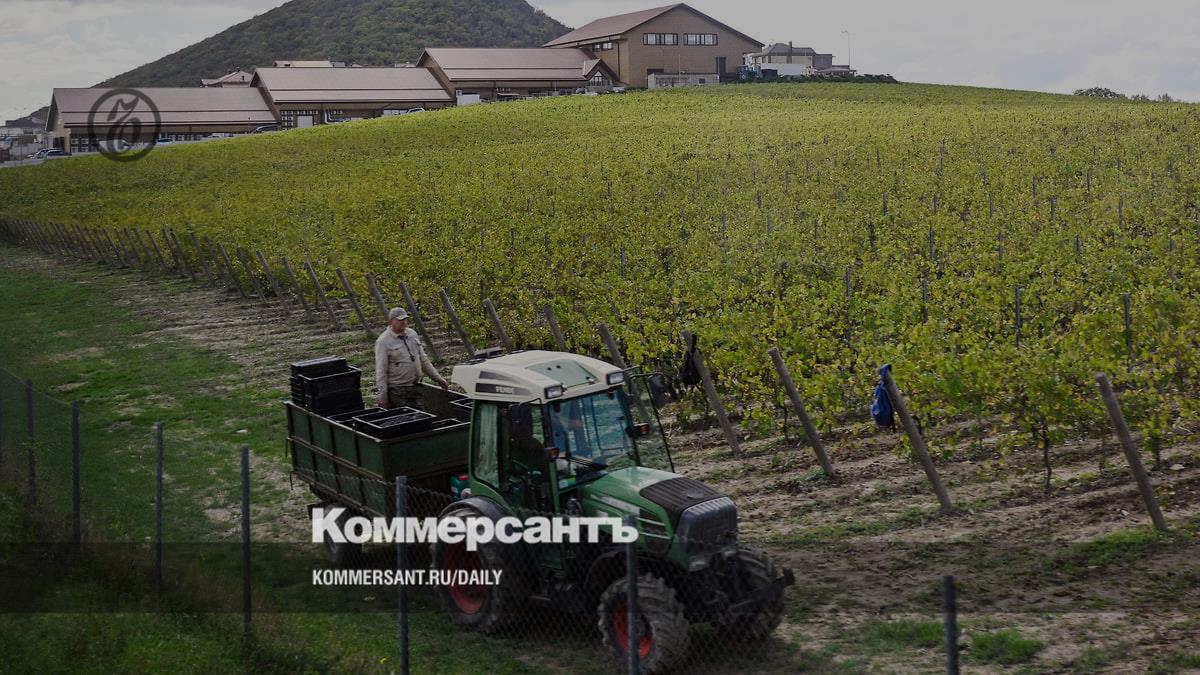
Russian wine production contracted sharply in the first half of 2026, reversing three years of expansion. Data from Rosalkogoltabakkontrol cited by Kommersant show that the country produced 15.44 million decalitres of still wine in January–June, down 12.6% year on year. Sparkling wine output fell 14% to 6.16 million decalitres, while production of fortified wine dropped 31.6% to 441,100 decalitres.
The decline followed strong results in 2025, when still wine production increased by 13.6%, sparkling output by 7.7% and fortified wine by 12.7%. Producers expanded in anticipation of continued consumer-market growth, but demand did not match those expectations. According to Alexey Solovyov of the Bely Mys wine testing centre, wineries entered 2026 with accumulated inventories. WineRetail head Alexander Stavtsev said several large producers subsequently halted operations for two months or longer.
Regulatory action also affected output. Rosalkogoltabakkontrol suspended the licence of St Petersburg producer ZAO Sparkling Wines, which makes the Lev Golitsyn brand, on April 9, 2026, after finding that its products did not comply with state standards. Production resumed only on July 6.
Higher prices weaken domestic demand
Retail sales of still wine declined by 2.7% year on year to 26.38 million decalitres in the first six months, according to Rosalkogoltabakkontrol. Sparkling wine sales rose by 3.9% to 9.99 million decalitres. Producers are now aligning output more closely with current orders because building additional inventory is considered costly and risky.
Affordability has become a central constraint. Rosstat put the average retail price of still wine at 726.7 rubles per litre in June, 8.9% higher than a year earlier. Ladoga president Veniamin Grabar estimated that mass-market consumers are comfortable paying 300–400 rubles per bottle, but finding wine at that level is difficult. Alexander Lipilin of Fort said a bottle priced at 500 rubles two years ago now costs about 1,000 rubles. Consumers have consequently reduced purchase frequency or switched to cocktails based on relatively inexpensive gin, rum, whisky and aperitifs.
Government measures have not prevented the contraction. The Agriculture Ministry said 4 billion rubles was allocated to viticulture and winemaking support in each of 2025 and 2026. Duties on wine from countries classified by Russia as unfriendly, raised substantially in 2023, now stand at 25% and no less than $2 per litre. Market participants told Kommersant that the benefit of those duties had largely run its course by early 2026, while reduced competition helped domestic procurement prices rise.
Buyers turn to alternative suppliers
Demand for Russian still-wine brands fell by 4.9% in retail during the first half, according to market participants. Their estimate shows the domestic share of still-wine sales declining from 60.2% to 59.5%, while the share in sparkling wine slipped from 71.7% to 70.9%. Agriculture Ministry figures differ slightly: they put the Russian share at 59.3% for still wine, up 0.02 percentage points, and 71.21% for sparkling wine, down 0.35 points.
Alternative foreign suppliers gained ground. Sales of Argentine still wine rose 30.8% to 266,470 decalitres, Moldovan wine increased 28.8% to 133,100 decalitres, Chilean wine advanced 20% to 1.33 million decalitres and South African wine grew 10.2% to 978,030 decalitres. Moldovan, Serbian and Argentine products also recorded significant growth in sparkling wine. Italian wines regained some ground, increasing their share of sales from 21.6% to 22.5%.
Costs remain another pressure point for Russian wineries. Industry representatives cited more expensive crop-protection products, borrowing and components, as well as labour shortages and fuel-supply difficulties. The grape harvest increased nationally by 5.2% to 955,000 tonnes last year, according to the Agriculture Ministry, but some regions, including Crimea, reported declines. Return frosts on the Taman Peninsula and around Sevastopol also caused shortages of certain white grape varieties used for sparkling wine.