Russian Pet-Food Imports Rise 21.6% in Second Quarter to 15,800 Tonnes
Russian pet-food imports increased 21.6% year on year to 15,800 tonnes in April-June, according to data reported by Kommersant. Domestic production remained far larger at 443,400 tonnes, despite growing at a slower rate of 14.3%.
Foreign deliveries rebound from a low base
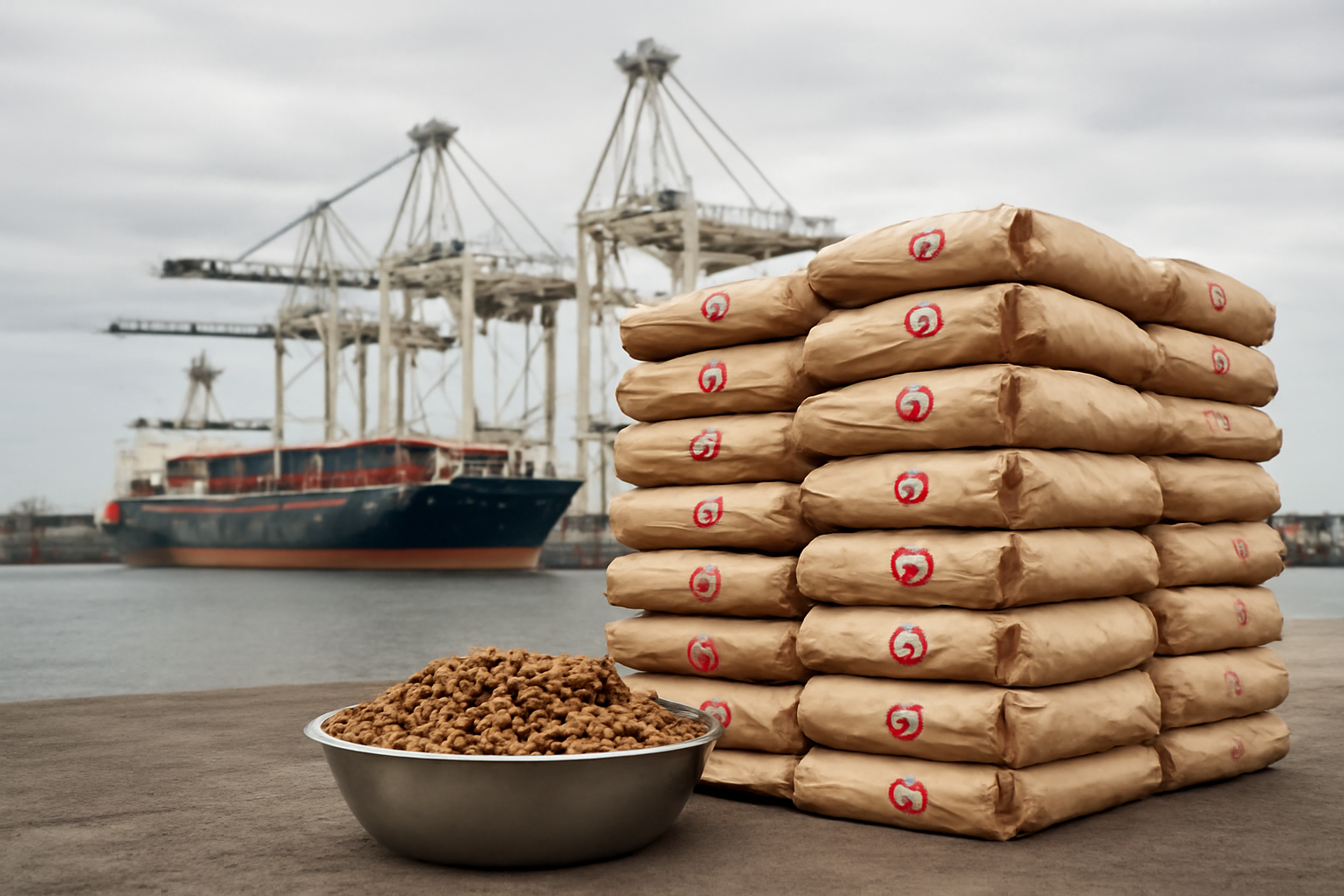
Russian imports of pet food increased by 21.6% year on year in the second quarter, reaching 15,800 tonnes between April and June, Kommersant reported, citing data from CRPT, the operator of the Chestny Znak national product-labelling system.
The increase outpaced growth in Russian production. Domestic manufacturers produced 443,400 tonnes during the same period, 14.3% more than a year earlier. The figures nevertheless show that local output remains the dominant source of supply for the Russian market, with imported volumes representing only a small fraction of domestic production.
Dry pet food and treats accounted for 89.5% of imports. This concentration means the recovery in foreign deliveries is primarily affecting the largest shelf-stable segment rather than reflecting equally strong growth across every pet-food category.
Brands return after regulatory issues are resolved
Irina Golovchenko, chief executive of pet-products manufacturer and distributor Valta Pet Products, told Kommersant that the faster import growth was partly a consequence of the low comparison base from the previous year. A sharp percentage increase from that base does not by itself indicate a major shift in the balance between domestic and foreign suppliers.
Golovchenko also linked part of the increase to the resumption of deliveries by individual foreign brands after they addressed concerns raised by Rosselkhoznadzor, Russia’s veterinary and phytosanitary regulator. The improvement therefore reflects the restoration of previously disrupted supply channels as well as underlying market demand.
For importers and distributors, the return of particular brands can broaden assortments and restore products already familiar to retailers and consumers. Domestic producers, however, continue to operate against an import presence that remains limited relative to Russian output.
Stronger ruble improves import economics
Mikhail Burmistrov, chief executive of Infoline Analytics, said the main driver of import growth may have been the strengthening of the ruble during the period. A stronger domestic currency made foreign offers more attractive on price, improving purchasing conditions for Russian importers.
Even after the second-quarter increase, foreign pet food retains a modest position in Russia. Kirill Dmitriev, president of the National Pet Industry Association, estimates that imported products will account for only 3–4% of the Russian market by the end of 2025.
The data point to a recovery in a narrow but commercially relevant part of the market. Importers benefit from improved currency conditions and the reopening of supply from selected brands, while Russian manufacturers still command the much larger production base. The next direction for foreign deliveries will depend on whether those advantages persist and whether additional suppliers can satisfy Russian regulatory requirements.