Russian ice cream output falls 8–9% as costs and cool weather weigh on demand
Russian ice cream production declined 8–9% year on year in the first half of 2026, according to INFOLine. Higher input and retail prices, cool weather, expensive credit and the exit of a major producer reduced output, while suppliers continued investing in premium, Asian-inspired and functional products.
Output declines while the product mix holds steady
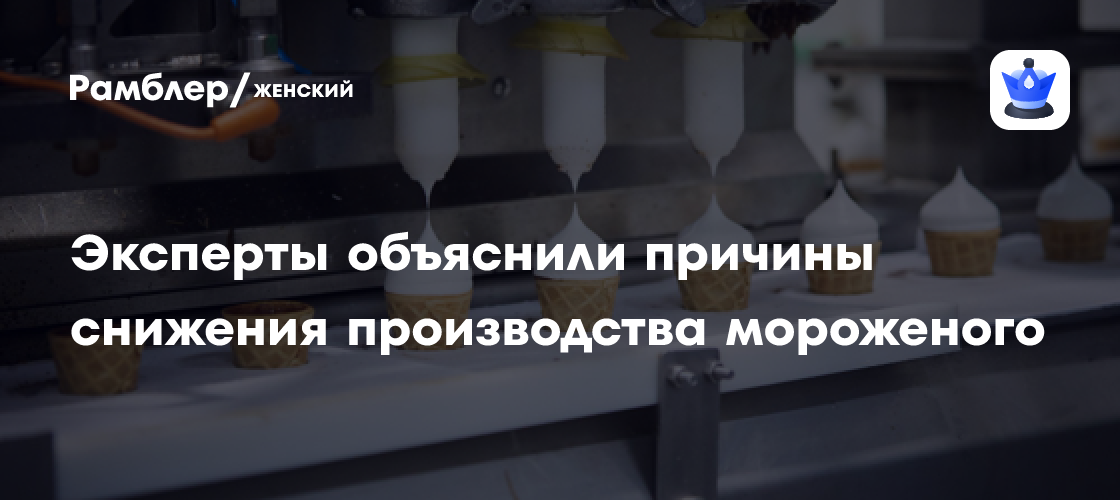
Russian ice cream production fell 8–9% year on year in the first half of 2026, according to industry monitoring by INFOLine reported by Sfera.fm. The decline did not stop manufacturers from launching new flavors, functional products and packaging formats as they adjusted their ranges to changing consumer preferences.
The composition of production remained broadly stable. Plombir, a rich dairy ice cream, accounted for about 60% of output, while cream ice cream represented approximately 20%. These shares indicate that traditional dairy varieties continue to dominate the Russian market despite faster innovation in smaller categories.
Weather, prices and financing restrict production
INFOLine linked weaker output to several factors. Cool weather reduced seasonal demand, while rising retail prices made ice cream less affordable. The price of the wafer cup alone increased by about 20%, adding pressure to one of the market’s most common formats.
A high key interest rate also limited manufacturers’ ability to finance seasonal inventories with borrowed funds. Ice cream companies normally need to build stocks before peak demand, so costly credit can directly constrain production and distribution. The departure of Altai-based Russian Kholod, which had ranked among the country’s ten largest producers, further reduced industry capacity.
Production costs increased as dairy fats, sugar, chocolate, logistics services and electricity became more expensive. These inputs affect both mass-market dairy ice cream and premium products, leaving producers to balance higher shelf prices against the risk of weaker volumes. For suppliers of ingredients and packaging, the output contraction may translate into softer demand from large processors.
Demand shifts toward functional and Asian-inspired products
The segment made with milk-fat substitutes contracted by 29%, while consumer interest in lactose-free and functional ice cream increased. Russian producer Eskimos introduced its Eskimos Lab range with 8% protein and no added sugar, offering cheese, chocolate, coconut and pistachio flavors.
INFOLine also identified stronger Asian influence on product development. Matcha and mochi are moving beyond niche positioning, while Kraft Desert’s MotiMe range combines ice cream, rice dough and several fillings. Producers are also using pitahaya, soursop, yuzu, lychee, mango and passion fruit in sorbets and conventional dairy ice cream.
The trend extends beyond Russia. In the United States, Chee Hoo added a pineapple-flavored protein ice pop containing 12 grams of protein per serving, with no added sugar or lactose. INFOLine also pointed to matcha products in the Häagen-Dazs range as evidence that the flavor has entered the international premium mainstream.
Innovation continues despite lower volumes
Russian companies are adapting global flavor trends quickly but remain behind international suppliers in packaging innovation, according to INFOLine. Overseas brands make wider use of miniature ice cream balls sold in cups and resealable zip bags, formats designed for repeated opening and easier storage.
Partnerships offer another route to product development. Logika Moloka and Arnest UniRus announced new products under the Danissimo and Magnat brands, combining expertise in dairy products, ice cream and chocolate to develop new flavors and textures.
For the second half of 2026, INFOLine expects manufacturers to expand savory, sweet-and-spicy and cheese-based flavors, alongside high-protein products without added sugar. Asian influences and competition in health-oriented ice cream are also expected to intensify. For ingredient exporters and packaging suppliers, growth opportunities are therefore shifting toward specialized proteins, fruit preparations, premium inclusions and convenient formats even as Russia’s overall production volume remains under pressure.