Russian crude vegetable-oil output rises 11.87% in first half of 2026
Russia produced 5.43 million tonnes of four major crude vegetable oils in the first half of 2026, up 11.87% year on year, according to revised Rosstat data reported by Oleoscope. Rapeseed and soybean oil outpaced sunflower oil, while linseed oil recorded the fastest percentage growth from a much smaller base.
Four major oils reach 5.43 million tonnes
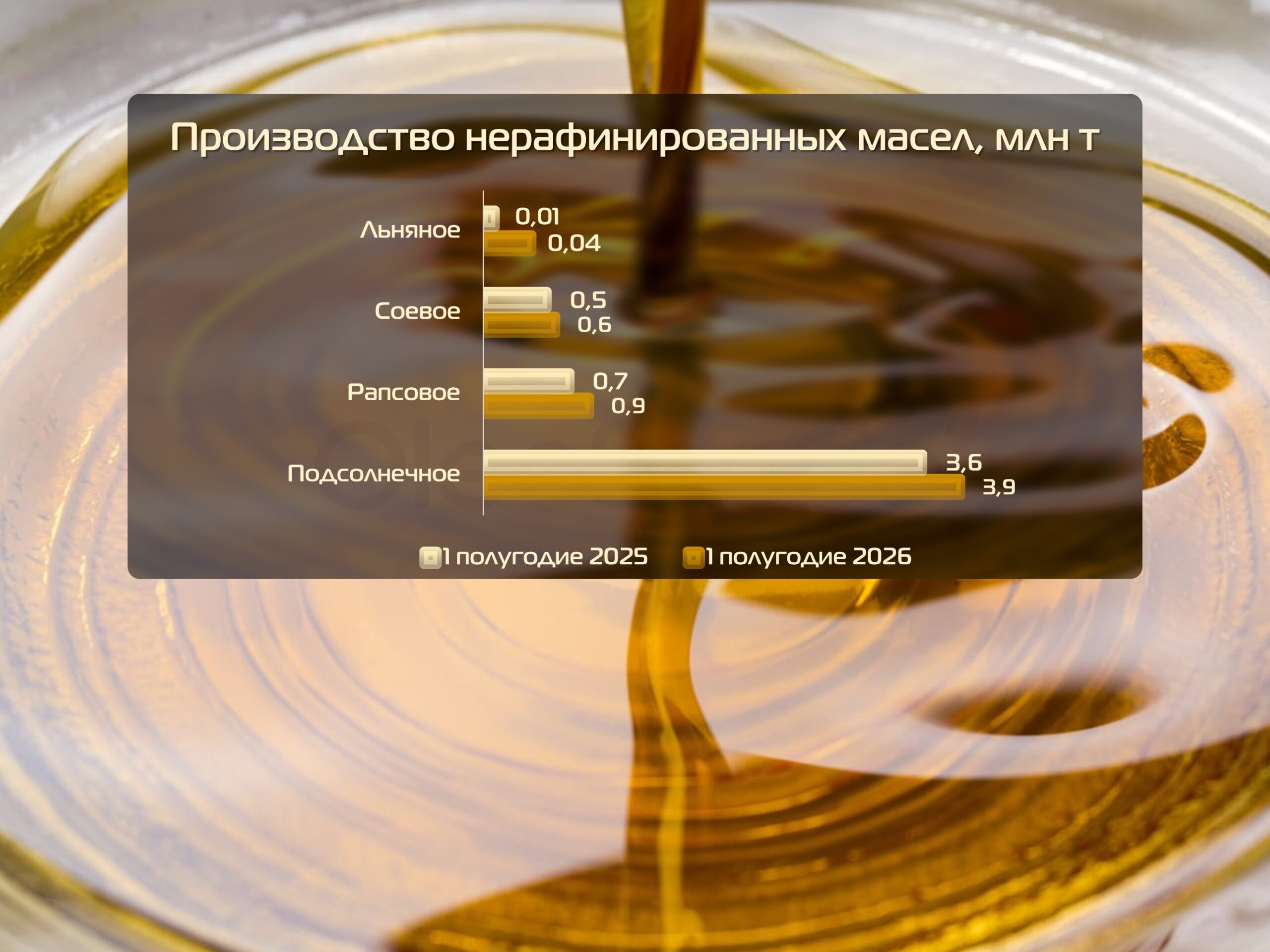
Russian production of four key crude vegetable oils increased by 11.87% year on year in the first half of 2026, reaching 5,433,230.75 tonnes. The total covers sunflower, soybean, rapeseed and linseed oils, according to revised Rosstat data dated September 2, 2026 and reported by Oleoscope.
The figures point to broader growth across Russia’s oilseed-processing industry rather than expansion confined to its dominant product. All four oil categories recorded higher output than in the first half of 2025, although their growth rates varied sharply. The additional supply strengthens availability for domestic processors and potentially enlarges the volumes that can be marketed abroad, subject to domestic demand and commercial conditions.
Sunflower oil remains dominant
Crude sunflower oil remained the industry’s largest segment. Production rose by 8.59% to 3.92 million tonnes in the first half of 2026. That was the most restrained growth rate among the four oils, but sunflower oil still accounted for the clear majority of their combined output.
Soybean oil production increased by 13.53% to 595,700 tonnes. Rapeseed oil recorded a larger rise of almost 23%, reaching 874,200 tonnes. Together, the figures show soybean and rapeseed processing expanding more quickly than sunflower oil production during the reporting period.
The mix matters for crushers, refiners and traders. Sunflower oil remains the principal source of market volume, while faster growth in rapeseed and soybean oil broadens the supply available to buyers with different technical and commercial requirements. For exporters, a more diversified output base may also provide greater flexibility across destination markets, although the source did not provide shipment volumes or a country breakdown.
Linseed oil surges from a small base
Linseed oil posted the fastest percentage increase. Output climbed by 471.88% to 39,500 tonnes, making it the smallest of the four categories despite its exceptional growth rate. Oleoscope linked the increase to the development of cold-pressing technology, more stable raw-material quality, growing export volumes and new state support measures for deeper oilseed processing.
The scale difference remains important: linseed oil output was only a fraction of sunflower, rapeseed or soybean oil production. Even so, the increase suggests that the product is moving beyond its traditional positioning in pharmacies and health-food retail toward a larger industrial and export-oriented market.
The production expansion comes against a firmer international price environment. Oleoscope noted that global vegetable-oil prices had previously risen by 11.6% season on season. Higher prices can support processor and exporter revenue, but the effect on margins also depends on oilseed costs, processing expenses and the prices obtainable in individual markets.
For the Russian industry, the first-half figures indicate more crude oil available for refining, food manufacturing and overseas sales. Sunflower oil will continue to determine the sector’s overall scale, while rapeseed, soybean and linseed oils are contributing a growing share of incremental production. Rosstat’s revised data do not specify how the extra output was divided between domestic consumption, inventories and exports, leaving trade statistics and second-half production as the next indicators of whether the increase translates into sustained export capacity.