Russia Estimates Rare-Earth Reserves at 22 Million Tonnes as Import Reliance Falls
Russia estimates its rare-earth reserves at about 22 million tonnes, placing the country seventh globally, according to ABIREG. The government says the import share of rare and rare-earth metals fell by 6% over the past year as domestic mining and processing projects advance.
Resource base supports an emerging domestic industry
Russia’s rare-earth reserves are estimated at approximately 22 million tonnes, giving the country the world’s seventh-largest resource base, ABIREG reported. The estimate was presented as Russia works to establish a domestic industry covering the full chain from raw-material extraction to deep processing and the production of higher-value goods.
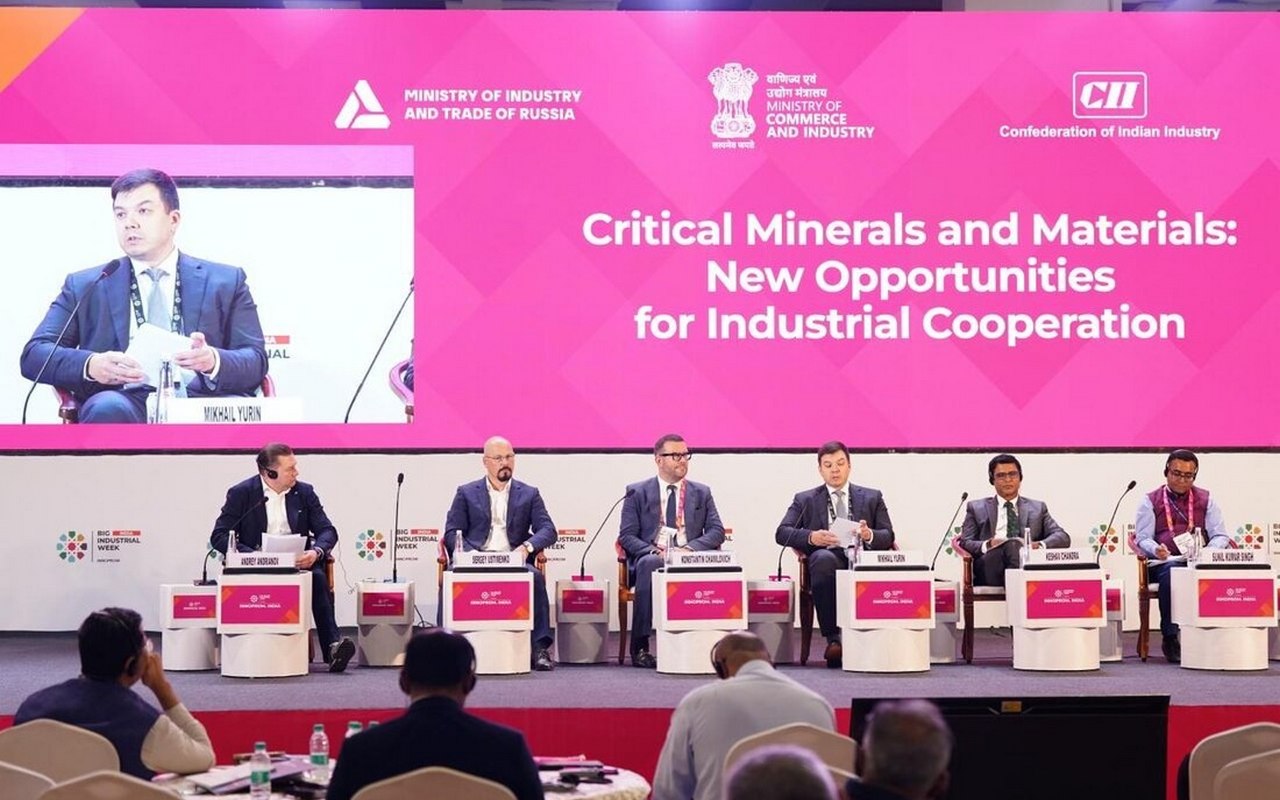
Deputy Industry and Trade Minister Mikhail Yurin outlined the strategy during the international INNOPROM India exhibition. He took part in a session on critical minerals and materials, where Russian and Indian representatives discussed opportunities for industrial cooperation.
The development programme is linked in part to Russia’s national project “New Materials and Chemistry.” The stated objective extends beyond mining: the authorities want domestic companies to produce separated materials, individual rare-earth oxides and finished components rather than relying primarily on sales of unprocessed resources.
Import share falls as projects move forward
According to Yurin, the share of imports in Russia’s supply of rare and rare-earth metals declined by 6% over the past year. The available information does not specify the original import share, the resulting percentage or whether the reduction was measured in percentage points. It therefore signals progress in import substitution but does not establish the scale of Russia’s remaining dependence on foreign supplies.
Projects are under development in lithium, beryllium, tungsten and niobium. For rare earths specifically, Russia is creating a production chain that begins with extraction at the Lovozersky Mining and Processing Plant and is intended to extend to individual oxides and permanent rare-earth magnets.
The Angara-Yenisei cluster is expected to become one of the centres for deep processing. Its role will be important because the commercial value of a large geological resource depends on whether producers can economically extract, separate and refine individual elements to the specifications required by industrial customers.
India offers market and technology options
Yurin said Russia and India have complementary advantages: Russia has a substantial resource base and mining and processing expertise, while India offers a large, growing industrial market and its own technological capabilities. Potential cooperation could include joint development of deposits, investment in processing facilities, technology development and manufacturing of higher-value products.
Long-term contracts and offtake agreements were also identified as possible instruments for supporting new capacity. Such arrangements could give Russian projects more predictable demand while offering Indian industrial buyers access to future supplies. However, the source disclosed no project values, production targets, commissioning schedules or contract volumes, leaving the pace of commercial expansion dependent on investment decisions and the execution of the planned processing chain.
Full market analysis