Russia to add up to 6 million tonnes of new polymer capacity by 2030
Russia's output of five base polymers reached 8.03 million tonnes in 2025, up 1% on the year. Three new plants — Irkutsk, Amur and the Baltic complex — could add 5-6 million tonnes of capacity by 2030, even as domestic consumption fell 6.7% to 6.69 million tonnes.
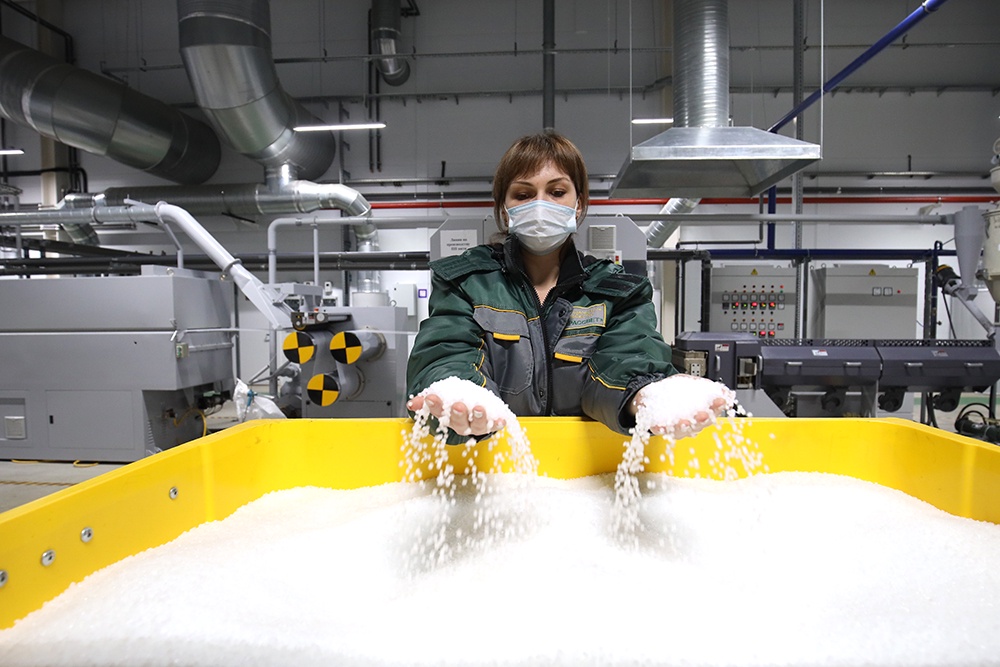
Russia is preparing to significantly expand its polymer output over the coming years as several large petrochemical plants move toward start-up, according to the newspaper Rossiyskaya Gazeta. The additional volumes could reshape trade flows in a market that has recently leaned on exports to sustain output.
Output recovers but stays flat
Production of the five base large-tonnage polymers — polyethylene (PE), polypropylene (PP), polyvinyl chloride (PVC), polyethylene terephthalate (PET) and polystyrene (PS) — rose to 8.03 million tonnes in 2025, according to estimates from the Union of Plastics Processors (SPP). That is 1% above the 2024 result and 0.4% above the pre-sanctions level of 2021. Output in 2026 is expected to reach at least 8 million tonnes.
SPP president Mikhail Katsevman told Rossiyskaya Gazeta that volumes recovered in 2024-2025 because exports fell and producers shifted their attention to the domestic market. Beyond the five base grades, Russia also makes polycarbonates, polyamides, polyesters and various resins; Arthur Consulting put total polymer production at roughly 11 million tonnes in 2024, with more than half being PE and PP.
Three mega-projects reshape capacity
The pipeline of new capacity is dominated by three plants:
- The Irkutsk Polymer Plant in Ust-Kut has already begun output, with the bulk of commissioning completed in April 2025. It will produce 650,000 tonnes a year of linear low-density and high-density polyethylene.
- The Amur Gas Chemical Complex is designed for 2.7 million tonnes a year — 2.3 million tonnes of polyethylene and 400,000 tonnes of polypropylene — using ethane and liquefied petroleum gases from the Amur Gas Processing Plant, which feeds gas to China via the Power of Siberia pipeline.
- The Baltic Chemical Complex near the port of Ust-Luga will make up to 3 million tonnes of polyethylene a year, with a phased launch in 2026 and 2027.
Amur region governor Vasily Orlov said in January 2026 that the Amur Gas Processing Plant was 95% complete and the Amur Gas Chemical Complex 92% complete, with commissioning set for 2027. Katsevman estimates that all the new projects together will add at least 5-6 million tonnes of polyolefins, PS, PET and other polymer products by 2030.
Imports, demand and the export question
The new plants target segments where import dependence remains high, said Sergey Bershitsky, president of the Association of Polymer Integration. While Russia is broadly self-sufficient in base PE and PP grades, specialized products — bimodal HDPE for pipes, high-impact PP copolymers for the auto industry and transparent PP for thin-wall packaging — have still been largely imported. Forecasts cited by Bershitsky see the share of imported base and mid-tonnage polymers falling from 18% today to under 10% by 2030.
Demand, however, is soft. Domestic polymer consumption was estimated at 6.69 million tonnes in 2025, down 6.7% from 2024, with only PET rising (up 7.1%) while PVC fell 10% and polystyrene also declined, Rossiyskaya Gazeta reported. Katsevman expects consumption to add at least 2 million tonnes by 2030, and Arthur Consulting sees organic growth of up to 0.4 million tonnes a year. SPP director general Petr Bazunov noted that Russia's petrochemical polymer sector is more export-oriented and competes with producers worldwide.
Full market analysis