Russian scientists call for centralized development of Siberia’s rare-earth cluster
Russian scientists and officials have proposed coordinating exploration, mining and processing across Siberia’s emerging rare-earth cluster. The project could involve 17 deposits, but requires further exploration, processing technologies and clearer estimates of domestic demand.
Scientists seek coordination from exploration to processing
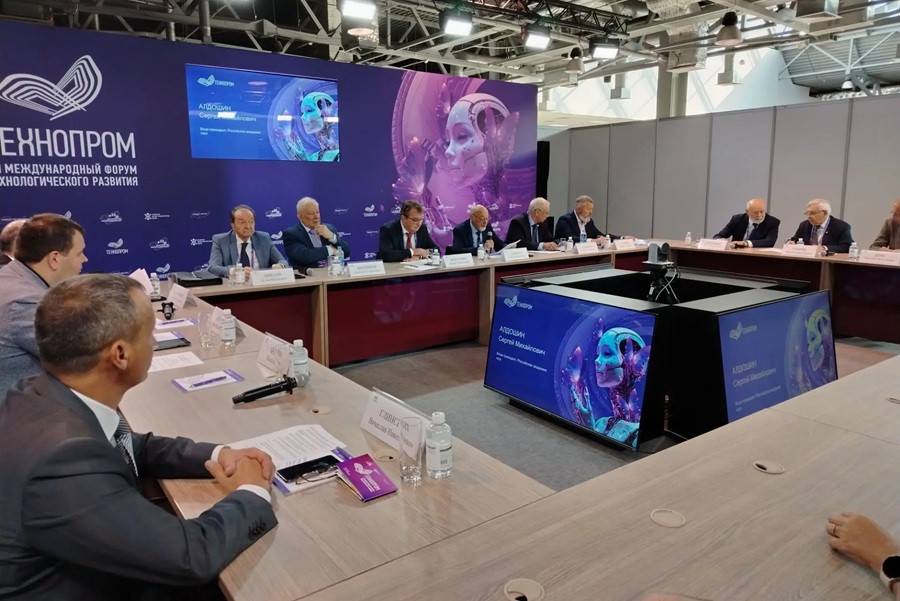
Russian scientists and industry representatives have called for centralized planning of the rare-earth metals cluster being developed in Siberia, arguing that uncoordinated market decisions could produce excess capacity, unwanted minerals and gaps in processing. The proposals were presented at a round table on Siberia’s critical metals during the Technoprom forum, according to Infopro54.
Nikolai Kruk, director of the V.S. Sobolev Institute of Geology and Mineralogy of the Siberian Branch of the Russian Academy of Sciences, said the cluster is expected to require 17 new deposits. The deposits were discovered, explored and entered on the state balance sheet during the Soviet period, but reserve-accounting standards have since changed. All 17 therefore require systematic additional geological and geophysical exploration. Work is under way at seven deposits, while mining licenses have been issued for five.
Kruk said every deposit contains a range of useful components. Reliable processing routes are still unavailable for some minerals, leaving operators to choose between discarding certain mineral phases, developing separate processing lines for each mineral or adopting integrated extraction methods. He argued that planning must cover exploration, reserve estimates, mine design and processing technology.
Investment rises as accessible deposits become scarcer
Aslambek Germakhanov, deputy head of the Federal Agency for Subsoil Use, said Siberia contains 3,400 of the 20,000 deposits registered in Russia and leads the country in reserves and production of the main strategic minerals. Subsoil users invested about 100 billion rubles in geological exploration in 2025. During the year, 50 solid-mineral deposits and two hydrocarbon deposits were discovered in Siberia, while reserves of gold, silver, titanium, apatite ore and coal increased.
Sergei Aldoshin, vice-president of the Russian Academy of Sciences, said Russia does not lack most of the mineral resources it currently imports. The constraint is a shortage of commercially viable reserves, compounded by deeper exploration targets, declining stocks at readily discoverable deposits and the movement of extraction into remote areas with weak infrastructure. He said new technologies could make previously uneconomic deposits viable and support reserve reassessments at operating mines.
Tomtor is among the assets under discussion. Nikolai Pokhilenko, scientific director of the Sobolev Institute, highlighted its niobium and niobium oxides, scandium and manganese, as well as prospects for gold, platinum and large diamonds. He proposed restoring a state system for regional and early-stage exploration programs, with specialist institutes participating more actively.
Demand and processing capacity remain unresolved
Kruk said the cluster’s economics depend on estimating the requirements of Russian processors before deposits and production volumes are selected. Primary-processing capacity must also be aligned with demand to avoid generating large surpluses of metals that cannot be sold. The issue is particularly important because the planned deposits are polymetallic rather than dedicated sources of a single rare-earth product.
Andrei Goliney, director of the chemical technology division at Rosatom Science and head of Giredmet, said Russia also needs to identify industries capable of driving domestic consumption. He cited electronics, alternative energy and electric vehicles as global demand drivers, while noting that coordinating domestic consumption and downstream processing is a difficult task.
Other constraints include access to licensed deposits for researchers and the industry’s workforce. Academician Nikolai Goryachev proposed giving institutes and universities conducting state assignments a legal route to collect material at licensed sites, subject to operators’ requirements, and suggested regional analytical centers in Khabarovsk, Irkutsk and other cities. Pokhilenko said the geological industry employed about 62,000 people in 2021-2022, of whom nearly 19,000 performed field geology work. The proposed planning model would have to connect these scientific and labor resources with investment, mine development and future processing demand.
Full market analysis