Romania trails EU wheat exporters early in 2026/27 season but leads in barley
Romania has started the 2026/27 marketing season with a modest pace of wheat exports and has been overtaken by several EU suppliers, Agrointeligența reports. The country nevertheless remains the bloc’s leading barley exporter after ending the previous season as its top wheat supplier.
Wheat shipments lose momentum
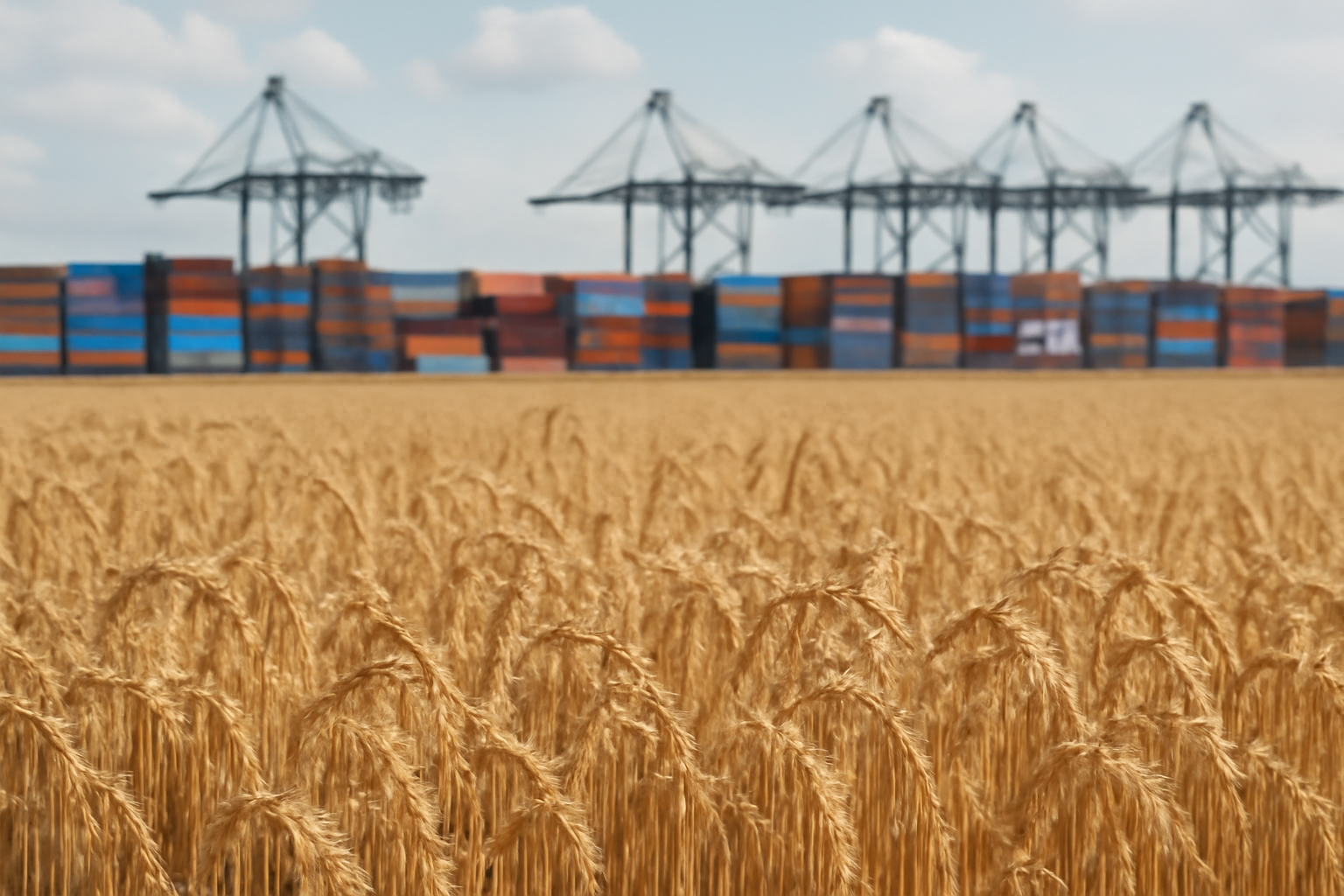
Romania has made a slower start to the 2026/27 wheat export season than several other European Union suppliers, according to Romanian agricultural publication Agrointeligența. The early ranking marks a reversal from the country’s performance in 2025/26, when it finished as the EU’s largest exporter of soft wheat.
Agrointeligența previously reported that Romania exported 7.26 million tonnes of soft wheat in 2025/26. France followed with 5.56 million tonnes, while Poland shipped 3.26 million tonnes, Germany 2.30 million tonnes and Lithuania 2.18 million tonnes. Total EU soft-wheat exports reached 23.17 million tonnes, 8% more than in the preceding season.
The opening weeks of a marketing year do not determine the final ranking. Shipment timing can reflect harvesting schedules, grain quality, contracting decisions and the availability of transport. The current figures nevertheless show that Romania is not carrying its previous wheat lead into the new season at the same initial pace. Exporters will need to compete for sales while other EU origins and Black Sea suppliers are also bringing new grain to market.
Barley provides a stronger opening
Romania remains the EU’s leading barley exporter at this stage of 2026/27, giving its grain trade a contrasting result. The position is notable because Romania ended 2025/26 in second place for barley exports, with 2.05 million tonnes. France led that season with 3.09 million tonnes, followed by Romania, Germany with 1.45 million tonnes and Denmark with 1.19 million tonnes.
Across the EU, barley exports reached 8.70 million tonnes in 2025/26, an increase of 68% from the previous season, according to figures cited by Agrointeligența. Romania’s current lead therefore comes in a segment that expanded sharply last year and remains important for suppliers serving feed-grain buyers.
The country also enters the season with substantial production potential. Agrointeligența reported that the US Department of Agriculture’s July outlook kept Romania’s 2026/27 crop estimates unchanged at 11 million tonnes of wheat from 2.25 million hectares and 3.2 million tonnes of barley from 635,000 hectares. These are production forecasts rather than confirmed harvest or export volumes, but they indicate the supply base available to traders if crop quality and logistics support shipments.
Competition shifts to execution
Romania’s split position highlights how performance can differ between crops even when they share the same ports and inland transport network. A weak early wheat ranking may affect the pace at which producers and merchants place newly harvested grain, while leadership in barley can support handling volumes and commercial activity.
The comparison with 2025/26 also sets a demanding benchmark. Romania moved 7.26 million tonnes of soft wheat abroad during that season and held a wide lead over France. Repeating that result will depend on sales over the full marketing year, not the first weeks alone.
For processors, traders and importers, the key issue is whether the current divergence persists. Romania has enough forecast wheat and barley production to remain a major EU supplier, but the early data suggest that barley is currently converting that supply position into exports more quickly. Wheat exporters still have most of the season to recover ground, although competing origins have established the initial advantage.