Romania’s Table-Grape Area Falls by More Than 24,000 Hectares
Romania’s table-grape area has fallen from more than 30,000 hectares in 1989 to about 6,000 hectares in 2026, leaving domestic production unable to meet local demand. Producers also face rising input and fuel costs as consumer preferences shift toward seedless varieties.
Area contracts to about 6,000 hectares
Romania’s table-grape area has fallen by more than 24,000 hectares in less than four decades, reducing the country’s capacity to supply its domestic market. Observatorul Prahovean reported that Romania had more than 30,000 hectares under table grapes in 1989, compared with only about 6,000 hectares in 2026.
The remaining area is insufficient to produce all the grapes required by Romanian consumers, according to Cristina Fabian, an adviser at the Ministry of Agriculture. She said support for growers would be necessary to avoid massive table-grape imports, although further measures would also require interest and initiative from producers.
The contraction presents an increasingly difficult market equation. Romania depends on imported grapes to cover the domestic supply gap, while local growers report higher costs and problems selling their harvests. That combination limits the incentive to establish new vineyards even though national production remains below consumption needs.
Production costs squeeze local growers
The harvest presented at the table-grape competition in Valea Călugărească offered a snapshot of current commercial production. Horticultural engineer Ionuț Dobrinoiu manages a 20-hectare table-grape plantation and entered the Moldova variety. His operation produced approximately 25 tonnes per hectare this year, a level he described as good, but he said cultivation was becoming more difficult as input and fuel prices rose and demand appeared to weaken.
Private investment has nevertheless modernized part of the sector. Constantin Badea, director of ADI Ținutul Vinului Prahova, said European funds had helped finance vineyard replanting, strong plantations and modern technology. He argued that more decisive action was now required from public authorities. The challenge for policymakers is to expand domestic capacity without overlooking the commercial pressures already affecting existing growers.
Seedless varieties gain ground
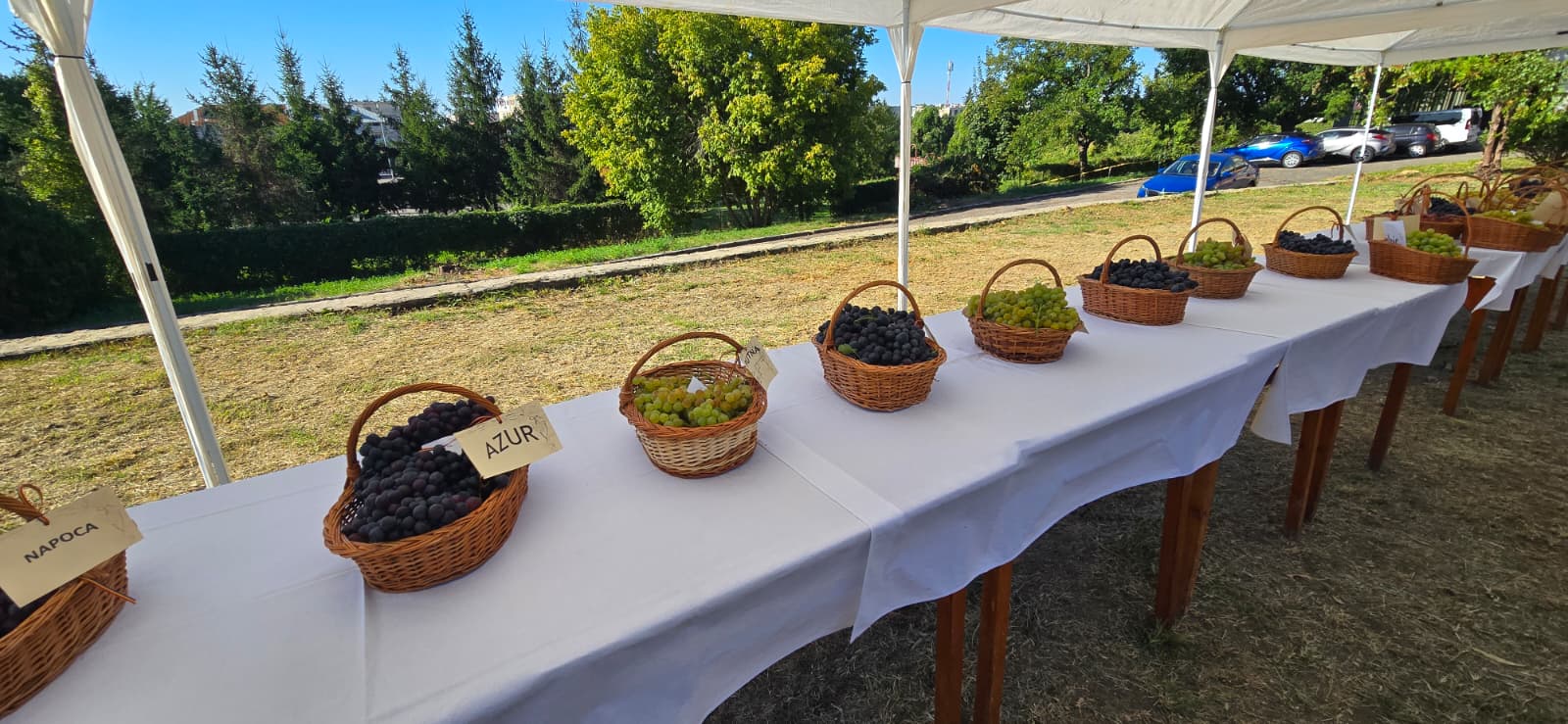
The 11th table-grape competition and exhibition at Valea Călugărească, held on 10 September, brought together more than 26 producers and research organizations from several Romanian wine-growing regions. Organizers received 113 entries, which were assessed blind under identification numbers. The event was organized by the Valea Călugărească Research and Development Institute for Viticulture and Winemaking and the Gheorghe Ionescu-Șișești Academy of Agricultural and Forestry Sciences, in cooperation with the Romanian Horticulturists’ Society.
The entries also highlighted changing consumer tastes. Ion Marin, director of the Valea Călugărească institute, said internationally sourced seedless varieties, including American cultivars, were attracting attention because they had no seeds. Although Romania has established domestic varieties such as Victoria, the competition showed that growers must consider a market increasingly oriented toward seedless grapes.
Radu Cristian, a producer from Săhăteni in Buzău County, took first place in the seedless category with the Avatar variety. The result underlined the sector’s two connected tasks: recovering some of the acreage lost since 1989 and choosing varieties that can compete for current retail demand. New planting alone will not resolve Romania’s supply deficit if growers cannot manage production costs or sell varieties that consumers want.