Rising Production Costs Expected to Push Up Supermarket Chicken Prices
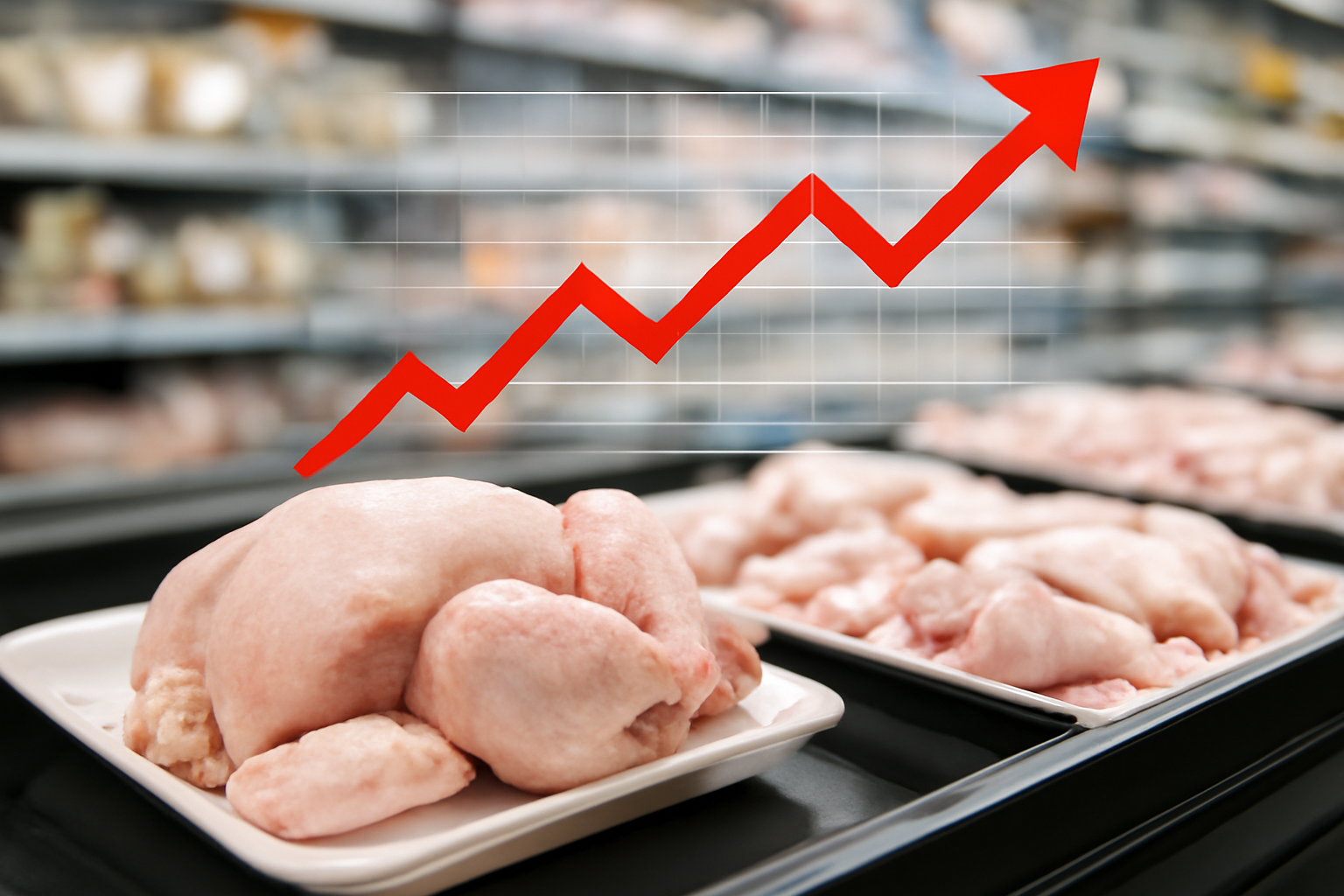
Chicken prices are expected to rise as increasing production costs reach supermarket shelves, regardless of whether avian influenza spreads into meat-poultry flocks. The scale of the increase will depend on how producers and retailers absorb or pass through those costs.
Production costs drive the price outlook
Supermarket chicken prices are expected to rise as increasing production costs put pressure on the poultry supply chain. The outlook does not depend on avian influenza spreading into flocks raised for meat: higher underlying expenses alone are expected to make chicken more costly for consumers.
The available information does not identify the individual cost categories behind the increase or quantify the likely movement in retail prices. It nevertheless points to a broad margin challenge for chicken producers, processors and retailers. Each business must decide how much of the additional expense it can absorb and how much it must pass through to its customers.
Bird flu remains an additional supply risk
The separation between production costs and avian influenza is important for the market. If the disease does not spread into the chicken-meat industry, consumers may still face higher prices because the cost base has already increased. A favourable disease outcome would therefore remove one potential disruption without reversing the pressure coming from production expenses.
If avian influenza does reach meat-poultry flocks, it could add a supply-side problem to the existing cost pressure. The source material provides no figures for affected birds, production losses or expected price effects, so the potential impact cannot be measured. For market participants, the central point is that bird flu represents an extra risk rather than the sole explanation for the anticipated retail increase.
Margins and demand come under scrutiny
Producers and processors face a difficult pricing decision. Passing higher costs through the chain can protect margins, but a larger supermarket increase may weaken consumer demand. Absorbing the increase can help preserve sales volumes, yet it leaves suppliers and retailers carrying more of the financial burden. The eventual outcome will depend on pricing decisions across the chain rather than on disease conditions alone.
Importers and exporters will also need to monitor whether the cost increase changes the competitiveness of domestic and foreign chicken, although no trade-flow data or countries were provided. Buyers will be watching retail prices, supplier margins and any evidence that consumers are switching their purchasing patterns. Without quantified cost, production or trade data, it is not possible to determine which segment will bear the largest share.
Two pressures must be assessed separately
The immediate market signal is straightforward: chicken can become more expensive even without a bird-flu shock. Production costs provide the baseline pressure, while avian influenza could intensify the situation if it disrupts meat-poultry supply. Treating the two factors separately gives producers, traders and retailers a clearer view of their exposure.
For consumers, the key issue is how quickly higher production expenses appear on supermarket shelves. For businesses, the questions are whether price increases will cover costs and whether demand will hold at the new level. The source material gives no timetable or price forecast, but it indicates that stable poultry health alone will not be enough to prevent chicken prices from rising.