Red Sea and Hormuz Disruptions Strand Nearly 0.5 Million Tonnes of Indian Basmati at Ports
Nearly 0.5 million tonnes of Indian basmati rice are stuck at ports as traffic through the Bab al-Mandab and the Strait of Hormuz remains disrupted. The bottleneck, tied to the unresolved US-Iran dispute, is set to raise the price of Indian rice for foreign buyers.
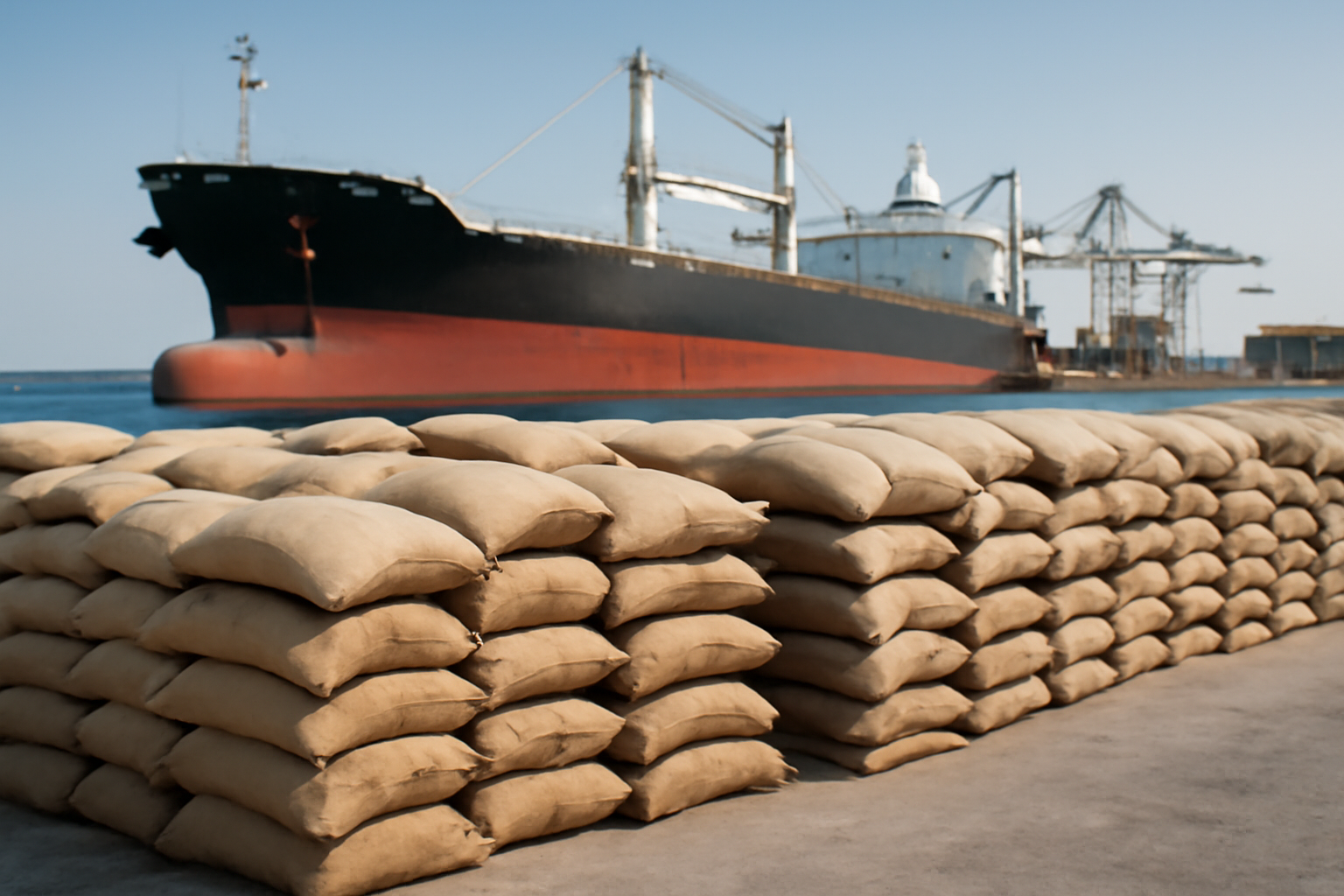
Half a million tonnes of basmati stranded
Nearly 0.5 million tonnes of Indian basmati rice are stuck at ports as disruption spreads across two of the world's most important shipping lanes: the Bab al-Mandab at the southern end of the Red Sea and the Strait of Hormuz. Traffic through both waterways has not been fully restored, leaving exporters unable to move cargoes booked for delivery to overseas buyers.
The blockage matters because these corridors carry the bulk of India's basmati trade toward Middle Eastern markets. With vessels rerouted or held back, shipments that would normally clear within days are piling up at loading points, and the backlog keeps growing the longer the standoff lasts. Industry concern is now spilling over into worries about wider global trade in the grain.
US-Iran tensions keep the routes closed
The disruption is tied to the unresolved dispute between the United States and Iran, which continues to weigh on movement through the Strait of Hormuz and the Red Sea. Until traffic normalizes, exporters have little room to reroute cargo without adding days at sea and extra cost to every shipment.
For Indian exporters the timing is awkward. Basmati is a premium product sold largely into markets that sit on the far side of these waterways, and there are few alternative routes that do not lengthen the voyage. Cargo already committed and loaded cannot easily be redirected, which is why volumes are accumulating at ports rather than finding a way around the chokepoints.
Why the chokepoints matter
The Strait of Hormuz and the Bab al-Mandab are narrow passages through which a large share of India's rice heading west must pass. When either is impaired, the effect is felt quickly along the entire supply chain, from the mill to the loading berth to the buyer's warehouse. There is no quick substitute for waterways of this scale.
Foreign buyers face higher costs
The immediate consequence is a higher landed price for buyers abroad. Longer voyages, higher freight and insurance premiums, and the cost of holding stranded stock all feed into the final price of Indian rice reaching foreign markets. Purchasers who rely on Indian basmati have limited near-term alternatives, since the origin and the quality are not easily replaced.
- Roughly 0.5 million tonnes of basmati are waiting at ports.
- Two key routes, the Bab al-Mandab and the Strait of Hormuz, remain only partially open.
- Rising freight and handling costs are being passed through to overseas purchasers.
How long the pressure lasts depends on when normal traffic resumes through both waterways, and that in turn hinges on the course of the US-Iran dispute. Until then, stranded volumes, stretched delivery times and firmer prices are likely to define India's basmati trade. For exporters the risk is not only delayed revenue but also the reputational cost of missed delivery windows in competitive premium markets.