Punjab farmers march against proposed India-US trade deal as police seal Shambhu highway
Punjab farm groups set out for a protest in Delhi against the proposed India-US trade agreement but were stopped at the Shambhu border. Unions fear cheaper US corn, soybean, cotton and dairy imports could depress domestic prices, while the Indian government says sensitive agricultural products will remain protected.
Farmers stopped on route to Delhi
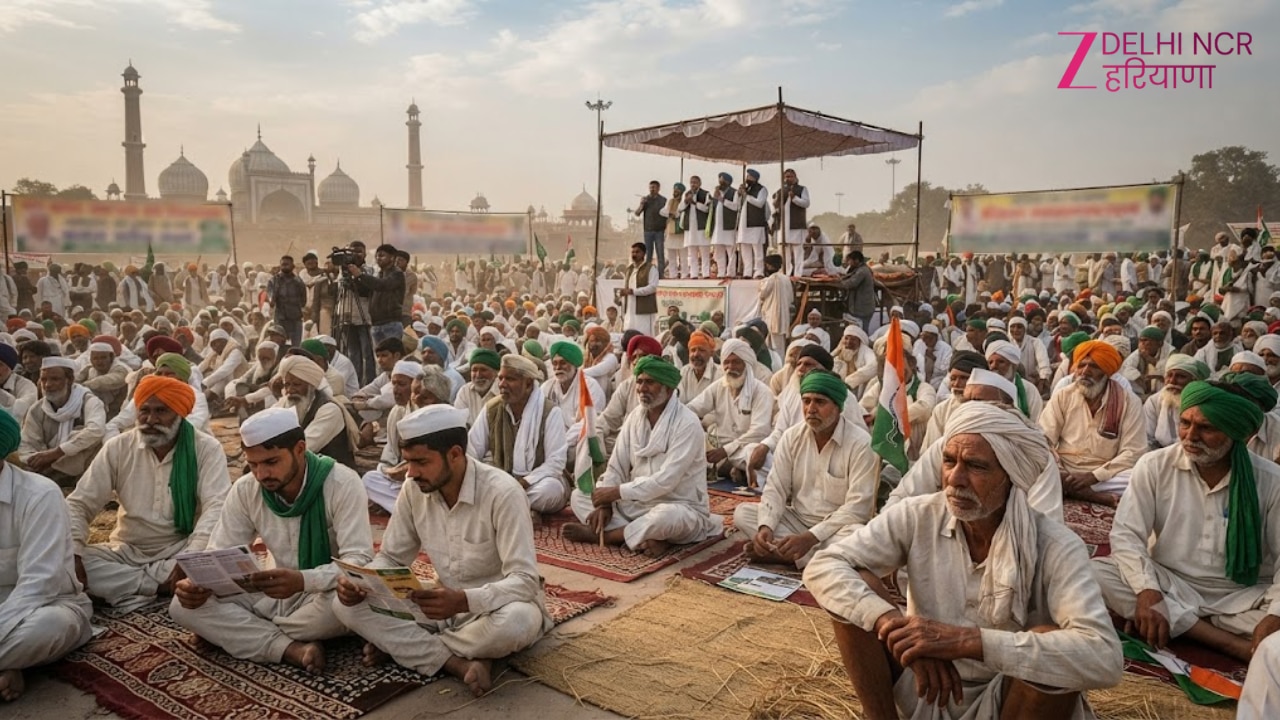
Farmers from Punjab heading to Delhi to protest a proposed India-US trade agreement were stopped by Haryana police at the Shambhu border, where authorities sealed the highway in both directions. The groups intended to join a farmers’ assembly at Kisan Ghat in Delhi on 21 July, called by the Desh Bachao Morcha.
Jagran reported that farmers had begun gathering in Fatehgarh Sahib and Khanauri on Monday night. A convoy of buses, jeeps, minibuses and private vehicles left Fatehgarh Sahib at 6 a.m. on Tuesday under the leadership of Sarwan Singh Pandher, coordinator of the Kisan Mazdoor Sangharsh Morcha. Police had placed barricades on the highway by 5:30 a.m.
Pandher said the farmers did not want a confrontation. He announced that if they were not allowed beyond Shambhu, they would hold a peaceful roadside protest there until 4 p.m. He described the Delhi gathering as a one-day programme and criticised restrictions on farmers seeking to demonstrate in the national capital.
Import competition drives opposition
The unions’ central objection concerns the possible inclusion of agriculture and dairy in the prospective agreement. According to Jagran, farmers fear that cheaper corn, soybean, cotton and dairy products from the United States would lower prices in the Indian market and cause substantial losses for Punjab’s producers.
Zee News reported that farm organisations see heavily subsidised US agricultural products as a particular risk if India sharply reduces import duties. Their concerns extend to dairy farming, cotton production—especially long-staple cotton—and other agricultural commodities whose domestic prices could face pressure from additional supply.
Some organisations also fear that negotiations could lead India to relax policies covering genetically modified crops, public procurement or minimum support prices. The protest comes as farmers are already demanding a legal guarantee for the minimum support price system, according to Jagran.
Government says sensitive sectors are protected
The Indian government disputes the unions’ assessment. Zee News, citing the Union Agriculture Ministry, said soybean, rice, wheat, sugar, poultry, dairy products, fruit and vegetables have been completely excluded from tariff concessions because they are considered sensitive agricultural products.
The government has also said that genetically modified products will not be permitted to enter the Indian market. It argues that the agreement could instead give Indian agricultural goods and spices easier, duty-free access to the US market, potentially creating opportunities for domestic producers.
The contrasting positions leave market access at the centre of the dispute. Farmers are focused on the risk that tariff reductions could expose local producers to subsidised US competition, while the government emphasises exclusions for sensitive goods and prospective export access. The final consequences for processors, traders and growers will depend on the agreement’s actual tariff schedules, product exclusions and agricultural rules, none of which were detailed in the reports.