Polish sugar prices fall as German retail prices rise
Sugar prices in Poland and Germany are moving in opposite directions, according to the supplied material. German shelf prices are rising, while Polish prices are falling sharply and putting pressure on the finances of domestic producers.
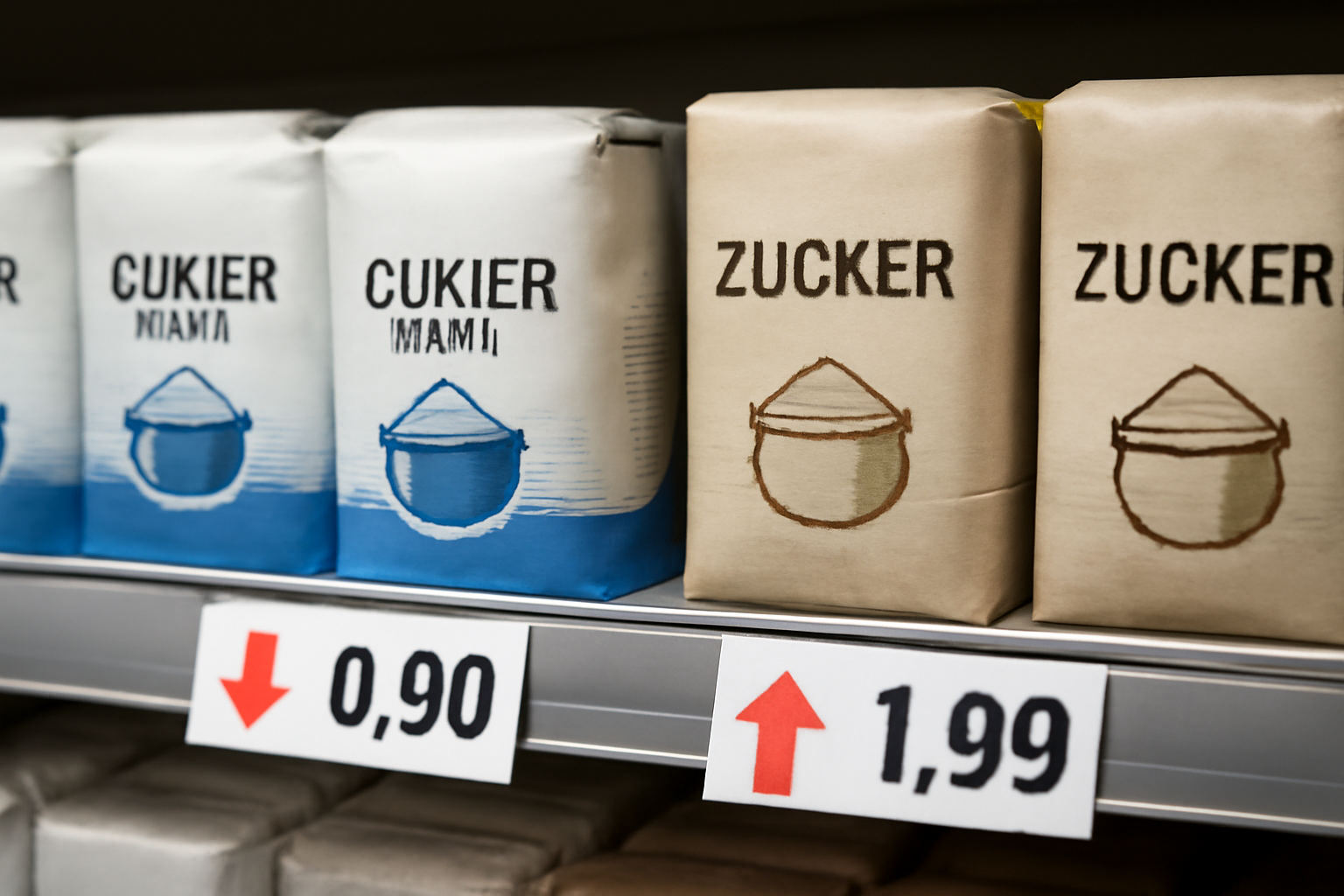
Prices move in opposite directions
The Polish and German sugar markets are showing a sharp price divergence. According to the supplied Polish-language report, prices on German retail shelves are rising, while prices in Poland are falling steeply. The decline is putting pressure on the finances of Polish sugar producers and creating markedly different conditions in two neighboring markets.
The available material does not provide specific price levels, percentage changes or a time series for either country. It nevertheless describes the difference as an unprecedented price anomaly for the Polish market. The central issue is therefore not simply that sugar is priced differently across the border, but that the direction of travel has also split: upward in German stores and downward in Poland.
Polish producers face financial pressure
For Polish producers, a steep fall in the domestic price weakens revenue generated from each unit of sugar sold. The source material says the decline is already hitting their finances. Without disclosed figures for production costs, margins or sales volumes, the full scale of that pressure cannot be calculated from the information available.
The divergence also matters for processors, distributors and buyers negotiating contracts. A falling Polish price can benefit domestic purchasers in the short term, but it leaves suppliers with less room to absorb operating costs or further price reductions. German retailers and consumers, meanwhile, are seeing the opposite movement at shelf level. The material does not establish whether the gap originates in production, wholesale markets, retail pricing or another part of the supply chain.
Cross-border comparison raises market questions
Poland and Germany provide a useful comparison because the same commodity is moving in different directions in adjacent national markets. That contrast may influence negotiations among producers, processors, retailers and commercial buyers, particularly when counterparties use prices in the neighboring country as a benchmark. However, the supplied report contains no data on cross-border shipments, inventories, beet output, factory capacity or contractual terms, so it does not support a definitive explanation for the split.
Industry participants will need more detailed evidence before determining whether the divergence is temporary or persistent. Relevant indicators would include producer and retail prices over comparable periods, processing economics, stocks, contracted volumes and flows between Poland, Germany and other markets. For now, the confirmed picture is narrower but commercially significant: German shelf prices are increasing, Polish prices are dropping sharply, and Polish producers are bearing the financial pressure created by the domestic decline.