Polish Beef Exporters Target Growth in Japan and Hong Kong
Poland is seeking to expand beef sales to Japan and Hong Kong through direct engagement with Asian importers, processors and distributors. Agrifood exports to the two markets increased in the first half of 2026, but further growth will depend on sanitary compliance, reliable supply and new commercial contracts.
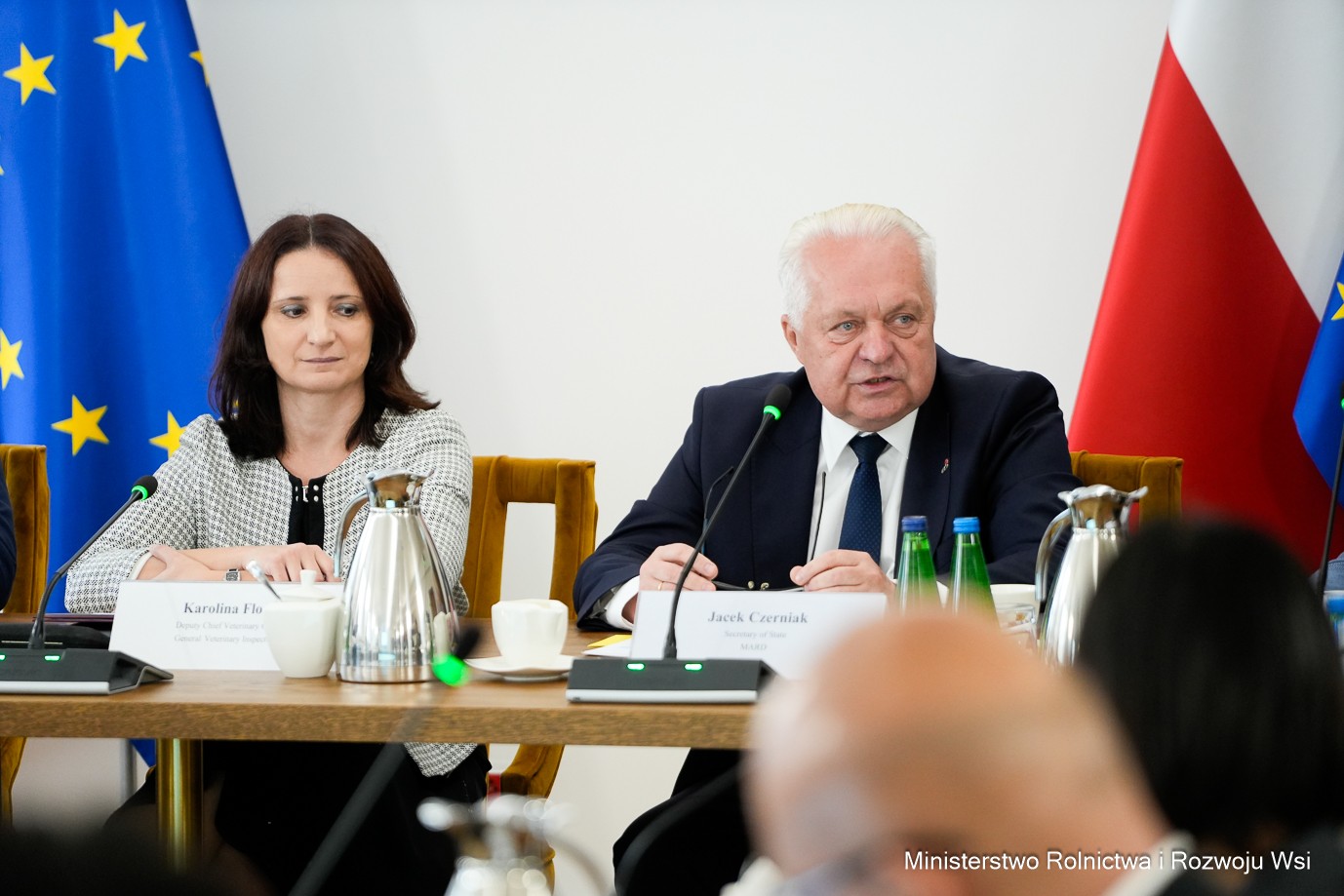
Poland presents its beef offer to Asian buyers
Poland is seeking to increase beef sales to Japan and the Hong Kong Special Administrative Region as its meat industry looks for more customers outside the European Union. According to Agronews, representatives of Asian companies involved in purchasing, importing, processing and distributing meat met officials at Poland’s Ministry of Agriculture and Rural Development to discuss trade opportunities and longer-term commercial relations.
State Secretary Jacek Czerniak presented the export potential of Polish meat companies during the meeting. He said Japan and Hong Kong were already important buyers of Polish meat and that beef held a significant position among Poland’s agrifood products sold in those markets. The ministry expects direct contact with importers to support further trade growth, although no contracts or prospective shipment volumes were announced.
The discussions also included Deputy Chief Veterinary Officer Karolina Florek and Paweł Zaręba, head of the Asia Division at the National Support Centre for Agriculture’s Export Support Department. Their participation reflects the two practical requirements behind any expansion: securing commercial partners throughout the supply chain and maintaining regulatory approval for products of animal origin.
Agrifood exports rise in both markets
Polish agrifood exports to Japan exceeded €38.5 million in the first six months of 2026, compared with €37.2 million in the same period a year earlier, Agronews reported. That represented growth of about 3.5%. The figures cover agrifood products rather than beef alone, so they indicate the broader development of the market without establishing the value or volume of Polish beef shipments.
Growth was faster in Hong Kong. Polish agrifood exports to the market reached more than €27.7 million in the first half of 2026, up from €23 million a year earlier, an increase of about 20%. The stronger rise makes Hong Kong an increasingly relevant destination for Polish food suppliers, but the available figures do not show which products accounted for the additional sales.
For the beef industry, adding stable buyers outside the EU could broaden the customer base for domestic production and reduce exposure to changes in European demand. Japan and Hong Kong are especially attractive because parts of their consumer markets are prepared to pay more for high-quality meat. Polish suppliers are consequently positioning beef as a premium European product rather than competing only on shipment volume.
Market access must translate into contracts
Japan’s requirements for food safety, animal health, traceability and product quality make access commercially valuable but operationally demanding. A presence in that market can strengthen the reputation of Polish premium food in Asia, yet exporters must continue meeting veterinary and sanitary conditions. Compliance is therefore not a one-time market-entry exercise but a condition for maintaining regular deliveries.
Regulatory access alone does not guarantee sales. Exporters still need importers, distributors, processors and end customers willing to commit to repeat purchases. The visiting delegation represented companies across these stages of the supply chain, giving Polish suppliers an opportunity to discuss how products could move from procurement and import clearance to processing and local distribution.
The visit was organized by the Union of Producers and Employers of the Meat Industry under the EU-co-financed program “European Beef on Asian Markets — Continuation.” The next commercial test will be whether the meetings produce new contracts and larger beef shipments. Without disclosed agreements, the first-half export growth provides a positive market signal, but not yet evidence of a material expansion in Polish beef sales.