Poland targets Sudan for grain, sugar, dairy and egg exports
Poland is seeking to expand agricultural and food exports to Sudan beyond tobacco, which currently dominates sales. Exports totaled only €867,000 in January-July 2026, while unresolved health certificates still restrict dairy and egg shipments.
Poland seeks a broader foothold in Sudan
Poland is seeking to increase its presence in Sudan’s agricultural and food market, with grain, sugar, dairy products and eggs identified as potential areas for expansion. The initiative is at an early stage: Polish agri-food exports to Sudan were worth only €867,000 between January and July 2026, according to Polish agricultural news publication AgroNews.
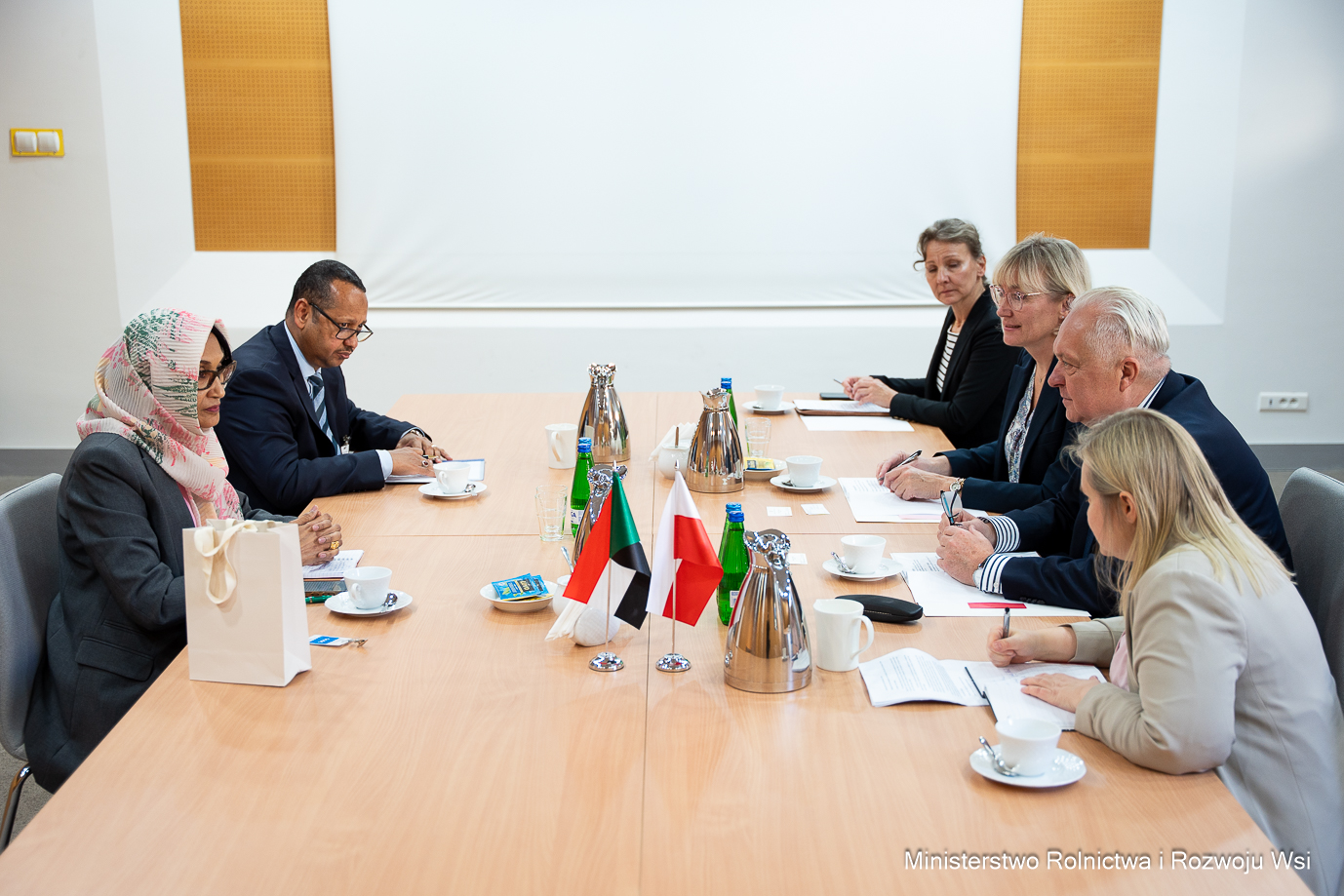
The export push was discussed by Jacek Czerniak, state secretary at Poland’s Ministry of Agriculture and Rural Development, and Sudan’s ambassador to Poland, Ilham Ibrahim Mohamed Ahmed, who is based in Berlin. Their meeting focused on closer agricultural cooperation and ways to increase the availability of Polish food products in Sudan.
Czerniak highlighted Poland’s position as a major European producer of grain and sugar. The government sees non-European Union markets as an outlet for producers and processors seeking a wider range of customers. Sudan is among the destinations where Polish exporters currently have only a limited presence.
Current sales remain concentrated in tobacco
The €867,000 recorded in the first seven months of 2026 shows the small scale of the existing trade relationship. AgroNews reported that tobacco accounted for the largest part of Polish agri-food sales to Sudan, leaving grain, sugar, milk, dairy products, eggs and egg products with largely unrealized potential.
That starting point creates room for growth, but it also underlines the commercial challenge. Poland is not expanding an established, diversified food trade; it is trying to build new sales channels in categories that currently make only a limited contribution. Exporters will need buyers, workable logistics and regulatory clearance before Poland’s production capacity can translate into shipments.
For grain and sugar suppliers, the talks represent an effort to diversify beyond the EU. No prospective shipment volumes, contracts, prices or implementation timetable were disclosed. The discussions therefore indicate government interest and possible market access rather than confirmed new trade flows.
Health certificates are the immediate hurdle
Animal-origin products face an additional obstacle. Poland wants to complete negotiations on health-certificate templates for milk and dairy products, as well as table eggs and egg products. Without agreed veterinary requirements and documentation, companies cannot obtain practical access to the Sudanese market even if commercial demand exists.
Completing those procedures is consequently one of the most immediate steps in the export effort. Dairy and egg processors could only begin developing regular sales after the relevant authorities agree on the certificates and exporters can demonstrate compliance with Sudanese requirements.
The two sides also discussed institutional, scientific and expert cooperation in agriculture, including exchanges of knowledge and contacts between relevant organizations. Poland’s agriculture ministry said it and its supervised institutions were ready to continue the dialogue and pursue joint projects responding to both countries’ needs. For now, however, the measurable trade base remains €867,000, and any broader opportunity for Polish food suppliers depends on turning diplomatic discussions and technical negotiations into effective market access.