Poland’s smart meter rollout exposes oversight gaps around Chinese-linked suppliers
Poland is financing the installation of nearly 5 million additional smart electricity meters as it works toward universal coverage by July 2031. Energetyka24 reports that Chinese-linked suppliers participate in the market, while Poland lacks a single state system for comprehensive supplier-risk assessment.
Nearly 5 million additional meters
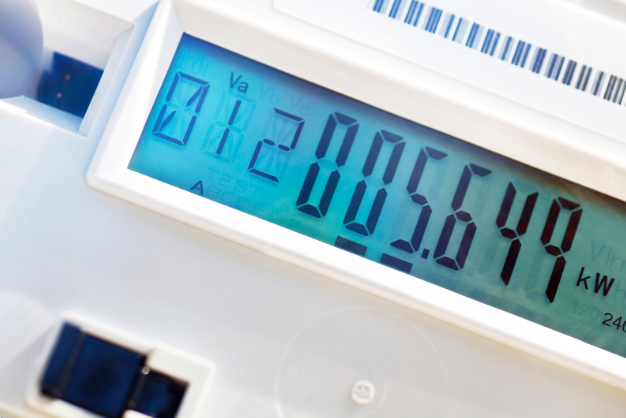
Poland’s expansion of smart electricity metering is bringing supplier ownership, software control and cybersecurity oversight under closer scrutiny. According to Energetyka24, almost 10 million smart meters are already operating in the country, while projects supported by approximately 1 billion złoty in public funding are intended to accelerate the installation of nearly 5 million more. All final electricity customers are due to receive remotely read meters by July 2031.
The National Fund for Environmental Protection and Water Management signed funding agreements with five major distribution system operators: Energa Operator, PGE Dystrybucja, Tauron Dystrybucja, Enea Operator and Stoen Operator. Their suppliers include Polish and European manufacturers as well as companies linked to Chinese capital. Foxytech is 60% controlled by China’s Ningbo Sanxing Smart Electric, part of Ningbo Sanxing Electric. Elgama-Elektronika, Esmetric Group has capital links to Jiangsu Linyang Energy.
Market share remains difficult to measure
There is no official statistic showing how many Chinese-made meters are installed in Poland, and Energetyka24 says the precise presence of individual non-EU manufacturers is difficult to establish. Industry estimates cited by the publication suggest that close to half of Poland’s installed devices of this type come from producers outside the European Economic Area. Chinese ownership alone does not establish that equipment is unsafe, but it adds a legal and governance factor to procurement reviews.
Operators also buy from European suppliers. In a tender covering approximately 3 million meters and worth around 1.3 billion złoty, Enea Operator selected Politech and Iskraemeco, Sagemcom Poland, Poland’s Apator and Landis+Gyr. The mix illustrates that procurement decisions cover competing manufacturers, ownership structures and supply chains rather than a single national source.
Risk extends beyond the household device
Smart meters form part of advanced metering infrastructure, or AMI, which also includes data concentrators, communication networks and operators’ central systems. Meter data is ultimately intended to flow into Poland’s Central Energy Market Information System, known as CSIRE. Some AMI systems can support remote connection and disconnection, although Energetyka24 notes that not every meter has this function and the devices are not necessarily accessible directly from the internet.
Adam Jawor, a retired counterintelligence reserve colonel, told Energetyka24 that compromising infrastructure communicating with large numbers of meters could have more serious consequences than taking over one device. Mirosław Maj, president of the Safe Cyberspace Foundation and a board member of the Open CSIRT Foundation, said operators need visibility into the full component supply chain and technical control over firmware updates and remote access. He argued that distribution operators, rather than manufacturers, should be able to decide who updates installed equipment.
New law provides a tool, but not a unified review
An amendment to Poland’s national cybersecurity system law, effective from 3 April 2026, introduced a high-risk vendor procedure. It allows the Minister of Digital Affairs, after consulting the Cybersecurity Council, to classify a hardware or software supplier as high risk. The assessment can consider ownership, dependence on a third country, potential state interference and control of manufacturing and delivery. Restrictions may cover specified products and affect some equipment already in use.
Energetyka24 nevertheless reports that Poland currently has no single government system comprehensively assessing suppliers of equipment entering energy infrastructure. China’s 2017 National Intelligence Law is part of the concern: Articles 7 and 14 require organizations and individuals to support and assist intelligence bodies. As Poland adds millions of connected devices, procurement scrutiny therefore extends from technical certification to component origin, firmware authority, maintenance access and the resilience of central communications architecture.