Poland’s shadow economy estimated at 659 billion zloty as illicit tobacco trade expands
Poland’s shadow economy is estimated at 659 billion zloty, equivalent to 18.1% of GDP, according to Warsaw Enterprise Institute data cited by Salon24. Illegal tobacco’s market share has risen to 9.7%, while unlicensed operators control about 40% of online gambling.
Shadow activity reaches 18.1% of GDP
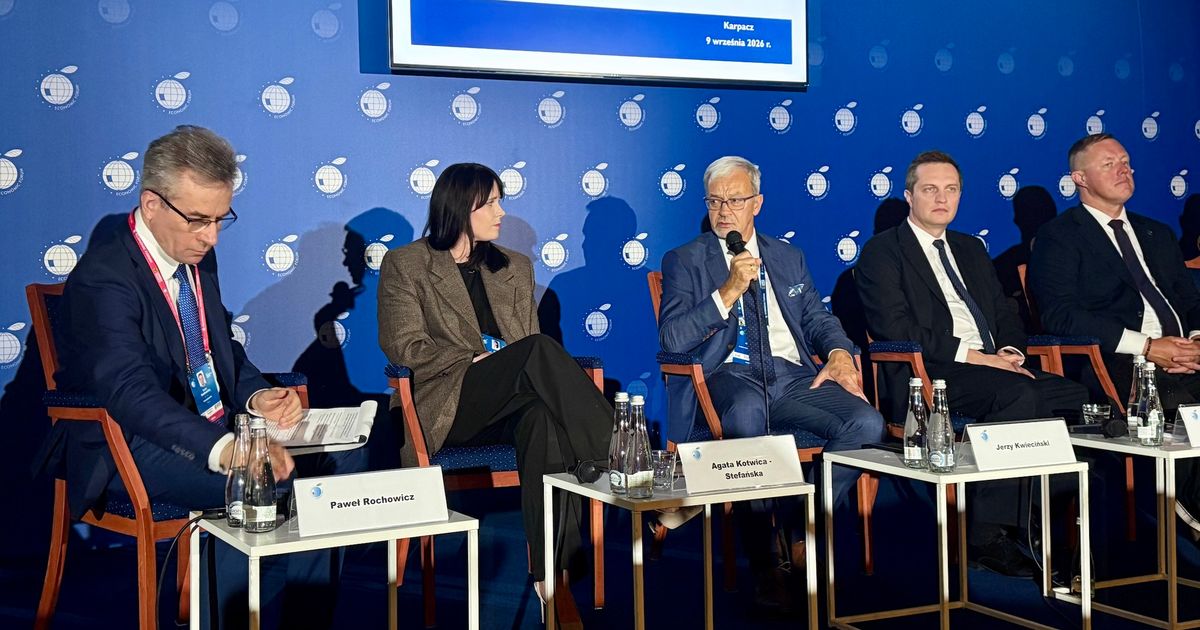
Poland’s shadow economy is estimated at 659 billion zloty, or 18.1% of gross domestic product, according to Warsaw Enterprise Institute data cited by Salon24. The figures presented during a discussion in Karpacz point to substantial illicit activity in tobacco, online gambling and the waste market, although the detailed evidence focused mainly on cigarettes and gambling.
The illegal share of Poland’s tobacco-products market has increased from 7% to 9.7%. Marek Młyński of Poland’s Central Bureau of Police Investigation, or CBŚP, said authorities had uncovered about 268 million illegal cigarettes this year, equivalent to roughly 13.4 million packs or the capacity of 20 fully loaded trucks. The seizures represent only part of the market, leaving hundreds of millions of zloty outside the state budget.
Poland is one of the world’s largest tobacco producers, ranking third or fourth, according to Młyński. That production base supplies a major legitimate industry but also provides raw material for criminal networks involved in cigarette manufacturing and smuggling.
Production moves across borders
Tobacco can be purchased legally in Poland and then transported abroad for illicit processing. The introduction of the SENT transport-monitoring system pushed part of the illegal production beyond Poland’s borders, where Polish monitoring no longer applies. Finished cigarettes without tax stamps can subsequently return to Poland or be declared as transit cargo before disappearing inside the country.
Police cooperation led to the closure of 8 illegal factories abroad in 2023, including sites in Belgium, Germany, the Czech Republic and Spain. The number fell to 4 in 2024 before rising to 11 in 2025. CBŚP data for the first half of 2026 showed fewer factories than in the same period a year earlier but larger cigarette seizures at each site, suggesting that criminal groups are concentrating production in fewer, larger and better-equipped plants.
Belarus is another source route. Młyński said the Belarusian regime and Alexander Lukashenko benefit financially from cigarette smuggling. After Poland tightened the European Union’s eastern border, smugglers increasingly used drones and balloons to move goods. Differences in EU excise rules also create enforcement gaps because goods closely controlled in one member state may receive less scrutiny in Belgium or Germany.
Tax revenue and regulated markets under pressure
Piotr Palutkiewicz of WEI linked the tobacco-market shift to an unplanned excise increase that departed from Poland’s previously agreed tax roadmap. The budget had expected more than 37 billion zloty in tobacco excise receipts but collected 33.5 billion zloty, around 3.5 billion zloty below the target, as the illegal market approached 10%. Lower legal sales also push consumers toward cheaper products outside official quality controls.
Online gambling presents a similar enforcement problem. Polish law assigns the legal casino website to the state-owned Totalizator Sportowy. Yet illegal operators still hold about 40% of the market, even after the Finance Ministry blocked more than 60,000 domains. The state monopoly consequently controls only about 60%.
Former finance and development minister Jerzy Kwieciński said the shadow economy may cost the state tens of billions of zloty annually. He argued that Poland should improve enforcement of existing law, invest in technologies including artificial intelligence for tax authorities and develop a long-term strategy. CBŚP also identified staff shortages and inconsistent EU rules as constraints, while tax-crime lawyer Agata Kotwica-Stefańska said complex legislation and evidentiary difficulties contribute to acquittals, discontinued cases and penalties that do not match criminal profits.