Poland Approves Alcohol Excise Increase From 2027, 1.4bn zł Earmarked for Health Fund
Poland's government has adopted a Finance Ministry bill raising excise duties on ethyl alcohol, beer, wine, other fermented beverages and intermediate products from 1 January 2027. Excise receipts above the 2026 level are to be transferred to the National Health Fund, with 1.4bn zł written into the act for 2027 and the same amount for 2028. The steepest increase, around 26%, falls on cider and perry below 5% alcohol.
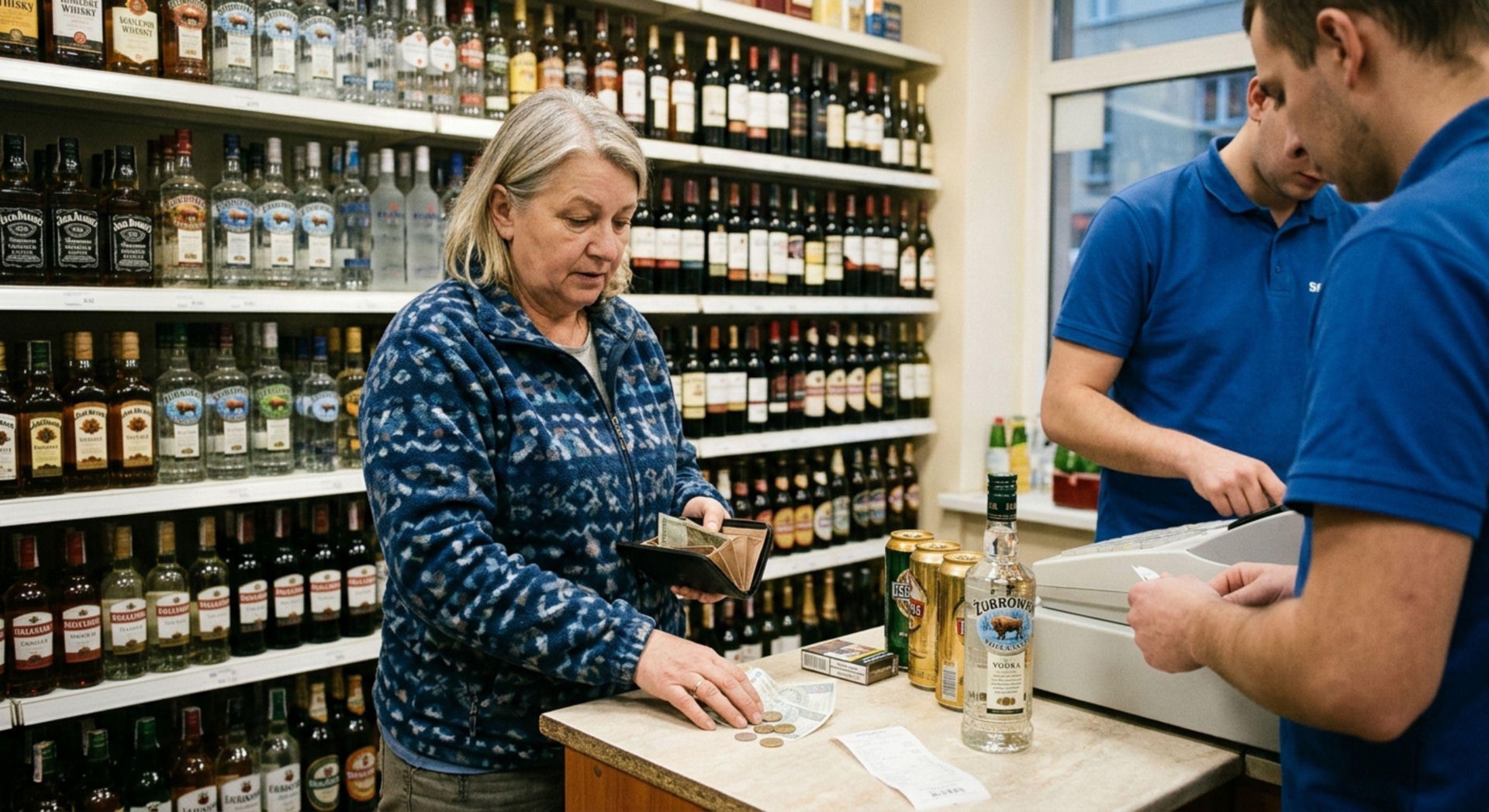
Poland's government has adopted a draft bill raising excise duties on alcoholic beverages from 1 January 2027, with part of the additional revenue channelled directly into the public health system. According to superbiz.se.pl, the bill, prepared by the Ministry of Finance, covers ethyl alcohol, beer, wine, other fermented beverages and intermediate products.
The increase applies across every major category of alcoholic drink rather than targeting a single segment, and it comes with an explicit fiscal earmark. The surplus in alcohol excise receipts above the 2026 level is to raise the subsidy paid to the National Health Fund (NFZ), with 1.4bn zł written into the act for 2027 and a further 1.4bn zł for 2028.
New rates from 1 January 2027
The largest nominal change applies to ethyl alcohol. superbiz.se.pl reports the following rates:
- Ethyl alcohol: from 8,811 zł to 10,109 zł per hectolitre of 100% alcohol
- Beer: from 12.04 zł to 13.82 zł per hectolitre for each degree Plato
- Wine and other fermented beverages: from 245 zł to 280.83 zł per hectolitre
- Intermediate products: from 490 zł to 562.93 zł per hectolitre
- Cider and perry of up to 5% alcohol: from 97 zł to 122.71 zł per hectolitre
Four of the five categories move by close to 15%. Cider and perry below 5% alcohol are the exception, with an increase of roughly 26% — the steepest in the package and the only rate that breaks the otherwise uniform treatment of the categories.
Revenue routed to the National Health Fund
The financing mechanism is defined against a baseline rather than on total receipts. Only the excess of alcohol excise revenue over the 2026 level feeds the increased NFZ subsidy, which means the size of the transfer depends on how far consumption falls as rates rise. The act provides for 1.4bn zł in 2027 and the same amount in 2028, to be used to finance healthcare services.
For producers, importers and distributors, the practical consequence is a defined step-change in tax cost on a known date, applied simultaneously to spirits, beer, wine and lower-strength fermented products. Because the rates are specific — set per hectolitre and, for beer, per degree Plato — the burden falls proportionally heavier on cheaper products, where duty accounts for a larger share of the shelf price.
The affordability argument
The government's justification rests on affordability. Official data cited alongside the bill show that in 2021 an average monthly wage bought 216 half-litre bottles of vodka, rising to 252 by 2025. For beer, the figure moved from 1,798 to 2,172 half-litre bottles, and for wine from 256 to 339 bottles of 0.75 l.
On the assumptions set out in the draft, a higher duty is intended to reduce the economic availability of alcoholic drinks and with it the harm associated with excessive consumption, while the additional receipts support the NFZ.
Pass-through and next steps
A higher excise does not mean every product will become more expensive by exactly the same amount, superbiz.se.pl notes: final shelf prices also depend on decisions taken by producers and retailers. The bill now faces the remainder of the legislative process. If it is passed and enters into force on the proposed timetable, the new rates will apply from 1 January 2027, leaving the industry roughly a year of known lead time to adjust contracts, pricing and stock positions.