Poland Has 5.5 Million Hectares in Four Major Grains, With Few Viable Alternatives
Wheat, triticale, rye and barley occupy about 5.5 million hectares in Poland, making rapid replacement impractical. Farmer.pl sees more scope to diversify away from spring grains through soybean, sunflower, pea and narrow-leaved lupin, but market access and machinery remain constraints.
Four grains dominate 5.5 million hectares
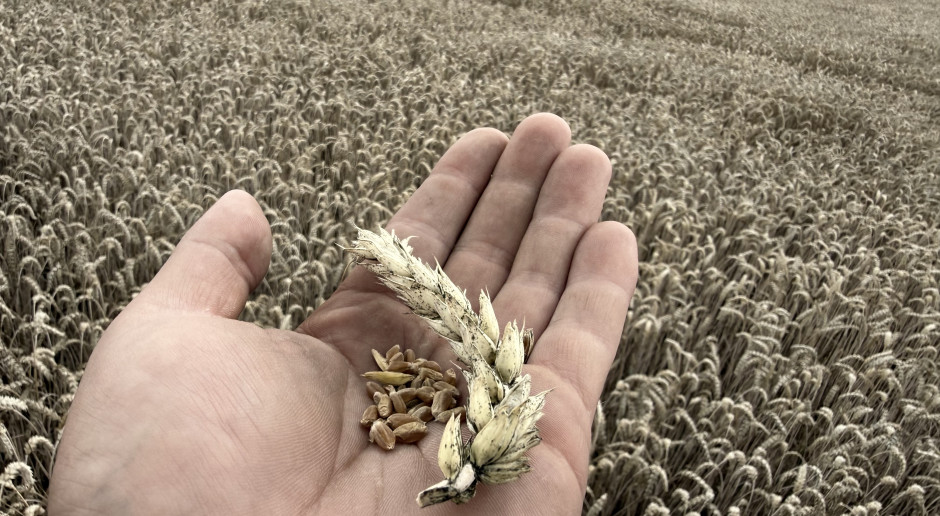
Wheat, triticale, rye and barley together cover about 5.5 million hectares in Poland, according to Farmer.pl. Wheat is the most important of these crops for Polish agriculture, while the combined area illustrates why replacing grain on a large scale would be exceptionally difficult. The issue is therefore less about eliminating cereals than about diversifying rotations and moving a limited share of land into other crops.
The scale also exposes Polish growers to intense competition. Grain is produced across a vast global area, and Polish suppliers compete for demand with much larger agricultural exporters. Wheat nevertheless remains central to global food security alongside rice. Farmer.pl argues that demand for wheat should persist unless a major collapse in the world economy disrupts supply chains, although prices in recent seasons have not kept pace with production costs.
Winter crops have no direct substitute
Poland's climatic conditions sharply limit alternatives to winter cereals. In practical terms, the country's autumn-sown conventional crops are mainly winter grains and rapeseed. Trials involving pea and oat exist, but their scale is small, and oat remains a cereal. Farmer.pl therefore sees no solid conventional crop capable of replacing winter grain across a meaningful area.
The options are broader for spring cereals. Soybean and pea cultivation has been developing rapidly, and both can improve economic diversification and crop rotation. Sunflower is another candidate for further expansion. Narrow-leaved lupin has also gained ground, appearing on more than 200,000 hectares this year. These crops are not direct substitutes for grain demand, infrastructure or agronomic function, but they can reduce cereal concentration on individual farms.
Even a 10% shift would transform land use
A hypothetical 10% reduction in the four grains would remove about 0.5 million hectares from cereal production. Farmer.pl notes that this is considerably more land than Poland currently devotes to potato and sugar beet combined. Neither crop could simply absorb the released area: expansion, particularly for potato, would require changes to farm machinery and supporting capacity.
Sales infrastructure is another limitation. Grain, especially wheat, can be delivered to almost any procurement business through a mature logistics chain. Buyers for pea and other less common crops are not equally widespread, so farms need to secure an outlet before changing their sowing plans. Recent performance should also be treated cautiously: pea disappointed on many farms this year, while sunflower and soybean yields were not yet known in the source material. Farmer.pl expects spring crops to gain popularity in Poland in 2026, but the central conclusion remains that spring cereals are easier to replace than winter forms. Diversification is feasible at the farm level; a direct nationwide replacement for Poland's 5.5 million hectares of major grains is not.