Pialze Oriente port project receives temporary technical clearance in Peru
Pialze Oriente says Peru’s National Port Authority has granted temporary technical viability to its proposed terminal in Loreto. The 50-hectare project aims to connect Brazilian Amazon cargo with Peru’s Pacific ports, building on a pilot shipment of 2,000 tonnes of soybean meal.
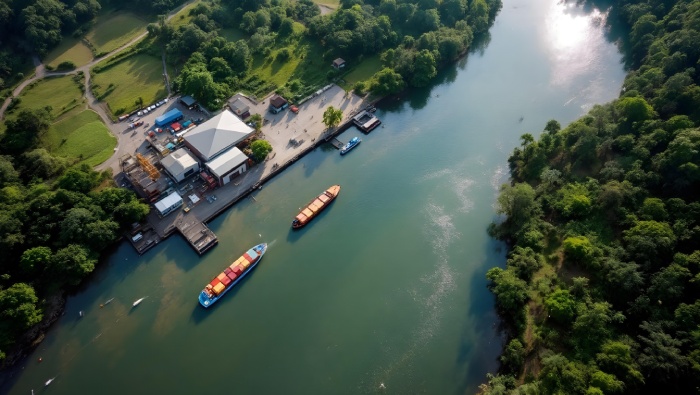
Temporary clearance for a new Amazon terminal
Pialze Oriente S.A.C. has obtained temporary technical viability from Peru’s National Port Authority, or APN, for the proposed Pialze Oriente Port Terminal in the Loreto region, according to PortalPortuario, citing the company. The decision gives preliminary technical backing to a project intended to make Iquitos a new logistics link between the Brazilian Amazon and Peru’s ports on the Pacific coast.
Pialze Oriente is a Peruvian-owned company and a member of Peru’s National Society of Industries. Its plan combines port, logistics and naval infrastructure at a single site, with services for receiving, storing and transferring cargo. The company also holds a shipyard and slipway licence, allowing the planned hub to provide vessel maintenance and related services alongside cargo handling.
A 50-hectare site serving river traffic
The terminal is planned on 50 hectares of titled land downstream from Sinchicuy, with access to the Amazon river system. PortalPortuario reports that the location has an approximate natural depth of 9 metres during the low-water season. Its position could also support future connections with Ecuador through the Napo River.
The project’s area of influence includes major production markets for grain, soybeans, animal protein and agricultural inputs. Pialze Oriente wants to use that production base to establish a two-way corridor: Brazilian cargo would move through Peru toward Pacific export gateways, while Peruvian goods would travel inland to Brazil. Peruvian phosphate products already have Brazil as a destination, providing an existing flow in the opposite direction.
Pilot cargo tests the Manaus–Iquitos route
The proposal is supported by a pilot operation completed this year. The shipment moved 2,000 tonnes of soybean meal from the Brazilian state of Roraima to Peru through the Manaus–Iquitos axis. According to PortalPortuario, the operation demonstrated that Brazilian cargo can reach Peruvian territory using the Amazon river network.
The planned corridor would give selected cargo flows from the Brazilian Amazon another route toward Asian markets. Goods could move through Iquitos and onward to Peru’s Pacific ports instead of relying exclusively on traditional routes through the Atlantic Ocean. For producers and traders, its commercial value will ultimately depend on whether the full journey can provide reliable transit times, sufficient volumes and competitive handling and transport costs.
Further development decisions remain
The clearance is temporary technical viability, not an announcement that the terminal has opened or entered construction. The source provides no construction timetable, investment figure, designed throughput capacity or date for commercial operations. It also does not detail the conditions attached to the temporary status or the additional authorisations needed before development can proceed.
Those missing elements will be central to assessing the project’s effect on Peru’s cargo-handling capacity. The pilot confirms that the river leg is operationally possible, but a 2,000-tonne movement does not by itself establish the scale of recurring demand. The next stage will need to show how the proposed terminal connects with Pacific port infrastructure and whether shippers can assemble balanced cargo volumes in both directions. If those requirements are met, the project could broaden Loreto’s logistics role and complement established Atlantic routes for trade between Peru, Brazil and overseas markets.