Philippines builds Golden Puyat durian exports as Vietnam strengthens China sales
The Philippines expects durian production of 150,000 tonnes in the 2026/2027 season from roughly 15,000 hectares, with 40-50% potentially available for export. The industry is promoting Golden Puyat and seeking markets beyond China as Vietnam records strong export growth.
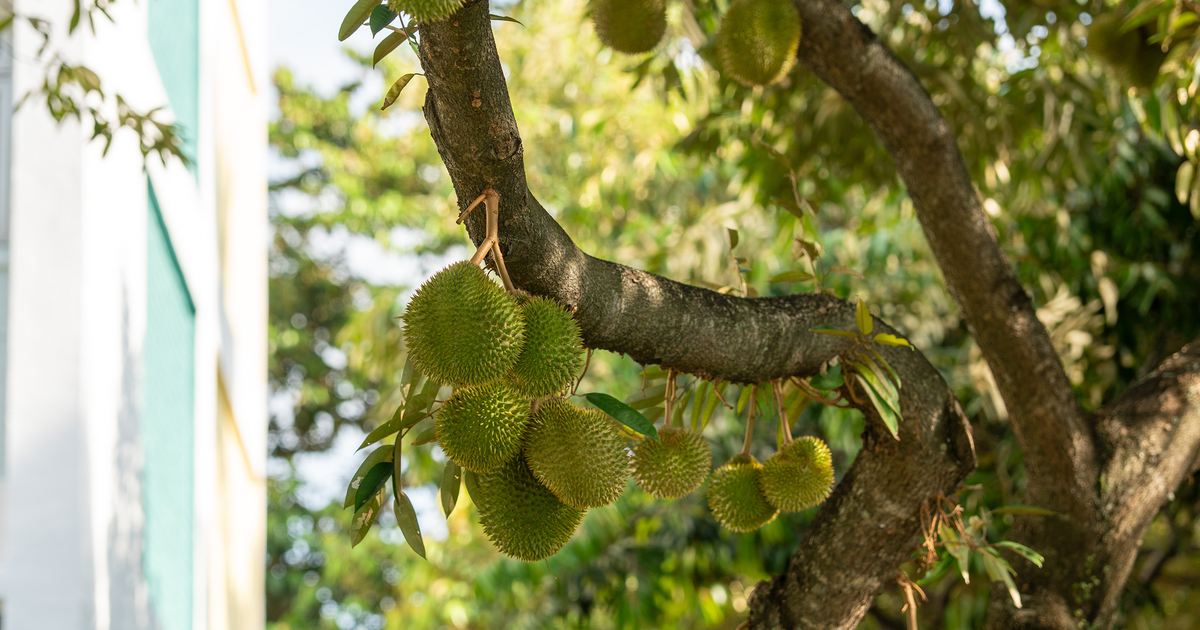
Philippine industry targets export growth
The Philippines is positioning its durian industry for a larger role in regional and international markets, increasing competition for established Southeast Asian suppliers. According to the Philippine Durian Export Association, the country has approximately 15,000 hectares under durian cultivation and expects production to reach 150,000 tonnes in the 2026/2027 season.
The association estimates that 40-50% of this crop could potentially be exported. That would give Philippine producers a sizeable volume for overseas sales, although turning export potential into regular shipments will depend on market access, product positioning and logistics. Most Philippine durian is grown in Mindanao, far from the country’s principal export hubs, complicating transport to international shipping routes—particularly for destinations outside Asia.
Golden Puyat offers a route to differentiation
China is already the Philippines’ main foreign market, accounting for about 90% of its durian exports. However, Philippine fruit represents less than 1% of China’s durian import market, leaving the country with a limited position compared with larger suppliers.
Rather than competing only through varieties already established in China, the Philippine industry wants to build recognition for Golden Puyat, a variety widely grown domestically. The strategy seeks to distinguish Philippine supply from Thailand’s Monthong exports, Vietnam’s sales of the same variety and Malaysia’s established Musang King brand.
Philippine companies are also exploring opportunities in Singapore, Japan, Canada, Europe, the Middle East and the United States. At Asia Fruit Logistica, Philippine durian attracted interest from customers from Germany, Canada, Australia, New Zealand, the Middle East and the United States, according to Kenh14. Diversifying sales would reduce dependence on China, but distant markets will place greater demands on cold-chain management, transit times and connections between Mindanao and export gateways.
Vietnam retains scale and momentum
Vietnam is expanding rapidly from a much larger commercial base. Customs data cited by Kenh14 show that Vietnamese durian exports reached about $681 million in July 2026, up 30.2% from the previous month and 81% from July 2025. Revenue for the first seven months totaled approximately $1.77 billion, an increase of 47.1%, and durian represented nearly 37% of Vietnam’s total fruit and vegetable export value.
China received more than $1.65 billion of Vietnamese durian during the seven-month period, representing 93.5% of the total and an increase of 56.9% year on year. China’s customs authority evaluated 736 Vietnamese applications covering 487 growing areas and 249 packing facilities. It approved 401 growing areas and 166 packing facilities that met its requirements. India also agreed in July to admit Vietnamese durian, giving exporters another outlet.
The Philippines is therefore entering a market in which Vietnam has stronger scale, approved supply infrastructure and fast-growing China sales. Its 15,000 hectares and proposed Golden Puyat identity provide a foundation, but logistics and low existing market share remain constraints. For buyers, stronger Philippine participation could broaden seasonal sourcing and variety choices; for Vietnamese exporters, it increases the need to defend quality, compliance and customer relationships while developing alternatives to China.