Philippines produces 2.3 million tonnes of bananas and still cannot meet export demand
The Philippines produced about 2.3 million tonnes of bananas last year but lacks the land to expand further, according to Stephen Antig of the Philippine exporters federation. Output could fall 10 to 15 percent this year as the industry prepares for a possible Super El Niño, while China has become the country's second-largest market for bananas and pineapples.
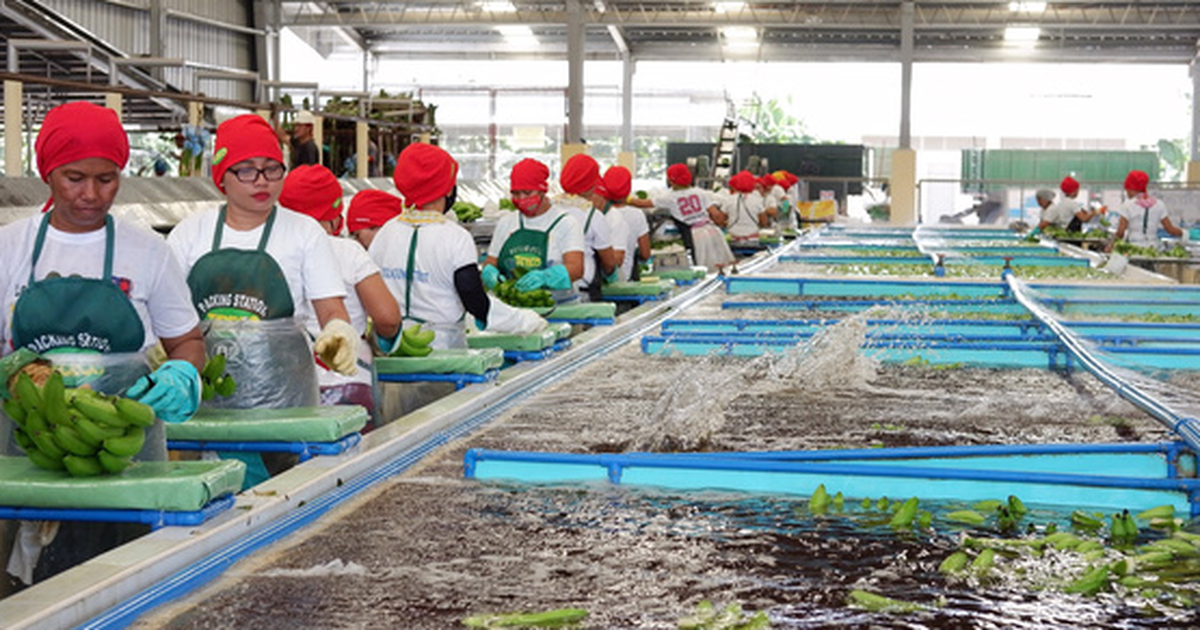
The Philippines' banana industry has run into a supply ceiling, with export demand outstripping what the country's growers can deliver. Stephen Antig, a representative of the Philippine exporters federation, described the gap as one of the biggest issues now facing the sector, in comments reported by cafebiz.vn.
After roughly 50 years of commercial-scale Cavendish production, the Philippines has built established positions in major markets across Asia and the Middle East. Antig said the country produced about 2.3 million tonnes of bananas last year, but the land currently available is not enough for the industry to cover total demand from international customers.
Land access, not buyers, is the binding constraint
Antig said planted area could be increased, but any expansion depends heavily on government policy governing access to and use of agricultural land. That places the sector's growth path largely outside the control of producers and exporters themselves, and makes the limit one of area rather than of commercial demand.
The Philippines competes with other banana suppliers in the region and on world markets, including Ecuador, Vietnam and Cambodia. Even so, Antig said the core problem is not finding buyers but scaling up supply. “Right now we have a supply problem, and that is a good problem. We just do not have enough land to produce all the bananas the market needs,” he said.
Weather risk and preparations for a Super El Niño
Climate change is adding pressure on top of the land constraint. Producers have recorded weather effects on output, although technology and new cultivation practices have offset part of the impact, according to the cafebiz.vn report.
The industry is preparing for a possible Super El Niño around October or November. Antig said banana output this year could come in below last year's level, with the decline estimated at 10 to 15 percent. Applied to a base of 2.3 million tonnes, that points to a shortfall of several hundred thousand tonnes in a year when buyers are already unable to secure all the fruit they want.
China's weight and the push into new markets
China has become one of the most important destinations for Philippine bananas and now ranks as the country's second-largest market for both bananas and pineapples. Antig said the scale of Chinese demand is large enough to absorb the entire volume the Philippines is able to produce. “In terms of market share, China could really buy everything we produce,” he said.
- Traditional markets: Japan, South Korea, China and the Middle East.
- New destinations being developed: Kazakhstan, Mongolia and Russia.
- Competing suppliers named by the federation: Ecuador, Vietnam and Cambodia.
Heavy reliance on a single market carries risk for exporters. Antig described diversification as a strategic choice aimed at limiting dependence on one destination, alongside the traditional buyers in Japan, South Korea, China and the Middle East.
The push comes as China expands fruit-growing operations across several Southeast Asian countries. Rising production elsewhere in the region could reshape the competitive environment for Philippine fruit exporters in the period ahead, particularly if new plantations come on stream while Philippine planted area stays flat.