Philippine Plant Health Chief Backs Korean Grapes After Gimcheon Inspection
The director of the Philippine Bureau of Plant Industry said South Korea's pest management and quarantine procedures are well established and that no pests of concern were found during an inspection in Gimcheon, North Gyeongsang Province. He assessed Korean grapes as competitive in the Philippines and a possible alternative to fruit from the United States, China and Australia, Asia Today reported.
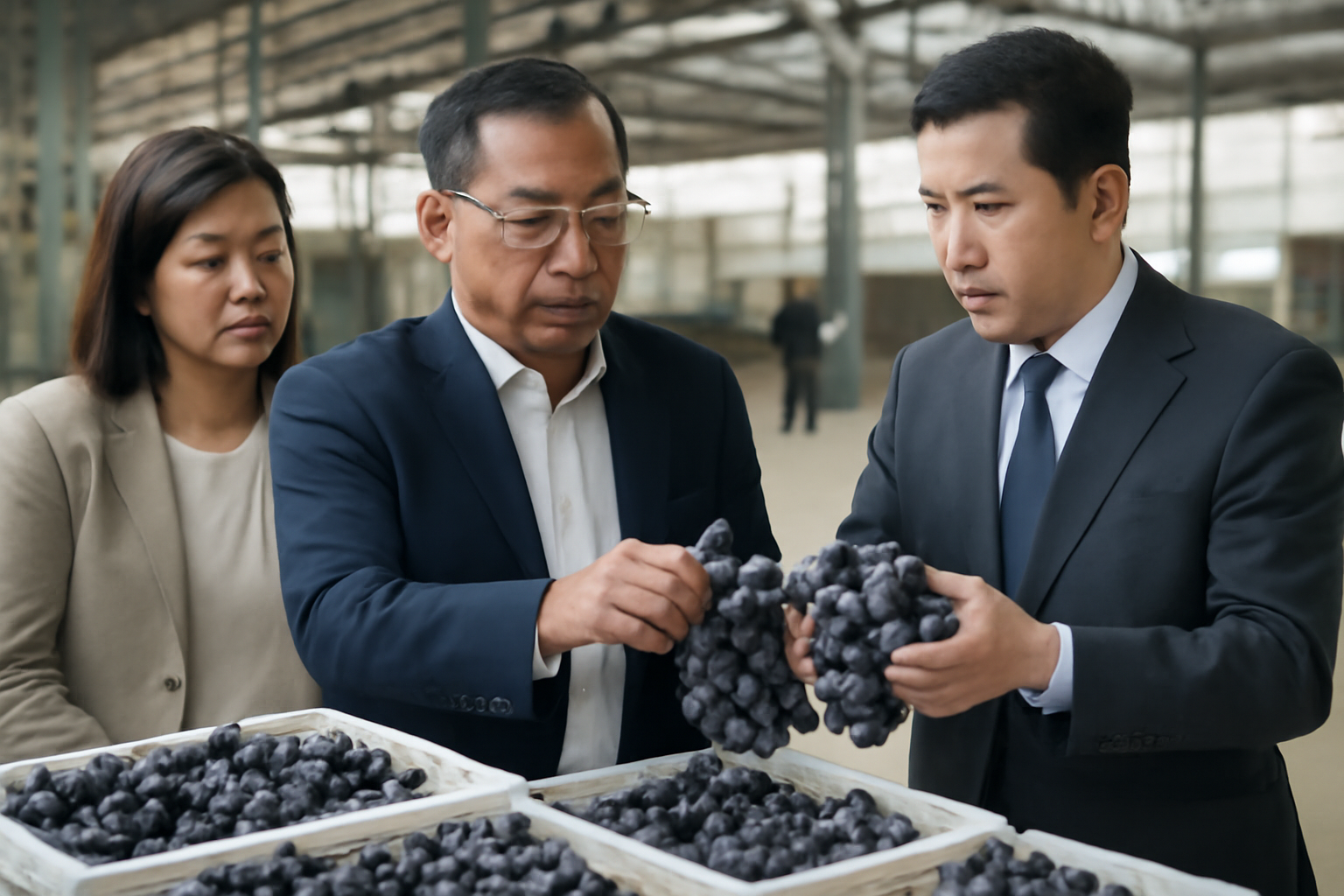
Inspection in North Gyeongsang finds no pests of concern
South Korean table grapes have moved a step closer to the Philippine market after plant health officials from Manila gave a favourable assessment of Korean orchards and cooperative packing operations. Gerald Glenn Panganiban, director of the Bureau of Plant Industry at the Philippine Department of Agriculture, said Korea's pest and disease management and its quarantine procedures were well established, according to Asia Today.
"Korea has well-established pest and disease management and quarantine procedures," Panganiban said. "The farms were kept very clean, and the pests of concern were not found."
The remarks were made on the 16th at the produce facility of the Saegimcheon agricultural cooperative in Gimcheon, North Gyeongsang Province, Asia Today reported. Gimcheon is one of the province's main grape-growing districts, and the cooperative channel is the route through which most Korean export fruit is graded, packed and shipped.
Why an on-site audit matters
For fresh fruit, access to a new market is decided by the importing country's plant protection service rather than by tariff schedules. The sequence is standard:
- a pest risk analysis by the importing authority, based on technical data supplied by the exporting country;
- on-site verification of orchards, packing houses and treatment facilities;
- agreement on quarantine conditions, which may include registered production sites, field monitoring or a mandatory post-harvest treatment;
- publication of import requirements and issuance of import permits.
Panganiban's statement addresses the second stage: an official of the importing authority confirming in person that the exporting country's controls function and that the quarantine pests listed as a concern are absent from the production sites examined. Asia Today did not report a timetable for the remaining steps, nor any volumes or prices under discussion.
Competition with US, Chinese and Australian fruit
Panganiban assessed Korean grapes as competitive in the Philippines and said they could serve as an alternative to fruit from the United States, China and Australia, according to Asia Today. Those three origins are the established suppliers of imported table grapes to the Philippine market, which has no significant commercial production of temperate fruit and depends on imports for year-round supply.
The competitive terms differ by origin. US and Chinese grapes are northern hemisphere crops harvested in the same part of the year as Korean fruit, so Korean shipments would meet them head-on on variety, sweetness, shelf life and price. Australian fruit belongs to the opposite hemisphere season and fills a different supply window, which makes it a less direct rival. A Korean programme would therefore be measured first against American and Chinese supply.
Proximity works in Korea's favour. The run from Korean ports to Manila is short compared with transpacific lanes from the US west coast, which shortens transit time and supports arrival quality for a perishable product. Price is the harder test: Korean fruit is sold as a premium item in the export destinations it already serves, while the Philippine trade is supplied by large-volume, lower-cost origins.
What to watch
The decisive documents are the outcome of the pest risk analysis and the import conditions eventually published by the Bureau of Plant Industry — which pests must be managed, whether a post-harvest treatment is required, and which orchards and packing houses are registered to ship. Those terms set the landed cost per box and determine whether the competitiveness described by the Philippine official survives contact with the market. The Asia Today report did not include a decision date.