Petkorm Plans ₽4 Billion Dry Pet-Food Plant Near Moscow
Petkorm plans to invest ₽4 billion in a dry cat- and dog-food plant in the Dmitrov district of the Moscow region. The facility is scheduled for 2026–2029 and will have annual capacity of 50,000 tonnes across two production lines.
Two lines to add 50,000 tonnes of capacity
Russian pet-food producer Petkorm plans to build a ₽4 billion dry cat- and dog-food plant in the Dmitrov municipal district of the Moscow region. The project will be implemented between 2026 and 2029, according to the regional Ministry of Agriculture and Food, whose announcement was reported by RIAMO, TASS and Regions.ru.
The new facility will operate two production lines, each designed to make 25,000 tonnes of product a year. Their combined annual capacity will reach 50,000 tonnes of dry granulated food for cats and dogs. The project is also expected to create 80 jobs.
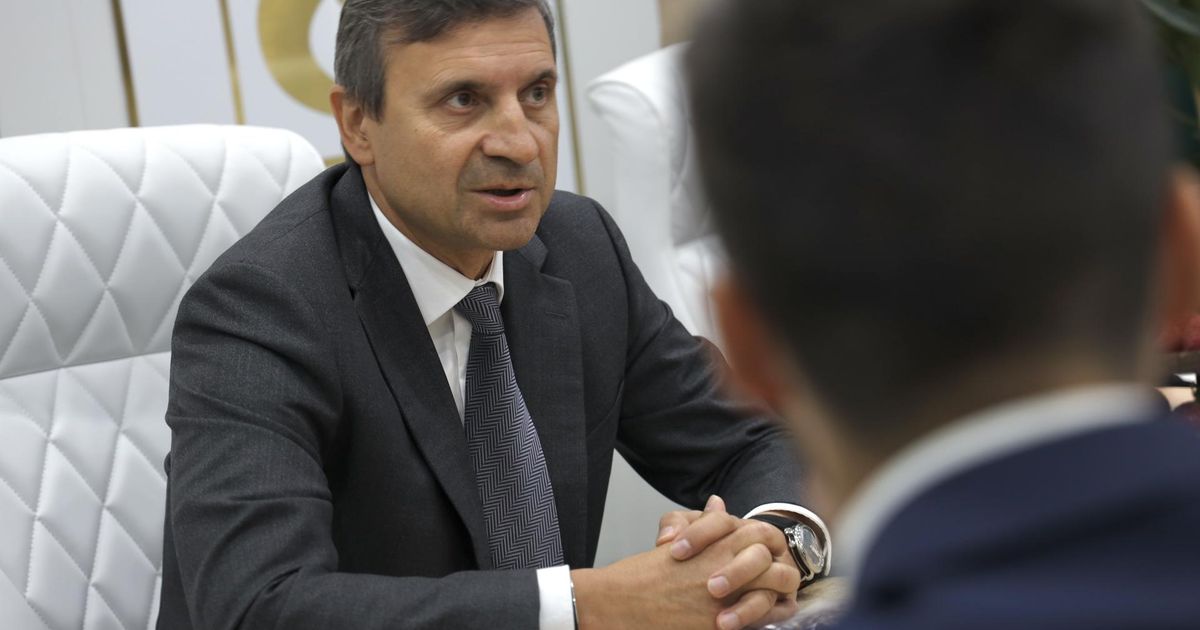
A cooperation agreement was signed during the 28th Golden Autumn Russian agricultural exhibition by Moscow region deputy prime minister Vyacheslav Dukhin and Petkorm founder Robert Imangulov. The document sets out cooperation between the regional authorities and the company during construction of the plant.
Expansion of an existing production base
Petkorm already operates a pet-food factory in the Dmitrov district. RIAMO reported that the existing 10,000-square-metre site was built in 2018 and has operated around the clock since December 2021. It currently produces approximately 1,250 tonnes of cat and dog food per month.
At that monthly rate, the existing plant’s output is equivalent to roughly 15,000 tonnes over 12 months. The planned facility’s nameplate capacity of 50,000 tonnes a year would therefore be more than three times that production rate, although the sources did not specify whether the existing factory will continue operating separately or whether output will be transferred between the two sites.
The company’s current operation includes modern production lines, an in-house quality-control laboratory and an experimental workshop used to develop formulations. These capabilities provide Petkorm with an established technical base in Dmitrov as it prepares to undertake the larger investment.
Domestic supply and import substitution
Regional officials present the project as part of an effort to increase Russian production of pet food and expand manufacturing of higher-value products. Dukhin said the factory would raise domestic pet-food output while adding jobs and supporting further development of the industrial site. The source material does not disclose the planned product mix, customer contracts, raw-material requirements or the share of imported equipment and ingredients.
Those details will determine how much of the investment translates into import substitution across the full supply chain. A domestic factory can replace finished-food imports, but producers may still depend on external suppliers for additives, enzymes, veterinary inputs, equipment or specialized ingredients. The national Food Security project cited by RIAMO includes the creation and modernization of facilities producing critical enzymes, food and feed additives and veterinary products, as well as the provision of domestically made equipment.
The investment also strengthens the Moscow region’s position as a food-processing center. Governor Andrey Vorobyov previously said the region had about 2,000 agricultural and processing enterprises employing more than 100,000 people. Petkorm’s planned 80 positions are modest within that total, but the plant’s capacity is substantial relative to the company’s reported current production. For manufacturers, suppliers and distributors, the key milestones will be construction progress, commissioning of both lines and the pace at which the plant approaches its 50,000-tonne annual design capacity.