Peruvian grape exports rise 17.1% to $790 million in first half of 2026
Peru exported $790 million of table grapes between January and June 2026, up 17.1% year on year. The United States remained the leading destination, while sales to Mexico and newly served markets supported growth.
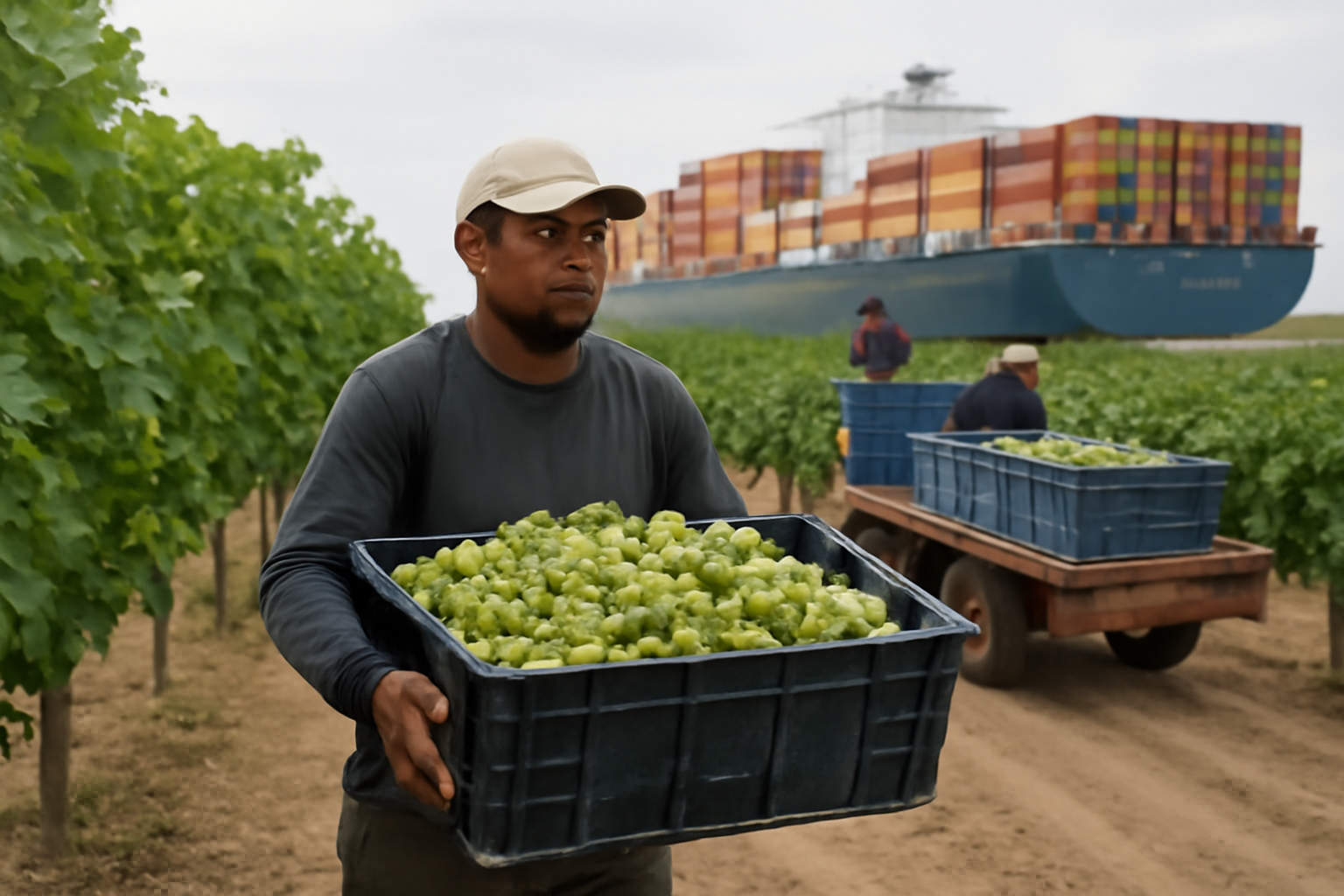
First-half export revenue reaches $790 million
Peru exported $790 million of table grapes between January and June 2026, an increase of 17.1% from the same period of 2025, Revista Economía reported, citing the Ministry of Agrarian Development and Irrigation, or Midagri. The result reinforces grapes’ position among Peru’s leading agricultural exports, alongside blueberries, avocados and coffee.
Export volume was virtually unchanged at 275,000 tonnes. Revenue growth with stable shipments indicates that the improvement came from a stronger value per unit, a more favorable product mix or both, although the source did not provide an average export price. For producers and exporters, the figures show that higher export earnings did not depend on a comparable expansion in physical supply.
United States leads as Mexico records faster growth
The United States remained the largest destination for Peruvian grapes in the first half, receiving shipments worth $446 million. That was 11.3% more than in the corresponding period of 2025 and represented more than half of Peru’s reported grape export revenue.
Mexico ranked second, with purchases valued at $93.7 million, up 46% year on year. Its growth substantially exceeded the overall export increase, strengthening Mexico’s role as Peru’s second-largest market even as the United States continued to dominate the destination mix.
Peruvian supply also entered markets that had recorded no purchases during the comparable period of 2025. Exports to Taiwan reached $21.6 million and shipments to Israel totaled $9.3 million. Revista Economía also reported deliveries to Greece, Ireland, Lebanon and Cambodia, without specifying their values.
Full-season sales approach $2 billion
Peru has led the global ranking of grape exporters since the 2022/2023 season, according to Midagri. In the 2025/2026 campaign, which ended in March 2026, grape exports reached $1.998 billion, up 6.1% from $1.883 billion in 2024/2025. The increase followed disruption in 2023/2024, when El Niño reduced exported volume.
The industry’s export position rests partly on a portfolio of more than 40 grape varieties. Sweet Globe, Crimson Seedless and Arra 15 are among the varieties with broad consumer acceptance. Midagri also identifies genetic diversity, traceability, climate adaptation, logistics efficiency and compliance with international standards as factors behind Peru’s competitiveness.
Regional harvest calendar supports the coming season
Production shifts between regions during the year. Harvesting is concentrated in Ica, Lima, Arequipa and Áncash from January through April, while Piura, Lambayeque and La Libertad account for much of the activity from October through December. This calendar places northern production areas at the center of the next major shipping period.
The Port of Chancay could strengthen access to Asian markets during future campaigns. Midagri says the infrastructure can reduce transit times and costs to Asia. That advantage is particularly relevant as Peru builds sales in Taiwan and other destinations beyond its established markets in the United States and Mexico.