Peru sugar prices surge as wholesale brown sugar rises 45%
Wholesale brown sugar prices in Peru rose 45% between August 5 and September 4, while some merchants offered 50-kilogram sacks for as much as S/190. Producers say northern sugarcane fields have not yet suffered direct El Niño damage, pointing instead to international price pressure and domestic market dynamics.
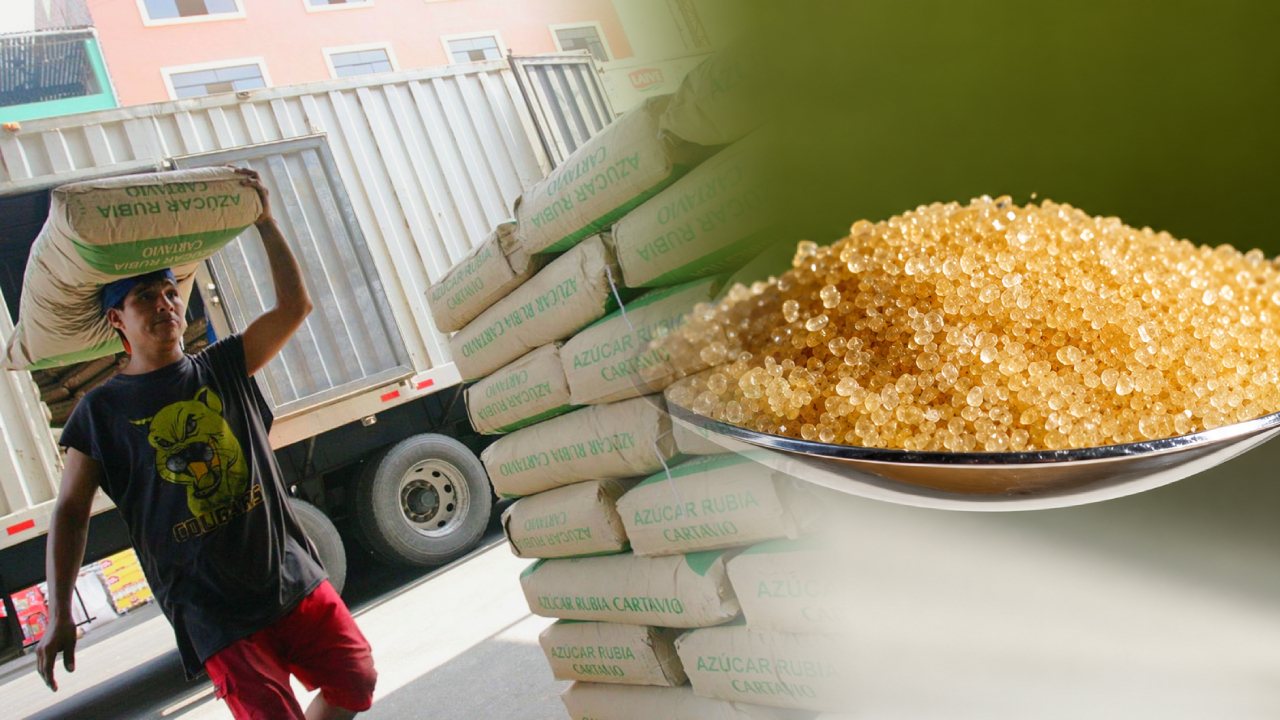
Wholesale brown sugar gains 45%
Sugar prices have risen sharply across Peru’s wholesale and retail markets. According to Ministry of Agricultural Development and Irrigation data reported by Caretas and Agraria.pe, the wholesale price of domestic bulk brown sugar increased 45% between August 5 and September 4, climbing from S/2.10 to S/3.05 per kilogram.
At those per-kilogram prices, the reference value of a 50-kilogram sack rose from S/105 to S/152.50. Actual prices reported by traders were higher in some markets. In Huancayo, a merchant said a 50-kilogram sack had risen from S/114 to S/170 in about 20 days. Digital wholesale channels listed sacks, described in the reports as quintals, for as much as S/190.
Domestic bulk white sugar also became more expensive, although its increase was smaller. Its wholesale price rose 20%, from S/2.47 to S/2.97 per kilogram. That lifted the calculated value of a 50-kilogram sack from S/123.50 to S/148.50.
Retail prices follow the wholesale market
The increases are already reaching consumers in Lima. The retail price of brown sugar advanced 17%, from S/3.04 to S/3.55 per kilogram, a difference of S/0.51. White sugar rose 10%, from S/3.74 to S/4.11 per kilogram.
The gap between wholesale benchmarks and the prices reported for individual sacks suggests that location, distribution costs and immediate availability are influencing transactions. The rise affects households as well as bakeries, beverage producers, confectioners and other food processors that use sugar as a regular input.
El Niño impact remains disputed
Merchants have associated the increase with El Niño, but growers consulted by the publications rejected a direct link to northern sugarcane fields for now. Alberto Salinas Barba, president of the Sugarcane Producers Association, said plantations were not experiencing problems and that the cane was ready for harvest.
External conditions may nevertheless be adding pressure. Conveagro general manager Luis Cruz Cuadros noted that sugar is traded internationally and that global price movements can affect Peru. The FAO sugar price index rose 11.9% in August to 106.4 points, its highest level since June 2025. FAO linked the increase to concerns about 2026/27 global supply, including hot and dry weather in the European Union, El Niño-related effects in Asian producing countries, lower output in Brazil’s center-south and India’s announcement of tariff-free raw sugar imports.
Cane growers question their share
Agraria.pe reported that Grupo Gloria controls 80% of Peru’s sugar market. Cruz Cuadros said international prices could serve as a reference for the group’s pricing, although changes in global indicators do not necessarily reach Peruvian consumers immediately or in the same proportion.
Growers in Lambayeque have taken complaints to the agriculture ministry because sugar’s rise contrasts with the price paid for cane. Salinas said some buyers offer S/50-S/60 per tonne of sugarcane, while one tonne yields approximately 120 kilograms of sugar. Growers argue that the calculation must also account for commercially valuable by-products, including molasses and bagasse. The widening difference between cane and sugar prices is therefore intensifying scrutiny of margins along Peru’s processing and distribution chain.