Peru’s top court to decide evaporated milk labeling rules after Gloria challenge
Peru’s Constitutional Court is preparing to rule on Leche Gloria’s challenge to the country’s 2022 evaporated milk rules. The judgment will determine whether the decree remains in force and which products and ingredients qualify for the protected name.
Constitutional challenge reaches final stage
Peru’s Constitutional Court is in the final stage of considering an action filed by Leche Gloria S.A. against Supreme Decree 004-2022-MIDAGRI, which changed the country’s rules for producing and naming evaporated milk. Revista Economía reports that the judge assigned to the case ordered the file to be referred to the court’s full jurisdictional bench. According to a document submitted by the National Association of Consumers and Users, or AINCUS, a decision could be announced in the coming days.
Gloria argues that the decree violates its constitutional rights and is asking the court to set it aside. The case also involves state bodies and representatives of consumers and livestock producers. The full bench must now decide whether the disputed regulation should remain in effect, with consequences for the products that dairy processors may legally market as evaporated milk.
Decree restricts the evaporated milk name
Supreme Decree 004-2022-MIDAGRI has been in force since October 2022. It defines evaporated milk as a product obtained by partially removing water solely from milk. The distinction is central to the dispute because a reconstituted dairy product is made by adding water to a concentrated or dehydrated form, rather than by removing water from milk during the production process.
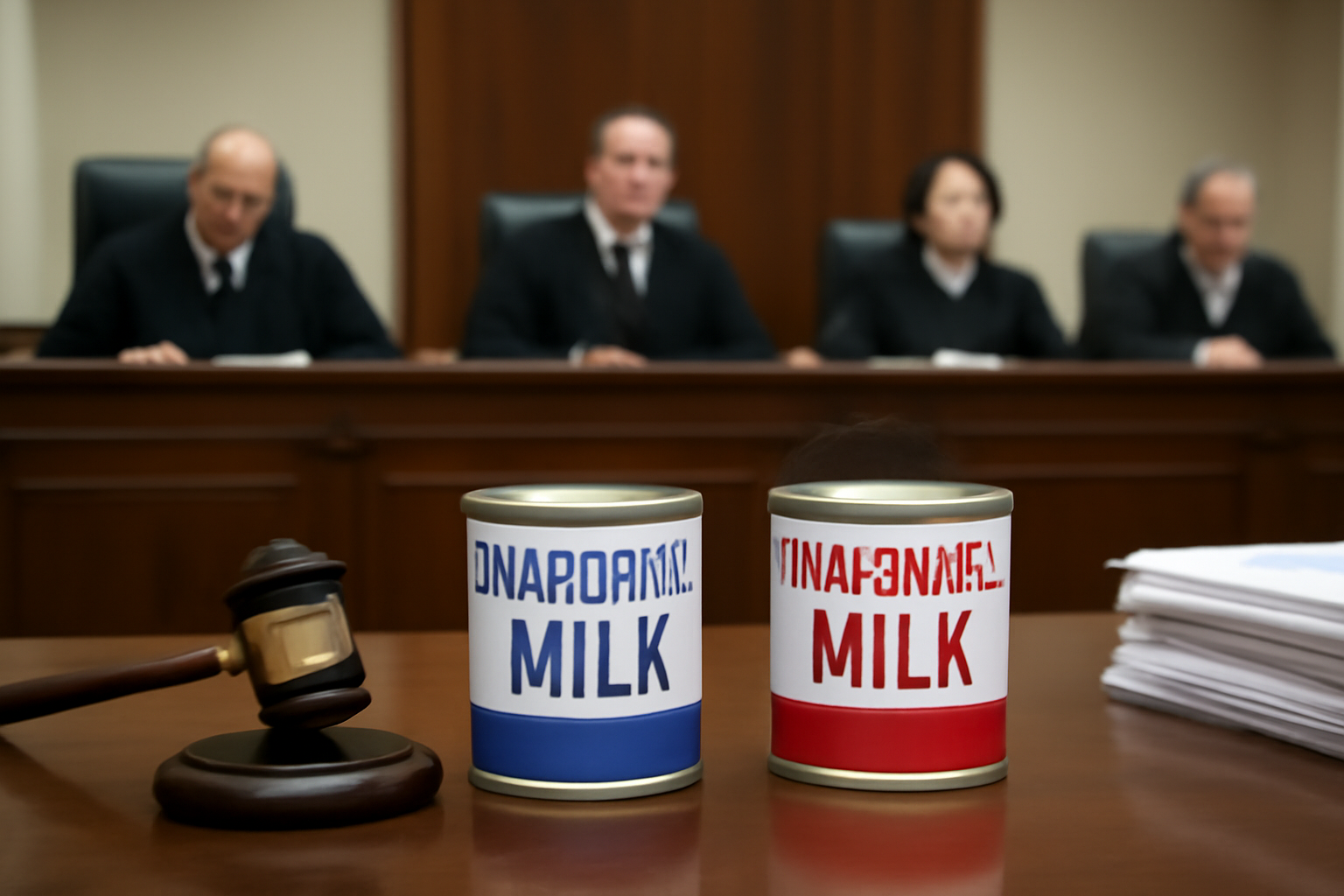
The rule prompted Gloria to stop selling its traditional blue-label product under the evaporated milk name. The company replaced it with a blue-label reconstituted milk and introduced a new purple-label evaporated milk. Gloria had sought an interim measure allowing it to continue producing and marketing the previous blue-label product as evaporated milk while the case was pending, but that request was rejected. The product has not been sold under that designation since October 2022.
Ingredients and international standards under scrutiny
AINCUS disputes the composition of products marketed by Gloria and argues that the current regulation imposes specific conditions for using the evaporated milk designation. According to the association’s filing, Gloria’s previous formula included milk powder. AINCUS says the current purple-label evaporated milk lists raw milk, milk concentrated to 30% and anhydrous milk fat among its ingredients. These claims represent the consumer association’s position in the constitutional proceedings.
The controversy also refers to the Codex Alimentarius, the collection of international food standards and guidelines. One of its principles is that a food’s name should reflect its nature and should not mislead consumers. The arguments before the court therefore concern protected dairy terms and the distinctions among milk, dairy products and reconstituted dairy products. AINCUS maintains that international standards require evaporated milk to be produced only from milk through partial water removal.
Ruling could reset rules for dairy processors
The judgment will define how Peru applies its production and naming requirements and whether the 2022 decree continues to govern the market. If the court upholds the measure, processors will remain subject to the existing distinction between evaporated and reconstituted products. If it grants Gloria’s request, the decree could be set aside, requiring the industry and public authorities to reassess the applicable standard.
For producers, processors and retailers, the result will determine which formulations can carry one of the Peruvian dairy market’s established product names. It will also shape ingredient sourcing, production methods, packaging and consumer communication. The court is not merely reviewing a label: it is deciding the legal boundary between two manufacturing processes and the commercial categories attached to them.