Palm oil prices rise as Indonesian wildfires threaten output
Palm oil futures rose as fires and toxic haze disrupted harvesting in parts of Indonesia, the world’s largest producer. More than 202,000 hectares have burned across Indonesian Borneo and Sumatra, while traders are assessing the risk to output and international supply.
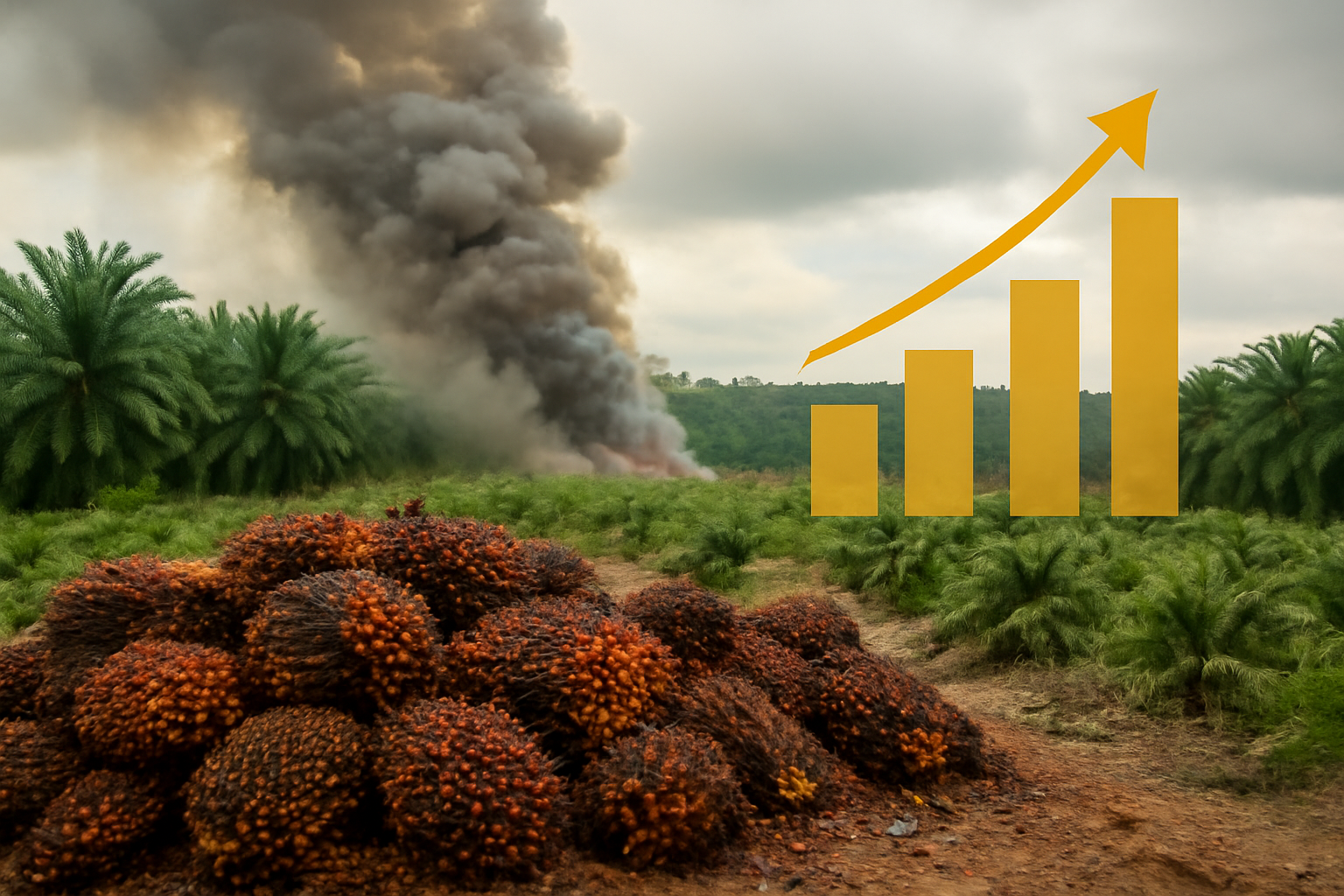
Kuala Lumpur benchmark gains 0.9%
Benchmark crude palm oil futures in Kuala Lumpur rose as traders assessed the threat of supply disruption from widespread wildfires in Indonesia, the world’s largest palm oil producer. InfoQuest reported that the contract gained as much as 0.9% to 4,975 ringgit ($1,229) per tonne on September 7.
The advance reflects an immediate risk premium rather than a confirmed estimate of production losses. Nevertheless, the market is responding to several connected threats: interruptions to harvesting, the reassignment of plantation workers to firefighting and the possible effect of smoke and reduced sunlight on the development of oil palm fruit.
Haze interrupts work on plantations
Toxic smoke from the fires has covered large parts of Southeast Asia. Harvesting has stopped in some areas because workers from oil palm plantations have been mobilized to help fight the fires, according to InfoQuest. Any prolonged interruption could delay the collection and processing of fresh fruit bunches, increasing uncertainty over near-term crude palm oil availability.
David Ng, senior trader at Iceberg X Sdn Bhd, said the latest price movement reflected the worsening haze in Indonesia. He added that the market was concerned about dry weather and smoke affecting production. These concerns matter beyond the areas directly burned because smoke can restrict sunlight over a broader region and interfere with plantation operations.
More than 202,000 hectares have been damaged by fire across the Indonesian islands of Borneo and Sumatra. Pollution levels have also risen in Indonesia and neighboring Singapore, Malaysia and the Philippines. The geographic spread of the haze makes the event a regional operational problem, even though the main production risk is concentrated in Indonesia.
El Niño extends the supply threat
Forest and land fires recur in Southeast Asia and are often associated with traditional and commercial burning to prepare agricultural land. This year’s strong El Niño has worsened the impact and prolonged the episode. In its latest report last week, the ASEAN Specialised Meteorological Centre said conditions favored fires and the spread of transboundary haze, with prevailing winds from the southeast and southwest.
The duration of the dry conditions will determine whether the current increase remains a short-lived weather premium or develops into a broader supply concern. The ASMC expects higher rainfall in October, ahead of the rainy season, to provide some relief from the fires and haze. Until that rainfall arrives and plantation activity normalizes, producers, processors and traders will have limited visibility over the scale of harvesting delays and any effect on output.