Palm oil industry urged to pair production efficiency with sustainability
Global palm oil production has exceeded 80 million tonnes a year, reinforcing the crop’s advantage over soybean and rapeseed oil in output per unit of land. Industry competitiveness, however, increasingly depends on biodiversity protection, responsible cultivation and social outcomes alongside productivity.
Efficiency is no longer the only benchmark
The global palm oil industry is entering a phase in which production efficiency alone may no longer determine commercial success. Sustainability in cultivation and supply chains is becoming an increasingly important part of the commodity’s competitiveness in international markets, according to InfoSAWIT Sumatera.
Palm oil remains the most efficient major vegetable oil crop. Global production has exceeded 80 million tonnes a year, while oil palm produces substantially more oil per unit of land than soybean or rapeseed. This yield advantage has helped establish palm oil as a central raw material for food manufacturers, processors and other industrial users.
The industry’s next challenge is to preserve that economic advantage while responding to concerns over environmental protection and biodiversity. Expansion of planted area can bring income and production growth, but forest conversion and changes to natural landscapes create costs that buyers, regulators and investors increasingly expect producers to address.
Plantation visits show the industry’s two sides
Ina von Frantzius, deputy head of the Agriculture and Rural Development unit at Germany’s Federal Ministry for Economic Cooperation and Development, discussed the issue during a webinar attended by InfoSAWIT. Her comments were reported from the May 2026 edition of InfoSAWIT magazine.
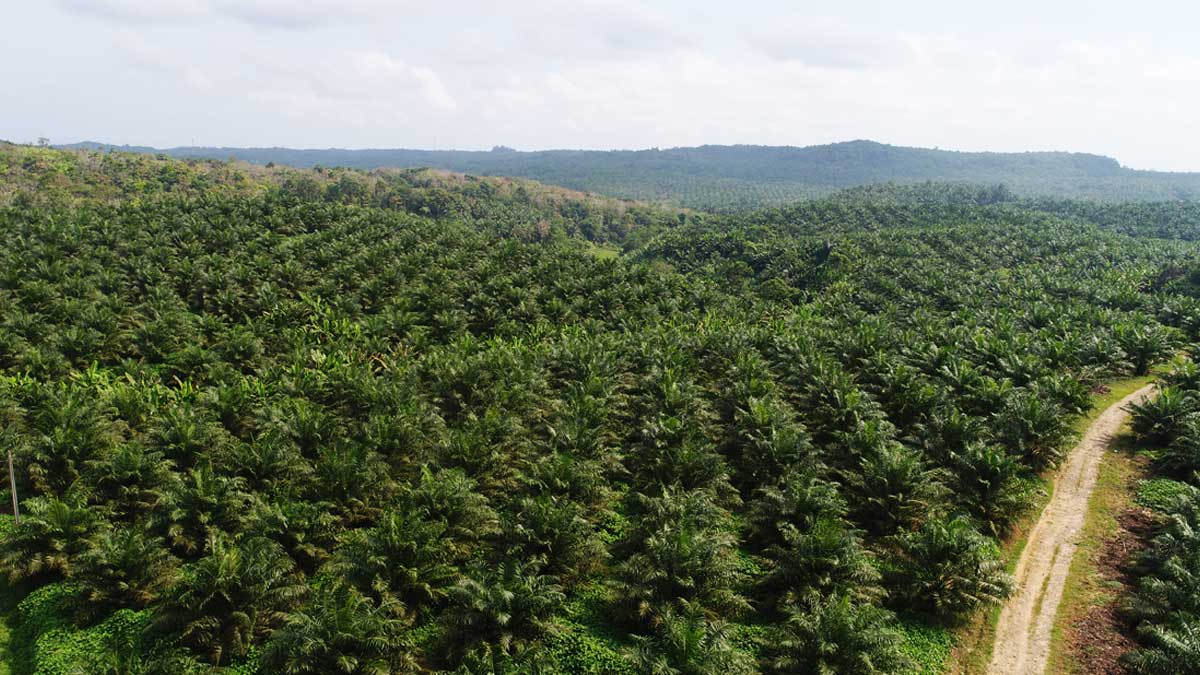
Drawing on visits to plantation areas in Jambi and Kalimantan, von Frantzius described productive and well-managed operations alongside visible changes to landscapes resulting from forest conversion. The contrast illustrates the central policy and investment question facing the sector: how to maintain high output without weakening biodiversity and other environmental assets on which agricultural regions depend.
Her assessment also places social responsibility alongside environmental performance. For producers and plantation operators, this means that output per hectare remains important but is only one measure of performance. Community welfare, land management and conservation practices can also influence whether palm oil retains acceptance among international customers.
Market access increasingly tied to supply-chain practices
InfoSAWIT said future development should balance productivity, community welfare and environmental protection. For processors and traders, that balance has practical implications: sourcing policies and evidence of responsible management are becoming more relevant to customer relationships in markets where sustainability expectations are rising.
The shift does not remove palm oil’s underlying production advantage. Its high land productivity remains significant in a global vegetable-oil market that must meet large demand without unlimited agricultural land. The commercial question is whether producers can turn that efficiency into a broader proposition that also meets conservation and social requirements.
Indonesia, including major producing regions such as Jambi and Kalimantan, sits at the center of this debate. Plantation companies, smallholders, processors and buyers face different costs and capabilities, but all are exposed to changing expectations across the supply chain. The sector’s next stage will therefore be judged not only by how much oil it produces, but also by how production affects forests, biodiversity and surrounding communities.