Palm oil producer bloc links smallholder productivity to sustainable market access
The Council of Palm Oil Producing Countries is seeking to raise smallholder productivity and incomes while protecting access to markets with sustainability requirements. CPOPC and WWF Indonesia say verifiable field data will be essential to demonstrate producer practices and economic conditions.
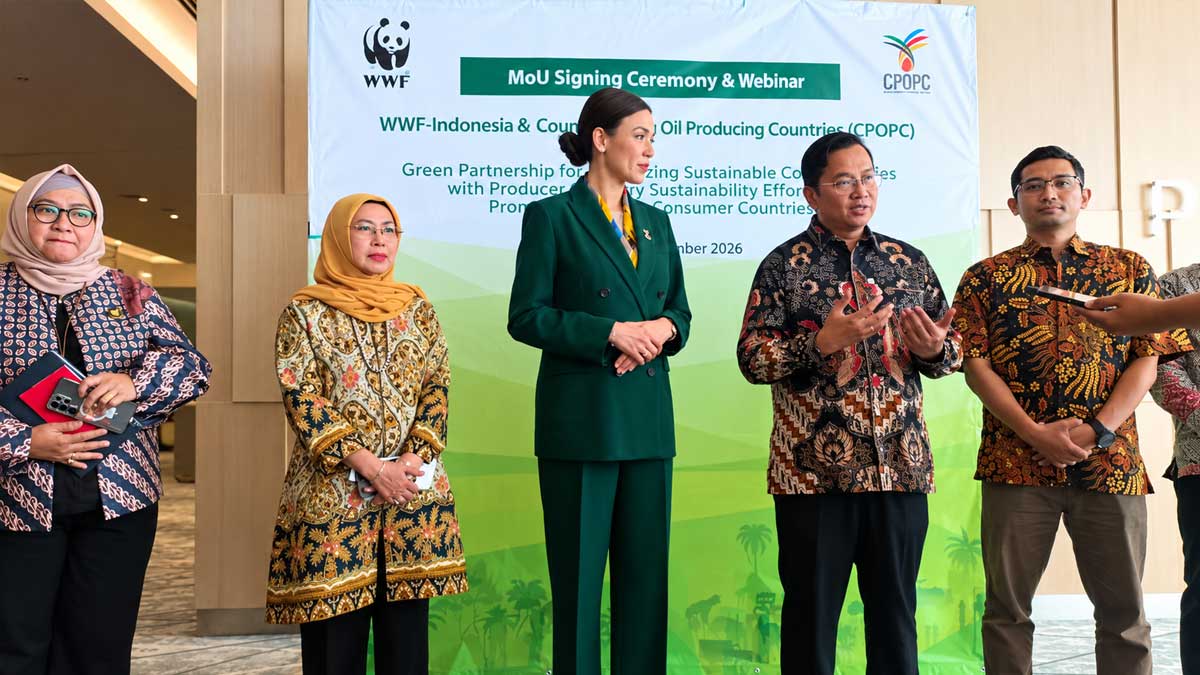
Producer countries put smallholders at the center
The Council of Palm Oil Producing Countries is pushing for higher smallholder productivity and incomes alongside stronger access to markets that impose sustainability requirements. The initiative reflects a concern among producing countries that environmental standards should deliver economic benefits for communities dependent on palm oil rather than operate only as conditions imposed on suppliers.
Musdhalifah Machmud, deputy secretary-general of CPOPC, said producer countries have a shared interest in ensuring that oil palm farmers receive support to improve both output and earnings. Speaking at a press conference on cooperation between CPOPC and WWF Indonesia in Jakarta on September 18, 2026, she said the organization also wanted to help farmers improve their income, productivity and other aspects of their operations, according to InfoSAWIT.
The approach places rural livelihoods within the sustainability debate. CPOPC argues that policies affecting the sector need to reflect the economic conditions of producing countries and the position of communities whose income depends on the crop. For growers, productivity gains can help spread compliance and operating costs over larger output, although InfoSAWIT reported no specific yield targets, funding commitments or implementation timetable.
Verifiable data becomes a market tool
Building credible evidence from plantations and farming communities is another priority. Machmud said producer countries needed data that accurately described conditions on the ground, both to improve discussions with other stakeholders and to support their responsibility toward people who rely on palm oil. The emphasis suggests that traceability, statistics and documented production practices will play a larger role in negotiations over market eligibility.
Aditya Bayunanda, chief executive of the WWF Indonesia Foundation, said sustainability work already conducted in Indonesia overlaps with initiatives at the global level. Those common elements could allow practices developed by sustainable producers to reach a wider market. He also said sector data and statistics were necessary to show palm oil’s contribution and prevent sustainability discussions from being driven only by perceptions.
For smallholders, the quality of that evidence may determine whether they can participate in sustainability-linked supply chains. Collecting verifiable information can strengthen recognition of compliant production, but it may also require technical support and coordination among farmers, producer organizations, processors and governments. The CPOPC-WWF discussion did not specify a certification system or a single data standard.
Market access must reward sustainable production
WWF Indonesia said its consistent objective was to ensure market access for products made through sustainable practices. Bayunanda argued that producers investing in sustainability should receive market acceptance and access. This connects environmental performance with a commercial incentive: farmers and companies are more likely to maintain improved practices when eligible output can continue reaching buyers.
The cooperation also points to closer communication among producer governments, civil-society organizations and other stakeholders. For processors, traders and importers, stronger field evidence could reduce uncertainty when assessing suppliers. For producers, the central issue is whether the cost of meeting environmental expectations is matched by reliable demand and better economic prospects. CPOPC and WWF Indonesia have therefore framed productivity, farmer income, verifiable data and market access as interdependent parts of the same agenda, while leaving operational details to future work.
