More than 1,000 licensed poultry houses idled in Syria's Hama as feed and energy costs bite
More than 1,000 licensed poultry houses in Hama governorate have stopped operating after losses driven by feed, fuel, electricity and veterinary costs, Hawar News Agency reports. Around 1,600 licensed units remain in production. Syria halted poultry imports on 9 June and reopened live chicken imports on 31 August, with Turkish shipments crossing at Al-Rai from early September.
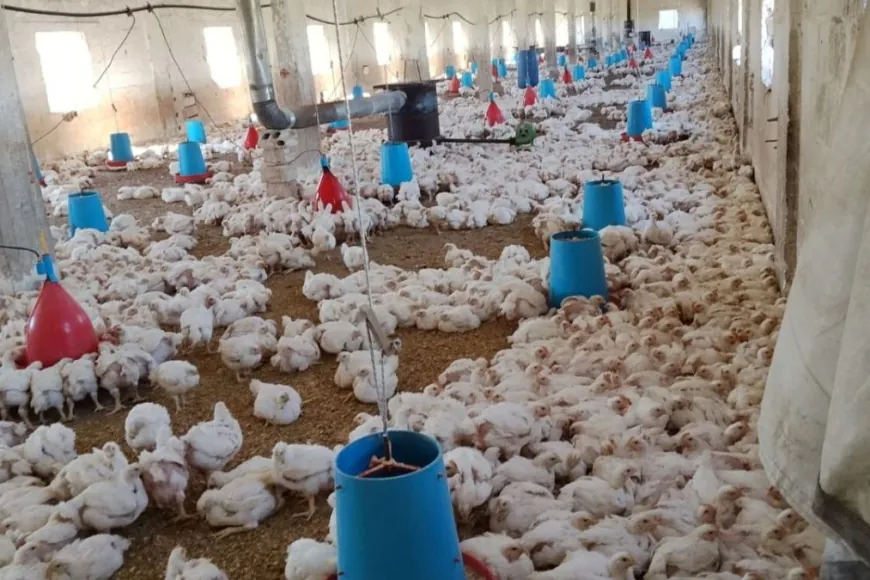
More than 1,000 licensed poultry houses in Syria's Hama governorate and its countryside have gone out of service, Hawar News Agency reported, after accumulated losses tied to feed, fuel, electricity, medicines, vaccines and wages forced farmers to stop placing new flocks.
According to monitoring by the agency's correspondents in Hama and its rural areas, more than 1,600 licensed poultry houses remain in operation, alongside more than 160 unlicensed units. A source at the Hama agriculture directorate said the wave of closures was linked to losses incurred by farmers, particularly during May and June.
Feed and energy costs outrun the sale price
Farmers told the agency that the selling price of broilers fails, at some stages of the production cycle, to cover the actual cost of rearing. Feed is the single largest item: a kilogram costs around 7,500 Syrian pounds, according to farmers in Hama, and a bird consumes close to four kilograms before reaching market weight, on top of vaccines, medicines, energy, transport and labour.
Prices for feed raw materials collected by the agency's correspondents showed wide variation depending on the market and the source of supply:
- yellow maize: about 14,200 to 15,000 Syrian pounds per tonne
- soybean meal at 44 percent protein: about 24,000 to 25,000 Syrian pounds per tonne
- broiler meat at retail: between 350 and 450 new Syrian pounds per kilogram
Retail prices varied slightly between governorates, shaped by the volume of supply, production costs and the movement of demand. Power cuts add a further burden: one farmer said outages force poultry house owners to run generators, and called for rearing inputs and energy to be secured at prices that allow producers to continue. With a production cycle of roughly 40 to 50 days and no visibility on the sale price at the end of it, smaller operators in particular have stopped bringing in new batches.
Import policy reversed twice in three months
The National Import and Export Committee halted imports of broilers, layer chicks and broiler chicks on 9 June until further notice, in a decision it said was intended to protect national production, support farmers and preserve stability in the production process. On 31 August the Ministry of Agriculture again permitted live chicken imports to meet domestic market needs and help stabilise prices, which had risen as the volume of production on offer fell and the number of active farmers declined.
Shipments of live chicken imported from Turkey began entering Syria at the start of September through the Al-Rai border crossing, subject to health and regulatory inspection. Fadel Haj Hashem, director of the General Poultry Establishment, described the decision at the time as a forced and temporary measure until local production recovers, stressing that consignments would be placed under health controls. The source at the Hama agriculture directorate said higher consumption in coastal and eastern areas had lifted demand for broilers, prompting authorities to allow live birds in to balance supply and demand, with production expected to rise in the period ahead.
A pricing mechanism still under construction
The Ministry of Agriculture announced on 30 June that it was preparing a detailed study of production costs across the poultry value chain, aiming at an indicative price that balances the interests of producers and consumers, alongside work to organise the sector and ensure the availability of poultry products and table eggs. In a meeting with poultry farmers and relevant bodies, the ministry also discussed setting an indicative price for broiler meat based on the actual cost of production, together with market regulation mechanisms and a profit margin that keeps production viable.
On 13 August the Directorate of Consumer Protection and Food Safety obliged poultry farmers and slaughterhouse operators to comply with the price guidance issued by the Poultry Breeders Union, and insisted on invoices circulating from the farm gate through the slaughterhouses to final points of sale.
Farmers are pressing for a review of import mechanisms, arguing that bringing in quantities of live chicken can raise supply and lower prices in the short term but may weigh on local producers if it coincides with rising domestic output and the return of idled houses to work. Their demands centre on energy and feed support, control over input prices, organisation of marketing channels and limits on monopoly, so that local poultry houses can keep operating and consumers can still find supply at reasonable prices.