Al Safa Foods Raises Broiler Capacity to 60 Million Birds a Year in Oman
Al Safa Foods has expanded annual broiler capacity to about 60 million birds, with slaughter capacity reaching 200,000 birds a day. The integrated operation is intended to supply more of Oman’s poultry demand and support future sales to Gulf markets.
Expansion increases domestic poultry capacity
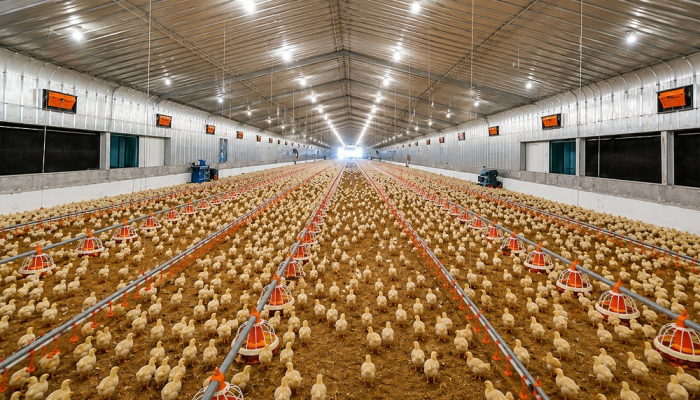
Al Safa Foods has raised its annual broiler production capacity to about 60 million birds following a new expansion in Oman, according to Shabiba. The company’s slaughter capacity now stands at 200,000 birds a day. The project is intended to meet more demand in the domestic poultry market while creating additional scope to market and export products across the Gulf Cooperation Council.
The increase is significant for Oman’s food supply because poultry can be produced on relatively short cycles and distributed through established chilled and frozen supply chains. Higher local output could displace part of the country’s poultry imports, although the source did not provide current import volumes, the expansion’s investment value or a timetable for reaching full utilization. The effect on imports will therefore depend on actual production, domestic consumption and the competitiveness of Al Safa’s products against foreign supplies.
Integrated chain covers farms, feed and processing
Al Safa’s commercial director, Hamdoun bin Abdullah Al-Saqri, told the Oman News Agency that the expansion represents a strategic investment in a more efficient and competitive integrated poultry system. The company’s network includes about 225 broiler farms, while the number of birds at its farms reaches approximately 60 million. Its hatcheries have capacity for 72 million eggs, and its feed mills can produce about 130,000 metric tonnes annually.
This vertical integration spans feed production, hatcheries, farms, processing and distribution. According to Al-Saqri, control across those stages helps the company maintain product quality, use resources more efficiently and add value. It also links the expansion to demand in adjacent industries, including veterinary services, transport, storage, cold-chain operations, packaging, marketing and logistics. Those services will be important if higher slaughter volumes are to reach retailers and regional customers without increasing losses.
Automation supports efficiency and Gulf ambitions
Modern technology, automation and intelligent systems are central to the company’s development plans. Al Safa is using them to improve the management of farms, hatcheries and feed mills, monitor production and analyze operating data. The stated objectives are to raise productivity, reduce waste and improve the use of water, energy and feed. These measures matter because feed and resource efficiency directly affect poultry producers’ costs and their ability to compete with imported meat.
Al-Saqri said the additional capacity would strengthen Al Safa’s contribution to domestic food security and provide a production base for regional growth, particularly in GCC markets viewed as a natural extension for Omani products. The expansion consequently gives the company two potential outlets: replacing some imported poultry in Oman and directing output beyond domestic requirements to neighboring markets. No target export volume, destination breakdown or launch date was disclosed. Commercial results will depend on capacity utilization, cold-chain performance, regulatory access and the balance between Omani demand and available regional sales.