Olam Agri enters Nigeria's cattle feed market with Tru-Value range
Singapore-based Olam Agri has launched Tru-Value, its first cattle feed range in Nigeria, with three products for fattening, finishing and milk production. The move extends a feed business that already runs 800,000 tonnes of poultry feed and more than 150,000 tonnes of fish feed capacity in Kwara State. Nigeria's Livestock Master Plan 2026-2040 puts the national dry matter shortfall at 8.33% of requirements.
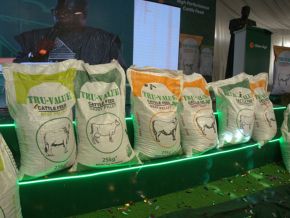
Singapore-based agribusiness Olam Agri has entered Nigeria's ruminant nutrition market with the launch of Tru-Value, its first range of cattle feed products, Ecofin Agency reported. Citing a company statement published on September 11, the outlet said the range was launched in Kaduna State and comprises three products designed for cattle fattening, finishing and increased milk production.
The launch expands Olam Agri's Integrated Feed & Protein (IFP) business, which had previously focused on poultry and aquaculture. According to the company, it operates two production facilities in Kwara State with annual capacities of 800,000 tonnes of poultry feed and more than 150,000 tonnes of fish feed. Tru-Value is its first ruminant-specific offering in the country.
Policy push toward commercial livestock production
Olam Agri's move into ruminant feed coincides with a government drive to raise livestock productivity and develop more commercial livestock production, a shift expected to lift demand for cattle fattening and dairy feed. Since 2025, Abuja has said it intends to double national milk production to nearly 1.4 million tonnes by 2030, according to Ecofin Agency. Compound rations are the main input for feedlot fattening and for dairy herds kept in place rather than moved between seasonal pastures.
Feed supply falls 17.7 million tonnes short
That ambition runs into a national feed shortage. Nigeria's Livestock Master Plan 2026-2040, developed by the Federal Ministry of Livestock Development with the International Livestock Research Institute (ILRI) and adopted in April 2026, estimates annual availability of about 194.7 million tonnes of dry matter against requirements of 212.4 million tonnes. The resulting gap of 17.7 million tonnes is equal to 8.33% of national requirements.
Volume is only part of the problem. The Master Plan also notes that a significant share of the available biomass has low metabolizable energy content, which reduces its nutritional value for animals and caps weight gain and milk yield even where forage is physically available.
Dry savanna carries the deepest shortfall
The deficit is concentrated in the dry savanna agroecological zone, which accounts for 53% of the country's ruminant herd across 13 states, among them Sokoto, Kebbi, Zamfara and Katsina. The zone runs a dry matter deficit of 44.7 million tonnes, equivalent to 37% of its requirements, as feed availability varies sharply by season and dry-season forage tends to have low energy content.
Herd growth to 2040
- Cattle: about 61 million head in the reference year, rising to 75 million by 2040, an increase of roughly 22%.
- Sheep: up by nearly 59%, to 110 million head by 2040.
- Goats: up by 42%, to 199 million head by 2040.
Growth in animal numbers is expected to increase demand for feed even as current supply remains insufficient. That is the opening Olam Agri is targeting, using its existing production capacity, distribution network and access to raw materials.
Turning the shortage into sales of commercial feed is the harder part. A large share of Nigerian livestock farming still depends on grazing and locally available forage, and adoption of manufactured products will depend on their price, availability and the productivity gains they deliver. The Tru-Value launch marks Olam Agri's first move into a segment likely to expand as livestock numbers rise and production becomes more commercialized.
Full market analysis