Odisha plans eightfold expansion of nutrient-dense rice cultivation
Odisha aims to expand healthier rice cultivation from 1,200 to 10,000 hectares within four to five years. Commercial commitments covering around 1,000 metric tonnes, worth about Rs 6 crore, indicate early demand from processors and buyers.
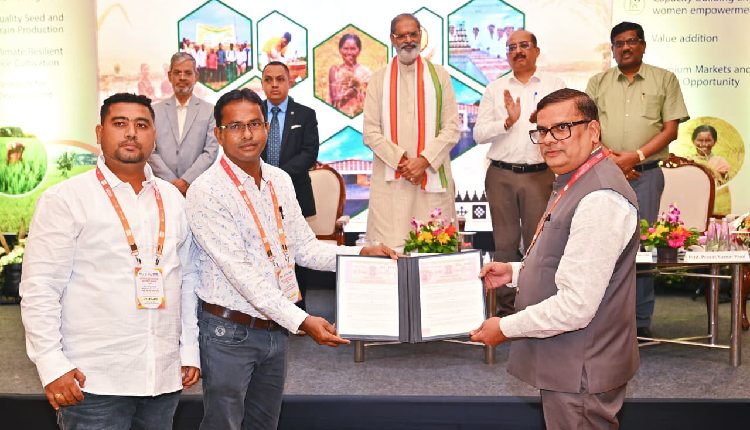
Odisha sets a 10,000-hectare target
Odisha plans to expand cultivation of healthier and nutrient-dense rice varieties from 1,200 hectares to 10,000 hectares over the next four to five years. Deputy Chief Minister Kanak Vardhan Singh Deo announced the target at the Odisha Healthier Rice Business Summit 2026 in Bhubaneswar, according to OMMCOM News.
The proposed increase would take the planted area to more than eight times its current size. The programme covers low-GI, ultra-low-GI, high-protein and micronutrient-rich rice, alongside traditional aromatic varieties such as Kalajeera. The International Rice Research Institute and Odisha University of Agriculture & Technology are providing technical support.
State officials describe the initiative as a shift from conventional volume-based production towards rice with differentiated nutritional and commercial characteristics. The government wants farmers and farmer producer organisations, or FPOs, connected with research institutions, processors and buyers so that cultivation growth is matched by value addition and market access.
Initial orders test commercial demand
The summit produced memoranda of understanding, letters of intent and purchase orders involving around 1,000 metric tonnes of healthier rice valued at about Rs 6 crore. Participants included KisaanSay, Bijaylaxmi Agro, Jaivik Sri FPC of Koraput and Loisingha W-FPC of Balangir.
These commitments provide an initial commercial reference point, although they cover only part of the supply that could emerge if cultivation reaches 10,000 hectares. Further expansion will depend on reliable seed availability, consistent grain quality, segregation of specialised varieties and repeat purchasing by processors and consumer brands.
Technical sessions at the summit addressed supply-chain integration, traceability, quality assurance and the challenge of scaling products from research programmes into commercial markets. Those systems are particularly important for varieties sold on nutritional attributes because buyers need verifiable identity and quality throughout procurement, milling and distribution.
Processing capacity and market development
Odisha is also developing a Specialty Rice and Millet facility for advanced processing and value addition. Dedicated infrastructure could help producer groups handle specialised grain separately, improve product consistency and supply higher-value retail or institutional markets. It may also reduce the risk that differentiated rice is mixed with conventional output and loses its premium characteristics.
The summit brought together farmers, FPOs, women-led producer groups, private processors and research institutions. Representatives of the Indian Rice Export Federation, the Embassy of Madagascar and commercial importers also attended, signalling interest beyond local production. However, officials did not disclose an export target, expected yields, the investment required for the expansion or a timetable for the new processing facility.
For farmers, the economic outcome will depend on whether price premiums and assured purchases compensate for any additional seed, identity-preservation or quality-control costs. For processors and traders, the planned acreage creates a larger potential supply base, but also requires demand development for distinct categories rather than a single healthier-rice label. The next four to five years will therefore test whether Odisha can convert research-backed varieties and early purchase commitments into a stable commercial segment.