Nigeria convenes rice value chain consultation as production costs hit 2.3 million naira per hectare
Nigeria's Federal Government brought federal and state institutions, farmers, millers and processors together in Abuja for a technical consultation on the rice value chain. Stakeholders put rice production costs at about 2.2 to 2.3 million naira per hectare, with fertiliser accounting for roughly 35 percent. The session will feed into a consolidated technical report covering the food balance, financing and priority actions.
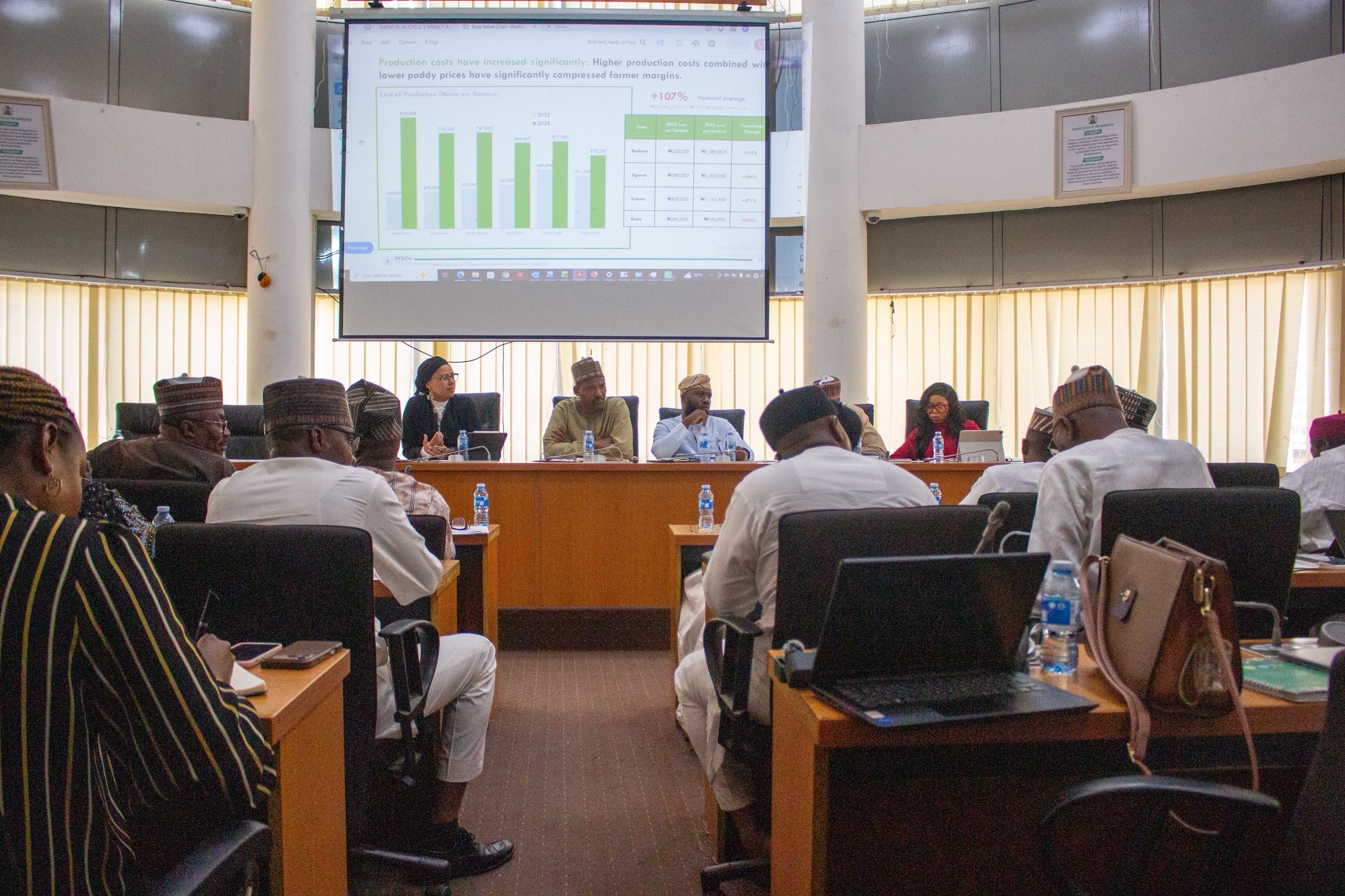
Nigeria's Federal Government convened federal and state institutions together with key industry stakeholders on Tuesday in Abuja for a technical consultation on the country's rice value chain, arise.tv reported. The session was framed around strengthening food security, domestic production, farmer livelihoods, private-sector investment and consumer affordability, in furtherance of President Bola Ahmed Tinubu's commitment to the sector.
The meeting was coordinated by the Presidential Food Systems Coordinating Unit (PFSCU) and followed a directive from its Steering Committee at the committee's seventh meeting, which was chaired by the Vice President. The Minister of Finance was represented by the Director, Technical Services, Bashir Abdukadir, who chaired the technical session, with Marion Moon assisting.
Who attended and what was on the agenda
Participants included the Federal Ministries responsible for Finance; Agriculture and Food Security; and Industry, Trade and Investment, alongside major rice-producing states, relevant federal institutions, farmers, processors, millers and industry associations. The engagement centred on Nigeria's food balance — domestic production, strategic reserves, imports and exports — assessed against market conditions, investment needs and consumer demand.
According to arise.tv, discussions covered:
- domestic rice production, cultivated area and yields;
- farmer economics and the cost structure of paddy;
- paddy and milled-rice prices;
- processing and milling activity;
- public and private stocks;
- trade flows, financing and investment.
Production costs identified as the main constraint
Stakeholders identified the high cost of production as a major constraint on the competitiveness of Nigerian rice. Production costs were reported at about 2.2 to 2.3 million naira per hectare, with fertiliser alone accounting for approximately 35 percent of that total. That single input therefore drives roughly a third of the cost base that domestic paddy must recover before milling, logistics and distribution margins are added.
High energy and irrigation costs were also flagged, together with limited access to appropriately priced long-term financing, post-harvest losses and inadequate distributed storage. Participants called for greater investment in irrigation — including solar-powered water systems — stronger financing and refinancing options for viable mills and processors, improved storage and aggregation infrastructure, and measures to bring down production and logistics costs across the chain.
Trade predictability, data and standards
Stakeholders stressed the importance of predictable trade and import decisions that reflect domestic production cycles. They noted that persistent price differentials between domestic and imported rice can create incentives for smuggling, a long-standing feature of West African rice trade that undercuts formal importers and domestic millers alike.
The meeting also highlighted the need for an integrated food-market data framework covering production, stocks, imports, consumption and prices, alongside stronger food-safety, traceability, certification and testing systems.
Speaking on behalf of the rice industry, the Vice President of the Rice Farmers Association of Nigeria (RIFAN), Mohammed Auwalu, welcomed the engagement. “We welcome Government's continued engagement with stakeholders across the rice value chain. Bringing farmers, processors, States and Government together around the full food balance is important for strengthening coordination across the sector and supporting continued production and investment,” he said.
Next steps
The consultation will inform a consolidated technical report on the current dynamics and status of the rice value chain, covering the food balance, market conditions, production economics, the financing and investment environment, and priority actions for strengthening the sector.
The exercise forms part of a broader approach to periodically review key staple food value chains, on the basis that production, markets and consumer conditions evolve over time. According to the PFSCU, these reviews are intended to support timely coordination across the food-balance levers and to help the government sustain food availability and affordability, protect farmer livelihoods, strengthen investor confidence and build a more resilient and competitive food economy.