Cost of cooking jollof rice in Nigeria rises 624% over decade
The average cost of cooking a pot of jollof rice in Nigeria has reached N29,578 after rising 624% in ten years. Climate stress and insecurity are deepening food-cost pressures, prompting families to abandon bulk buying and change meat choices.
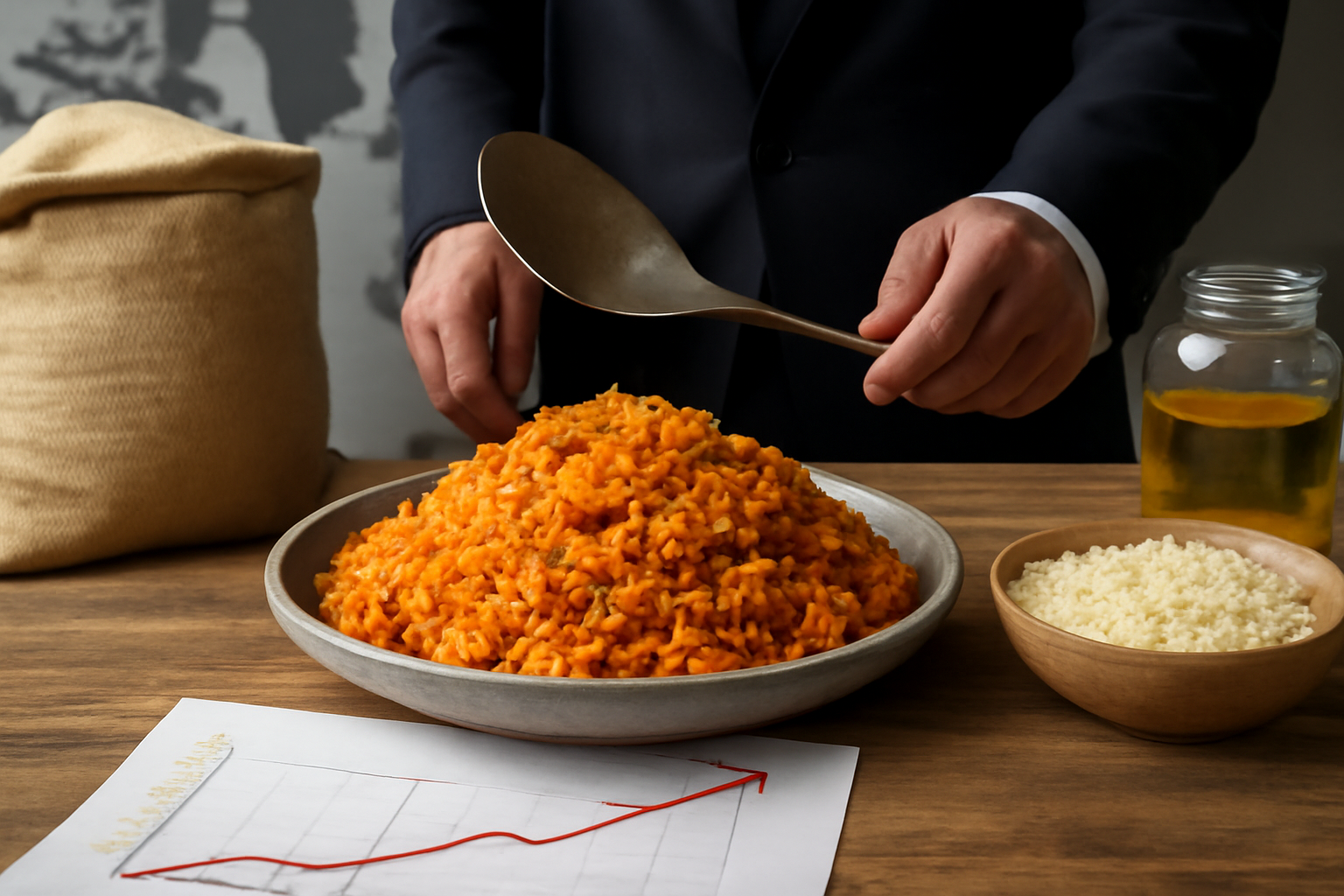
Cost of a pot reaches N29,578
The average cost of cooking a pot of jollof rice in Nigeria has risen 624% over the past ten years, reaching N29,578. The latest increase was 14.6% in one year, showing that pressure on household food budgets remains severe even after a decade of rapidly escalating costs.
The report links the increase to climate stress and insecurity, two forces affecting Nigeria’s food supply and the cost of moving ingredients from producing areas to consumer markets. Jollof rice combines several everyday food products in one meal, so its cooking cost provides a practical measure of the cumulative pressure facing households rather than the movement of a single commodity.
Climate and insecurity squeeze food supply
Climate stress can disrupt agricultural production, while insecurity can restrict activity in farming areas and complicate the movement of food. The reported 624% increase indicates that the effect has accumulated across the ingredients required to prepare the dish. Producers face a more difficult operating environment, while processors, wholesalers and retailers must pass higher costs through a supply chain serving consumers with limited purchasing power.
The 14.6% annual rise also matters for traders. When the cost of a familiar meal increases, households adjust both the volume and composition of their purchases. That weakens demand for some ingredients, increases interest in cheaper alternatives and makes inventory planning harder for sellers. Price sensitivity becomes especially important for meat suppliers and retailers because families are substituting meat as they try to preserve the meal while reducing its total cost.
Calabar becomes the costliest market
The increase is not uniform across Nigeria. Lagos recorded the sharpest market increase, while Calabar became the country’s most expensive market for cooking jollof rice. The distinction is important: Lagos experienced the strongest recent acceleration, but consumers in Calabar faced the highest overall bill.
These regional differences point to uneven local conditions in food availability, distribution and consumer prices. For producers and traders, a national average of N29,578 therefore does not describe every market. Procurement decisions, transport requirements and retail demand can vary substantially by location, leaving some households more exposed than others to the same national food crisis.
Households change how they buy food
Families are responding by abandoning bulk purchases and changing the meat used in the meal. Moving away from bulk buying can reduce the immediate cash required at the market, but it may also leave consumers buying smaller quantities more frequently. For merchants, this means smaller transactions and a customer base focused increasingly on the lowest affordable outlay.
The shift in meat choices shows that households are not simply removing jollof rice from their diets. They are modifying a staple meal to keep it within reach. The consequences extend across the food chain: ingredient producers face changing demand, traders must adapt pack sizes and product mixes, and consumers accept substitutions as the cost of maintaining familiar eating habits.