New Zealand dairy farmers brace for margin squeeze as strong El Niño looms
Forecasts of a very strong El Niño are pushing New Zealand dairy farmers to prepare for tighter profit margins in the months ahead, according to Bloomberg. Because the country's milk is produced almost entirely on pasture, a dry summer would raise feed costs and cut volumes at the same time, with consequences for internationally traded milk powder, butter and cheese.
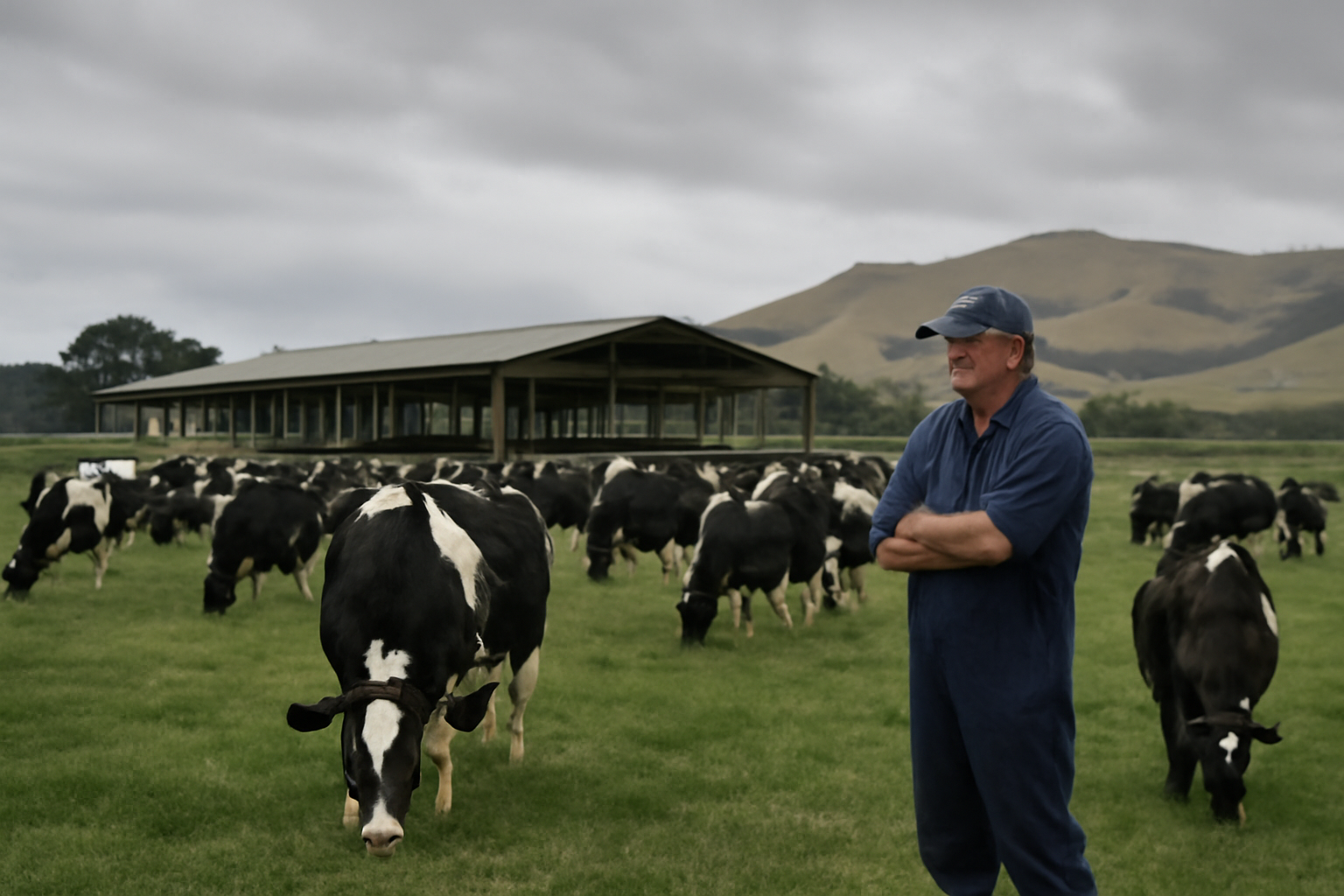
New Zealand's dairy farmers are preparing for a harder season as forecasters point to the development of a very strong El Niño in the Pacific. According to Bloomberg, producers will need to brace for tighter profit margins in the months ahead if those predictions prove accurate.
Pasture is the variable that matters
New Zealand's milk production model is built on grazed pasture rather than housed herds and purchased rations. That keeps the cost of production low in normal years, and it makes the system unusually sensitive to rainfall. When grass growth slows, there is no barn and no stored ration to fall back on, and milk output follows the weather almost immediately.
El Niño typically strengthens westerly airflow over New Zealand, leaving eastern districts of both islands drier than normal while the west receives more rain. Those eastern areas include some of the country's more drought-exposed dairying land, and the risk window overlaps with the second half of the milking season, when herds are already past peak production and pasture quality is declining anyway.
Costs rise as volumes fall
A dry summer changes a dairy operation's cost structure in several directions at once. Farmers short of grass buy supplementary feed, and because the shortage is regional rather than individual, demand rises across many farms simultaneously, which lifts feed prices at the worst possible moment. Irrigation costs increase where water is available, and restrictions bite where it is not.
Some operators respond by culling cows earlier or drying off the herd ahead of schedule. That protects cash flow in the current season, but it also reduces the milk base carried into the following one, so a single dry summer can affect two seasons of output. Debt servicing compounds the pressure: dairy conversions and land purchases are typically carried on borrowed capital, and a year of lower volumes with higher input costs leaves less headroom for interest, repairs and regrassing.
Implications for the traded dairy market
New Zealand is one of the world's largest exporters of dairy products, and a disproportionate share of its output is sold abroad rather than consumed at home. A production shortfall there is therefore not only a domestic farm-income story. It reaches the international market for whole milk powder, skim milk powder, butter and cheese, where New Zealand volumes function as a reference point for pricing.
The buyers most exposed are importers in Asia, the Middle East and North Africa that rely on Southern Hemisphere milk powder to cover a large part of their requirements. A weaker New Zealand season tends to lift internationally traded prices, and that price response usually appears at auction well before it shows up in shipment statistics. For farmers, the higher prices partly offset lost volume, but the offset is rarely complete on farms that lose a significant share of their production.
Processors face the mirror image of the same problem. Lower milk intake raises the fixed cost carried by each tonne of product, and it forces choices about which product streams to prioritise when the drier plants cannot all be filled.
What the sector is watching
- Updated forecasts on the strength and timing of the El Niño event, which determine whether the dry signal arrives before or after peak pasture growth
- Soil moisture deficits in eastern districts of both islands through the summer months
- Prices and availability of supplementary feed as regional demand builds
- Culling and dry-off decisions, which set the herd size and milk base for the next season
- Auction prices for whole milk powder, the earliest visible signal of a supply response
For now the risk is a forecast rather than a confirmed outcome. Bloomberg's framing is conditional: the margin squeeze follows if the predictions of a very strong El Niño are borne out. What is not conditional is the exposure. A pasture-based, export-oriented dairy sector has limited buffers against a dry summer, and the decisions that matter most for the season are taken early, while the weather is still uncertain.