Nabeul holds 61% of Tunisia’s potato reserve for the 2026 campaign
Tunisia’s regulatory stock of consumption potatoes for the 2026 campaign stands at 12,392 tonnes, the Agriculture Ministry said. Nabeul accounts for 61% of the national reserve, making the governorate central to the government’s supply-management program.
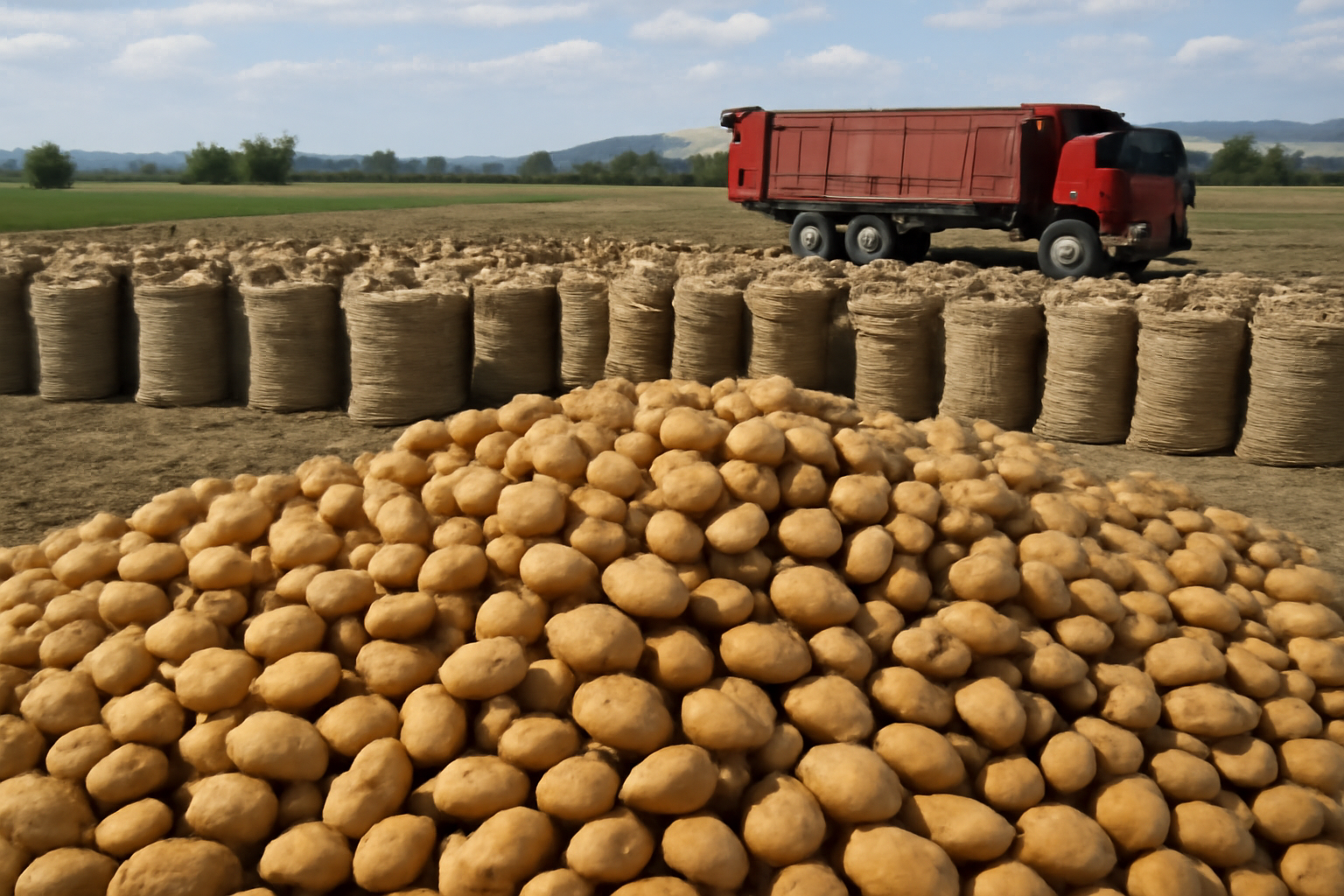
Tunisia reports a 12,392-tonne reserve
Tunisia’s regulatory stock of consumption potatoes for the 2026 campaign has reached 12,392 tonnes, according to an announcement by the Ministry of Agriculture, Water Resources and Fisheries. The ministry released the figure on Wednesday as part of its reporting on the country’s potato supply-management arrangements.
Nabeul holds 61% of the national stock. That concentration makes the governorate the main storage location within the regulatory reserve and gives it a pivotal role in the physical management of potatoes set aside for the domestic market.
The announced total applies specifically to consumption potatoes and to the 2026 campaign. The available information does not provide a breakdown for other governorates, identify participating storage companies or specify how much additional volume may enter the reserve later in the campaign.
Nabeul becomes the main operational hub
With almost two-thirds of the reserve located in one governorate, decisions affecting stocks in Nabeul will have an outsized influence on the execution of the national program. Storage conditions, release schedules and the movement of potatoes from warehouses to consuming areas will therefore be particularly important in this location.
For producers and storage operators in Nabeul, the 61% share signals that the governorate is handling most of the potatoes covered by the current government figures. For wholesalers and retailers elsewhere in Tunisia, it means that a large part of the regulated supply is geographically concentrated before it is released or redistributed.
The ministry’s announcement establishes the size and location profile of the reserve but does not state when stocks will be released, what prices will apply or which market conditions would trigger intervention. It also gives no comparison with the preceding campaign, so the reported 12,392 tonnes cannot by itself be characterized as an increase or a reduction.
Market impact depends on release policy
A regulatory reserve can affect the market only when its volumes are made available and reach the areas where supply is needed. The practical impact of the 2026 stock will consequently depend on the timing, pace and geographic distribution of releases decided by the authorities.
The Nabeul concentration also creates a clear monitoring point for potato-market participants. Producers, traders and buyers will need to follow ministry decisions concerning this governorate because it contains 61% of the volume currently reported at national level.
For now, the official figures provide two benchmarks for the campaign: a national consumption-potato reserve of 12,392 tonnes and a 61% share stored in Nabeul. Further assessment of price effects, regional availability or the reserve’s duration will require additional information on release dates, distribution channels and expected consumption needs.