Falling Moroccan tomato exports push French and Spanish retail prices to 12.39 euros per kilogram
Retail tomato prices in France and Spain have jumped to around 8 euros per kilogram for standard varieties, with French-grown fruit reaching 12.39 euros, as Moroccan export flows to Europe slow. The Moroccan outlet akhbarona.com links the spike directly to reduced Moroccan supply being redirected to other export markets and domestic demand.
Retail tomato prices climb in France and Spain
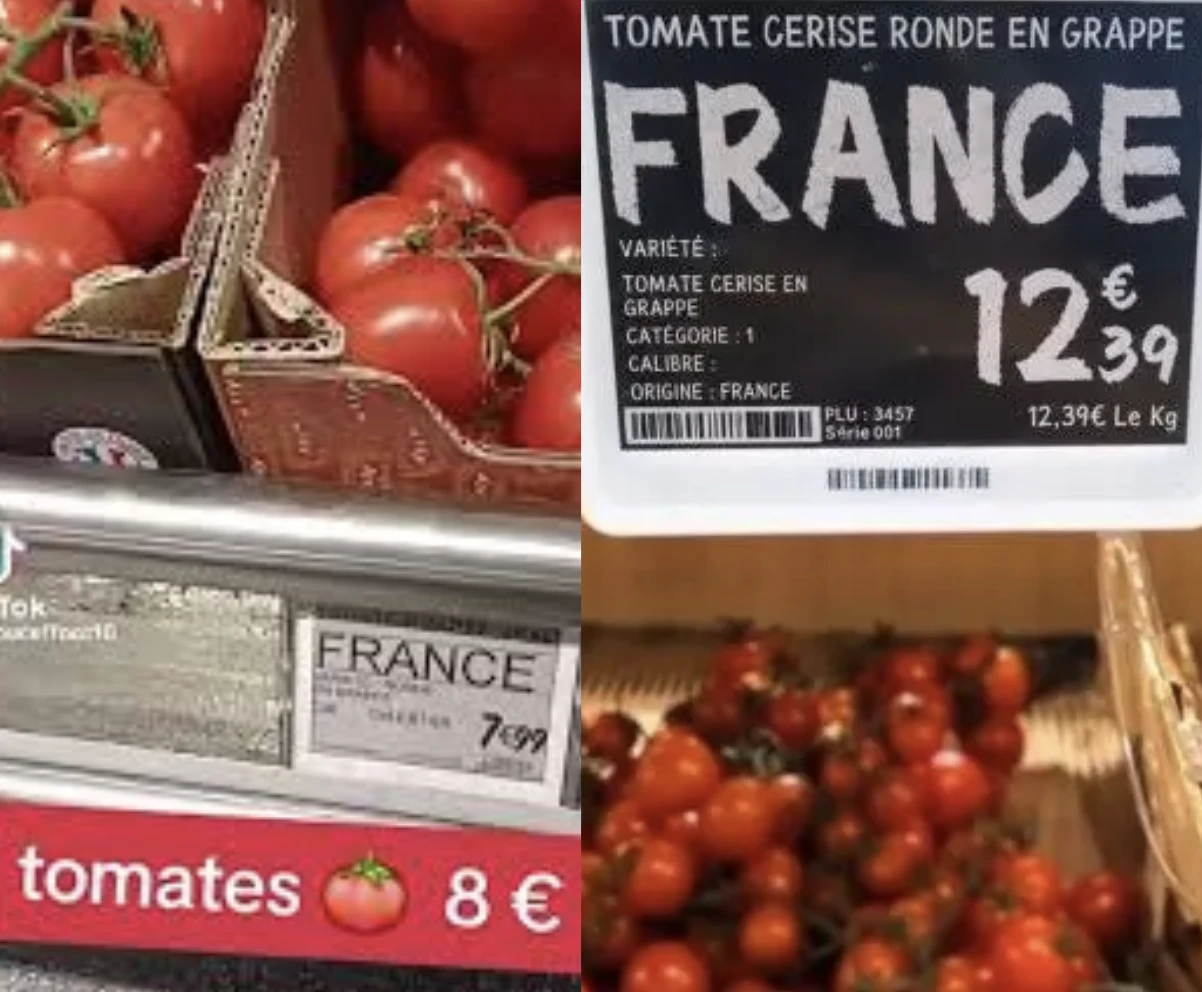
Tomato prices in French and Spanish food retail have risen to what the Moroccan outlet akhbarona.com describes as record and unprecedented levels, at the same time as the pace of Moroccan shipments to the European market has visibly slowed. According to that report, a kilogram of standard tomato varieties has moved to around 8 euros in large supermarkets and hypermarkets in both countries.
The highest figure cited applies to French domestically grown tomatoes, which the outlet says reached 12.39 euros per kilogram, the equivalent of roughly 130 Moroccan dirhams. The spread between imported and home-grown fruit is the heart of the story: the premium on European produce widens exactly when the cheaper import stream thins. No official French or Spanish statistical series is cited, and the figures describe retail shelf prices rather than wholesale or farmgate quotations.
Slower Moroccan flows into Europe
akhbarona.com ties the price move directly to a decline in the volume of Moroccan produce arriving in Europe. It publishes no tonnage or value data, but identifies two outlets absorbing the missing fruit: alternative export markets outside Europe and Morocco's own domestic market. Morocco is one of the main suppliers of fresh tomatoes to the European Union during the winter months, when northern European production depends on heated greenhouses.
The mechanics facing European buyers are straightforward:
- Fewer Moroccan arrivals force retail chains to cover a larger share of demand from Spanish and French greenhouses.
- Those greenhouses carry higher energy and labour costs, which the report names as a constraint on their ability to meet demand.
- Weather variability is cited as a second limit on European output, leaving little spare capacity to replace a missing import stream at short notice.
Spanish grower protests in a new light
The article sets the price spike against campaigns run by Spanish farming lobbies against Moroccan imports, including attacks on Moroccan trucks justified by claims of unfair competition. Its argument — presented as commentary rather than reported fact — is that the current shortfall shows European production cannot cover demand on its own, and that customs and administrative obstacles aimed at Moroccan produce carry a direct cost for consumers. The outlet describes Moroccan tomatoes as a buffer protecting European households from food inflation, and calls on northern governments to acknowledge the strategic value of the agricultural partnership with Rabat.
That reading is contested in Europe, where growers' organisations have argued for years that Moroccan production benefits from lower labour and input costs. The source text does not include a response from Spanish or French producer groups to the current price levels, nor any comment from European Commission or national authorities.
What the market will watch
For importers, processors and retail buyers the open questions are volume and duration. Neither the size of the Moroccan shortfall nor its expected length is quantified in the available reporting, and the 8-euro and 12.39-euro figures are single price points rather than an index. What is measurable on the shelf is the direction: European retail is paying materially more for tomatoes while Moroccan supply is reduced, and the substitution options inside Europe are limited by energy costs and growing conditions rather than by willingness to plant.