More countries seek Zambian maize as Kenya signs supply agreement
Several countries have expressed interest in buying maize from Zambia as the country works to widen its regional and international export markets. The most concrete step so far is a supply agreement Kenya reached with Zambia last week. Volumes, pricing and delivery terms have not been disclosed.
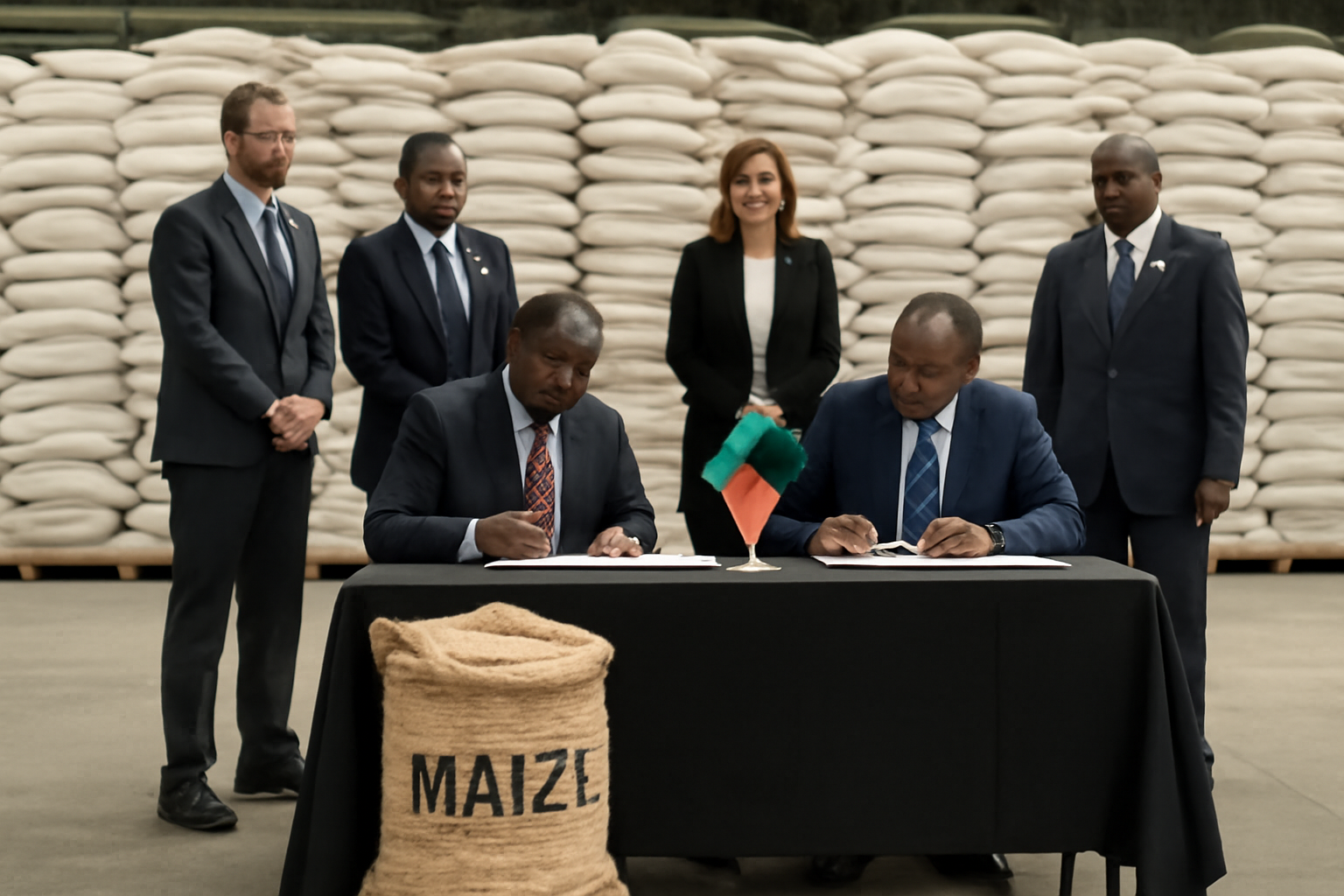
Several countries have expressed interest in buying maize from Zambia as the country moves to expand its regional and international export markets. The most concrete step so far came last week, when Kenya reached a supply agreement with Zambia. The interest spans more than one prospective buyer, although only the Kenyan arrangement has been confirmed as a deal.
The buyers behind the remaining expressions of interest have not been identified in the reporting available, and the commercial terms of the Kenyan agreement — volumes, price, delivery schedule and duration — have not been disclosed. That leaves the announcement as a statement of direction rather than a quantified trade flow, and the missing detail is exactly what maize traders, millers and feed buyers will be waiting for.
Kenya agreement sets the reference point
The Kenyan agreement matters less for its headline than for the precedent it sets. A government-level supply arrangement between an East African deficit market and a southern African producer creates a reference structure that other interested countries can copy. It also signals that Zambia intends to place export volumes under contract rather than leave them to spot trade, which changes how buyers plan their coverage.
Several commercial questions remain open. Whether supply is executed by state agencies or by private millers and traders determines who carries price risk. Whether the tonnage is contracted as a single tranche or staggered across months determines how much pressure lands on transport capacity at once. And whether pricing is fixed or indexed to a regional benchmark determines how the deal performs if the maize market moves between signature and delivery.
Logistics and permits are the binding constraints
Zambia is landlocked, so every tonne sold beyond its immediate neighbours moves overland before it reaches a mill or a port. Road haulage availability, border clearance times and corridor costs set the practical monthly ceiling on deliveries, irrespective of the tonnage written into a contract. Quality and phytosanitary requirements at destination are a further gate, since regional maize trade routinely turns on moisture and contamination thresholds accepted by the receiving mill. Importers weighing Zambian origin against seaborne alternatives need to price that freight and the transit risk attached to it.
The second constraint is domestic. Exportable volume is whatever remains once strategic reserve requirements and local milling demand are covered, and Zambian maize exports have historically been administered through permits. The pace at which export authorisations are issued, and whether they are open-ended or capped, will decide how much of the stated international interest converts into loaded trucks. For growers inside Zambia, the direction of travel is a wider buyer base heading into the next marketing season.
What it means for buyers and producers
For the wider regional market, the implications are straightforward:
- East African millers and feed compounders gain an additional origin, reducing dependence on any single supplier.
- Competition among several interested buyers for the same Zambian tonnage tends to firm up ex-Zambia offers.
- Higher export offtake transmits into the domestic market, supporting farmgate prices while lifting raw material costs for Zambian millers.
- Transport operators on the routes out of Zambia stand to gain volume, with backhaul imbalances remaining a persistent cost factor.
Watch points
The measurable signals from here are the publication of contracted volumes and delivery windows under the Kenyan agreement, the identity of the other interested countries, and the rate at which Zambian export permits are issued. Until those appear, the expansion of Zambia's maize export market remains a policy intention backed by one signed deal.