Moldova expects wine-grape harvest to rise by up to 15% in 2026
Moldova’s 2026 wine-grape harvest is forecast to increase by 10–15% from the previous year, with average yields of 8–9 tonnes per hectare. Indicative purchasing prices stand at 6.8–8.2 lei per kilogram, while vineyard area continues to contract.
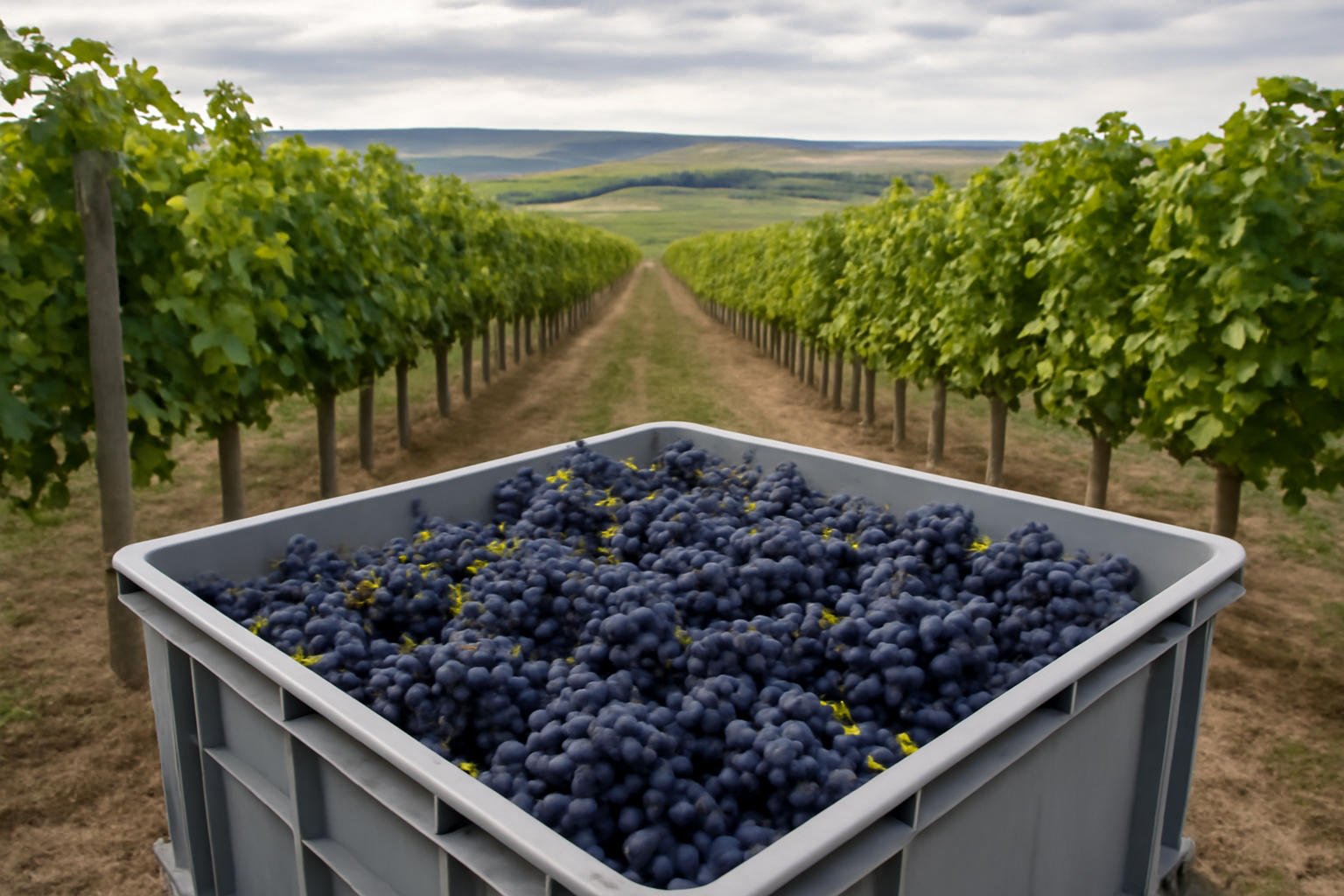
Moldova forecasts a larger wine-grape crop
Moldova’s wine-grape harvest is expected to increase by 10–15% in 2026 compared with the previous year, providing wineries with a larger volume of raw material despite a continuing reduction in vineyard area. Logos Press reported that the forecast was discussed by the commodity council for grapes, wine and wine products at the Ministry of Agriculture and Food Industry.
Average productivity is forecast at 8–9 tonnes per hectare. Depending on the variety, growing region, cultivation technology and local conditions, yields could range from 7 to 13 tonnes per hectare. Radio Moldova described the increase as a 15% rise, while Logos Press gave a forecast range of 10–15%.
Indicative prices remain subject to negotiation
The council took note of an indicative purchasing-price range of 6.8–8.2 Moldovan lei per kilogram for wine grapes from the 2026 harvest. These levels are not mandatory. Actual prices will be negotiated directly between growers and wineries according to market conditions, variety, quality, intended use and the circumstances of each transaction.
Grapes intended for high-quality wines and indigenous varieties are recommended to command prices 15–30% above the base range. Grapes destined for distillation may be priced 25–30% below it. This differentiation gives growers a financial incentive to supply varieties and quality levels sought by wineries, while lower-grade raw material remains exposed to a substantial discount.
A crop increase can expand winery processing volumes, but it can also strengthen buyers’ negotiating position where available grape supply exceeds immediate crushing requirements. The effect on farmgate revenue will therefore depend not only on tonnage but also on grape quality, winery demand and the proportion of production eligible for price premiums.
Vineyard area continues to decline
The seasonal improvement comes against a contraction in Moldova’s vineyard base. Logos Press reported that total vineyard area fell from 117,500 hectares in 2021 to 107,200 hectares in 2025. Over the same period, the area of bearing vineyards declined from 104,400 to 93,600 hectares.
Plantings of wine-grape varieties currently cover 90,500 hectares, of which about 80,000 hectares are productive. The figures indicate that the larger 2026 crop is being driven by improved yields rather than expansion of planted area. For processors, this offers more raw material in the current season without reversing the longer-term reduction in domestic vineyard capacity.
Production costs shape growers’ margins
Annual vineyard maintenance costs in 2026 are estimated at 52,000–80,000 lei per hectare, including depreciation of fixed assets. Costs vary with vineyard location and age, planted varieties, technology and yield. At the forecast average of 8–9 tonnes per hectare, the relationship between achieved price, quality premium and production cost will remain central to growers’ margins.
Government representatives also reminded producers that vineyards must be entered in Moldova’s viticulture and winemaking registry. For wineries and wine exporters, the larger crop could support higher processing volumes and improve access to selected varieties. It does not automatically translate into higher wine exports, however, because the available reports provide no export-volume forecast and final demand will determine how much of the additional harvest reaches finished-wine markets.